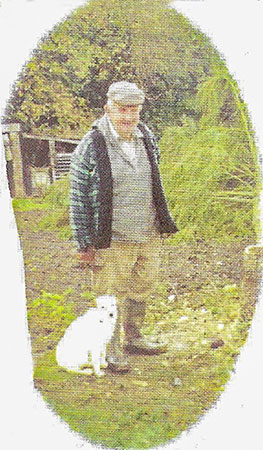
My father was a teamsman. This meant that he was in charge of all the horses on the farm, starting earlier than anyone else to prepare them for the day's work and finishing last. My mother cared for us and also took in washing.
We lived on The Meadow and most meat in our meals came from what we could catch. We were luckier than some because we lived with my father's parents so there was a wage from Grandad and later his pension, 10 shillings (50p) per week. This unfortunately meant I had to share a bed with my grandad!
I had two elder sisters, so our tiny cottage was very full. Our cottage on The Meadow, was tied to the farm where my Father worked so if there was any dispute with the farmer you lost your home as well as your job. The Meadow was a large field that was a sort of common space in our village. Things like fetes and sales were held there, but it was also used
as a short-term grazing place for cattle.
My father set snares around the house and one of my jobs was to cover any rabbits with a tin bath to stop them squealing until father got up to deal with them. A job I really hated was holding a lamp to light my father while he cut the chickens' throats to bleed them. We reared some every year for Christmas.
One year Father reared some geese but they were so friendly that come Christmas, he could not bear to kill them and had to sell them and buy our meat instead.
My Mother used her boiling copper from the washing business to cook peoples' Christmas puddings. Our Christmas stockings consisted of an orange, a piece of chocolate and one other gift. I think the girls might have had something that smelled nice and I got things
like socks. My Mother was such a good cook. We never went hungry thanks to those
rabbits, which were everywhere then and my Father's efforts in the vegetable garden. She did make treats too such as shortcake. A piece of short cake was left out for Father Christmas on Christmas Eve along with a glass of something. I still remember sneaking down one Christmas Eve along with my sisters and the horror when we saw the shortcake had been eaten but there was no sign of presents.
I began school at Melton Constable with the infants. I learnt to read and write. I still read the Eastern Daily Press every day. I found Maths difficult so the teacher sat me next to my big sister Phyllis. She had a real head for figures and the teacher felt she might help me. It didn't work but I must have picked up something, because no-one ever did me down when it came to doing a deal!
Our secondary school was called Central School. It is now the Astley Primary. We started there at eleven years old and left when we were thirteen. I was full of mischief by then but I was good at practical subjects so I was put to work making a model of a sailing ship. I made everything but the sails (the girls made those). I was so proud when my carpentry teacher Mr. Rider put it on display at the school.
On the playground by the science room was a large metal tank with metal wheels. This held gas which was used as fuel in the school. We older boys were given the task of dragging this tank to the gas works at the top end of Melton Constable to have it refilled at the gas holder.
We loved this job!
The roads were quiet then and there were two good slopes. We took it in turns to sit on the tank whilst the unlucky ones pushed or guided. Coming down through Melton back to school was terrifying and exciting. The metal wheels made a tremendous noise as it gathered speed. We made sure we hopped off before the teachers spotted us.
We would have got such a 'birthday' with the cane!
Our headmaster at secondary school (now the Astley Primary), was Billy May and he taught Maths and Geometry. Bad behaviour was rewarded with less Geometry and more Maths. I remember him striding up to school each morning, trilby hat on and books tucked under his arm. Mr. Parnell had his legs in irons. He lived in a caravan near Craymere Beck. Our P.E. teacher was called Billy Bush. He was small and bossy. None of us liked him. I remember one of my friends lost his temper and punched him. He knocked his teeth out! My school friends all lived near and we got up to all sorts of mischief. We had nicknames. Mine was Kingcup as I had blond hair. There were Tabs, Buck and Squeaker. Squeaker and I are the only ones still
alive now. He got his nickname because when we were at primary school, he was asked to take the part of a mouse in a play and had to make squeaking noises. We used to pool our pennies to buy sweets and cigarettes. (Five Woodbines cost two old pennies) One trick was to make our own cigarettes with dried rolled leaves from the Tobacco plants in the garden. They tasted disgusting! We kept this money in an Oxo tin which we buried on the meadow. We built a den there too where we could sit and play cards in peace. It was a hole dug out of the ground and then roofed with branches and sacking we pinched from a nearby field. The sacking had held fertilizer so it was a bit whiffy
In those days, Melton had gas lights. These were lit every evening by a man from the gas works. Our gang used to sneak behind him and switch off the lights he had just lit. Unfortunately for us, he told the local policeman who caught us doing it. The policeman carried a cane to keep us in order. We certainly got a 'birthday' that time! There was a small
sewage works at the end of Burgh Beck Road with a sort of motorised arm to spin over the gravel circle. We took to riding on this arm. Unfortunately, we broke it. More trouble!
Holly House down in Briston had a wonderful tree of sweet pears. We could not resist and made several raids. One day, just as we were reaching up to steal more the shed door opened, and the local policeman appeared. He had been waiting for us. We all got taken to
the Headmaster and were punished with a stroke of the cane on each hand.
'Would you like anymore?' we were asked. We all declined.
Make a Shilling
Mr. Eke at the garage (the grandad of the present Ekes) had made a bicycle. It was a beauty, a blue and yellow racer, and I was so keen to get it. I did not have much money but he offered to let me have it and pay for it so much a week.
I made a little trailer for the bike and used it to deliver my Mother's washing at a penny per load. One of the neighbours lent me his billy goat. I made a cart for him to pull with a home- made harness. Then I offered the local children rides round the meadow in the cart for
sixpence a go. My best earner however was rabbits. I had become really good at trapping them. The local butcher asked me if I could find him a few. He regretted his request a bit though as I caught so many he could not cope with them all! He had to take them to Aylsham Market in the end. My last profitable job as a boy was to dig allotments for the
railway workers. This earned me the huge sum of one shilling (5p) Mr. Eke got his money and I had that bike a long time.
We say 'a boy is worth half a man' and when I started to work for the same local farmer as my Father, I was paid eleven shillings and twopence halfpenny per week (just short of 60p). My first job was scaring the birds from the crops on a forty acre field up where Hillside and the Lomax estate are now. I made a rattle of the sort you used to take to football and ran round the field in the daylight hours. Five shillings of this wage went to my Mother for my keep and the rest I spent on cigarettes, sweets and eventually beer.
Don’t mention the War!
On Sunday afternoons, everyone went to bed for a rest. My sister Betty and I were sent off upstairs for this, but we heard a plane flying around and got up to the window to look. It was a lone German bomber. The pilot was flying round machine gunning the village. Then he bombed the water towers at the railway yard. The blast blew us away from the window. You can still see the repairs up on the towers to this day. They said the fighters at the grass strip at Matlaske caught up with him as he went out to sea, and shot him down. There were bombers at Foulsham. We saw them fly over Melton and Briston in the afternoon on their
way to raids. When they came back at first light, I would be on my way to work. I would look up at them as some of them came over very low. They would be very heavily damaged and I sometimes saw big holes in their wings. You could see daylight! One morning, one crashed into the railway bridge above Hillside. All the poor crew were killed. There is now a memorial to them on the new housing estate.
One really good thing about the war was that they housed the Land Girls at Thurning Hall. Mr Barwick ran the local taxi, and about 8 or 9 of us used to share the cost of a ride there. He always made us walk back though. There was a policeman guarding the entrance but we knew how to sneak round the back. The-girls would climb out of the windows and join us in the backs of the lorries which were parked there overnight. Old Barwick usually lured a girl or two into his taxi.
There was a lot of black market stuff going on. The farmers were the worst at this as they had plenty of opportunity. My boss was taking a large basket of eggs to Norwich but he was stopped by the police at Horsford. He pretended he was taking them to the hospital so he got away without going to court, but of course he didn't get to sell his eggs! Another farmer killed bullocks to sell on the black market, keeping them out of sight of inspectors by using a winch to hide them up in the barn rafters. Raising ducks in isolated pits was another way of getting off ration meat. It was hard to get extra feed for them and one local farmer made extra money by selling corn with added sand. This made him very unpopular with customers, but they could not report him! Of course every family had a pig in the garden. We even got extra coupons for its feed. We all raised extra pigs to sell for cash, and even the
local bobby joined in that little bit of mischief.
My boss came up to me one day, and informed me that he had written for permission to keep me out of being called up into the army. I was furious but it was too late, and I had to stay on the farm. I suspect my parents were happy about this though.
I was 14 when the Second World War began and had been at work on the farm for about a year. Together with some of my friends, I lied about my age in order to join the Home Guard. Most of us were teenagers but the men in charge were much older. They included a man with a wooden leg, a local seed merchant and my Dad (who had fought in the first war). My Dad was a corporal but we did not obey his orders very well and I used to catch it for that when I got home!
We were issued with guns and some ammunition. The bullets all had to be accounted for, but we really wanted them to go after pheasants. The seed merchant had a lorry and as our officer he used to take us over to Holkham for training. We had to go through dykes full of water there which we hated. However, we found spare bullet cases lying around there which we collected. Then we were issued with more bullets!
Squeaker was not into living off the land like me and he remembers having to be very well behaved with his officer, Mr Fisher, who kept the local shop. Mr Fisher had food under the counter to supplement the ration. You did not upset him!
Every week we had to patrol overnight and guard the village from invaders. As we had worked a full day and had to work next day we used to sneak off to a nearby barn and have a sleep. Unfortunately we got caught at this and in order to keep us awake, we were made to go over to Hindolveston during the night and sign in a book kept by the local policeman. Squeaker said he had to go on those, and he was with a chap who was a bit nervous. This man was a bit of a menace with his gun. If he heard a noise, he would shoot his gun in that direction.Squeaker always kept a close eye on him in case he shot him by mistake. Squeaker was based in an underground room at the Railway Institute but we were using the Pavillion on Briston recreation ground. We still got up to mischief though as we were using the Pavillion on Briston recreation ground.
A farmer kept his cattle on there overnight and one of the cows was really good tempered. She would stand for us while we milked her and then we would heat the milk in an old copper in the Pavillion.
Life on the Farm
My first job was with the farmer who employed my Dad, but there was one thing about this man that I could not take. He swore at everyone. My Dad put up with it but I answered back and punched him! He promptly sacked me as he could not lose face. In fairness though, when another farmer was thinking of taking me on, he told him I was a good worker as long as no-one swore at me.
I won't give you the name of my next employer as I want to tell you some stories about him later in my tale. It was a large mixed farm and I was one of fourteen workers not counting the girls who worked in the dairy. There were two hundred dairy cows and their milk was either sent out in bottles or else, as in the case of Gresham's School, in churns. One local butcher did collect milk in churns which he took round Melton Constable to be sold by the jug. As well as doing relief milking, which I did not mind as the milking parlour had a machine, there were many other jobs to do on the fields. The most wearying of these was hoeing sugar beet for weeds and thinning the young plants as they grew. I was very pleased when they started using a special coated seed that did not need thinning. We also grew potatoes, broad beans, cabbages, carrots, barley, wheat and oats. There was also hay and silage grown to feed our stock.
All the work was done by horses, except for ploughing for which there was a tractor. My big goal in life was to get my hands on this tractor. I loved machines and had a talent for understanding how to make them work. It was to stand me in good stead as farming changed. At present however it was hard manual labour and horse work for me. The horses were used for drilling seed, harrowing the ploughed soil, bringing in crops and the muck cart. The oats grown on the farm were for them, and they were put into 12 stone (50
kilo) bags for us to lift. This was the 'easy ' crop as barley 16stone (65 kilo), wheat 18 stone (75 kilo) and finally broad beans 20 stone (80 kilo) bags were all there for lifting, mostly by yours truly! I was one of the biggest and fittest lads on the farm then. All due to my Mother's good cooking of course!
We did have outside help sometimes, depending on the crop being harvested. Local women came in to pick up the potatoes once they were dug up and the schoolchildren came after school to pick the broad beans. They were given so much per box and my nephew did well, as I was in charge of the tickets which showed how many they had picked. These crops were mostly sent out by train then as we had the station at Melton Constable. The cabbages for instance went to the London markets, but more of that later.
One of the heavier jobs was harvesting hay as it all had to be manhandled into 'cocks' or small stacks to be heaved onto the cart. The weather was always hot when we did this, and come midday we were all really tired and would have loved an after lunch nap (we would have been working since first light). We were working on this one year on the day of the Royal Norfolk Show. Our boss always went to the show so we lay down under the hedge for that longed for nap. Alas the boss had stayed at home and caught us! Did he shout!
The farm foreman was the man in charge of the tractor. It was a Fordson Major and I longed to drive it. One day the foreman got into a dispute with our boss. It was over some repairs to the cottage where the foreman lived. The boss was responsible for repairs and was slow to arrange them. The foreman walked off his job in protest and got the sack. This was my big
chance and I took to it like a duck to water. I could manoeuvre that tractor better than anyone else and the boss was very impressed. In addition I could plough a perfectly straight furrow with it. In fact I won prizes for my ploughing ability. At this time the horse were gradually being replaced by tractors and other machines. In the end, the only horse left was an ex racehorse which the boss used to ride on about the farm.
The railway was shut down in Melton Constable eventually and my boss decided his crops would have to be moved by lorry. He sent me off to Norwich to learn the driving skills and take my test. I was on the road! Of course this meant I worked all day on the farm and then loaded the lorry with cabbages before setting off for the London markets. You had to arrive
by 3am in the centre of London unload and collect the cash before driving home for another day of work. I have found myself hitting the road side banking because I was so tired. The lorry was very basic, no heating of course, so I used sacking to stay warm. I smoked then though I later gave up. My boss had cheap petrol on the farm and he insisted I took spare cans of it in the cab with me. It is a wonder I did not blow myself up!
I had never been outside Norfolk till I started driving the lorry and had no maps. I relied on road signs and verbal instructions from my boss. He said 'If you get to Oxford Street go along it till you see a building with a large Guinness on it and turn off there to cross the river. The market is just there. If you hit the first set of traffic lights on green at a good speed they will be green for you the whole way'.
One time I tried this when someone else had loaded my lorry to allow me a couple of hours sleep. He was not good at loading safely and my dash for the lights made several of the cabbages tumbled off onto Oxford Street! A policeman arrived and started to question me.
'What is your load?' he asked
'Fresh cabbages' I replied. 'How many would you like?' He took a few and let me off!
As cabbages were mainly a winter crop, I often had to drive in bad weather. Fog was difficult as there was no lighting or cat's eyes then and I just tried to keep an eye on the road edge. Snow and ice were worse. Gritting back then was a bloke with a wheelbarrow who scattered a bit of sand at busy junctions, no gritting lorries and snow ploughs. One afternoon when I was due to drive to London it came on the radio that Epping Forest was blocked. This was on my route. 'What do you think? 'my Boss said. 'This load is sprouts and they will not keep'
'If I can take one of the men with me and a couple of shovels I will give it a try' I answered.
'Take who you like.'
I chose Derek from Briningham as he was easy to collect on the way and was as strong as an ox. We had a slow run but no real trouble with digging as there was no other traffic about and I could drive in the middle of the road. At one point however I came across a fallen tree. I had no chance of braking safely so I shouted to Derek to hang on to something tightly and
aimed for the thin end of the tree. The lorry bounced over it and we continued on to the London market. When we arrived, the manager was just about to leave as he had nothing to sell but a few swedes.
Home and Hearth
Some of the girls in the village went away to work. One of them, Iris, got a job as a 'bedder' at Cambridge University. (She did the cleaning for the undergraduates) She met a girl called Elsie there and made friends with her. Elsie was an orphan and in the long holidays, she had nowhere to go. Iris invited her to stay in Briston with her parents. I was about twenty years old then and I fell in love with Elsie.
We got married, but I had never saved my money. As a result, we were really poor. Our first home together was a room in Iris's parent's house. We had a two burner Valor oil stove on which all our cooking and water heating was done.
Elsie managed to get a cleaning job with a local farmer and he let us rent an old bungalow in the woods at Thurning. He took his rent from Elsie's wages. This place was in terrible condition - you could walk outside through the scullery without bothering with the door. Any water came from a well. The local horse dealers used to come round when we were out at
work and take drums of water for their horses. We would come home to a dry well. I was savage so I went round to complain. They left me some water after that.
We had a coal sack for a fireside rug and not much furniture. I remember we had to share a single bed. I liked that! Elsie found it very lonely when she was there without me. I always worked very long hours. There were prisoners of war about then as it was just after the war had finished. One Italian prisoner made a lovely fruit bowl from scraps of wood and painted
Perspex. Elsie bought it from him, and I still have it. In the end I found a cottage to rent not far from Briston crossroads. We were back in the village!
This cottage was one of a row of five. They were condemned and knocked down long ago. I had managed to buy a double brass bedstead by then, but it would not go up the tiny twisted staircase. I had to take it to the local blacksmith who cut it in half and then provided some bolts to rebuild it when I had forced it up into the bedroom. Water came from a well again, wound up in a bucket which often came unhooked from its chain and had to be located and retrieved using a long pole. The toilets consisted of a little row of outhouses each of which contained a seat over a bucket. This bucket was emptied each week by a man with a horse and tank. We called him 'The ice cream man'. He emptied his tank into an old limekiln quarry which was in a field opposite what is now Astley Primary School. The local rubbish cart emptied out there too. There were brick lined tunnels in this quarry where wrens used to nest. The rubbish attracted hordes of rats and a local chap called Platten used to stand there shooting them. The quarry eventually filled and the farmer covered it with soil and made it part of his field, but if you look closely you can still see a dip where the quarry was situated.
Elsie hated this cottage, because it stood a little lower than the road. This meant that every time it rained, water flooded under the door of the cottage and ruined all the downstairs floors. She got so upset about it that it made her ill and our local doctor recommended that we be allowed to rent one of the new post war council houses that were being built at Woodfields. The rent on this house was higher than we had been used to, but it had a
bathroom and water from a tap!
I was always on at my boss at the farm to increase my pay but he was allergic to pay increases! I complained bitterly to him that I could not afford the rent on my council house in another attempt to get more cash. At the time, the railway was selling lots of the houses in Melton Constable. He suggested that he would buy one of these at auction and I would live in it and pay him the cost back from my wages. He sent his son to the auction with me and a house on Burgh Beck Road was bought for £400 plus £40 stamp duty. He took so much each week from my wages and in time, the house was mine.
Sugar Beet Wars!
I have told you how hard we worked to grow sugar beet, but the harvest was even worse when it came to the work involved. We started lifting just as the corn harvest was finishing in early September, but 'the campaign' as they called it, went on until February when the factory would finally close to deliveries. We took freshly dug beet at the start even in the frost, but as the frost got deeper the beet would all be lifted and stored in 'clamps' which were protected under straw.
There was a beet plough pulled by a tractor which lifted it, but it then had to be 'topped', 'knocked' to remove frost and mould and then put into heaps for loading. Sometimes the plough missed some beet, and these had to be pulled up by hand which was very difficult. Back then, we had Italian prisoners of war who had to do this. When one of our tractor drivers missed several beets, they shouted at him 'You're no good!'
He got angry and shouted back, 'You should have told that Mussolini he was no good'
At this they were very angry and went after him. He drove his tractor back to the farm and refused to go back until the Boss went with him to calm things down.
My job was to load onto a horse drawn cart and take it up to Melton Station where I put it into a railway truck to go off to the factory at Kings Lynn. Later I was allowed to use a tractor and trailer for this, which I much preferred. At this stage instead of shifting the load by hand, you could tip it in. The man in charge of the goods yard encouraged all us drivers to tip in
as much as we could to each truck. He then shunted them across to make up a large goods train. As they were overloaded, some beet would fall off. He then gathered this up and filled a spare truck. He arranged with a local small farmer to put a permit on this and they shared the money for it.
My Boss really did not like the move from horses to tractors. Many a time he would stop me from using the tractor. He said,' There's a horse in that stable. You are not wasting my money on fuel for that machine.'
He was getting older by now and his children were doing more of the everyday work. He would call in at the local pub for a game of dominoes with his friends. They would play as if their lives depended on it, though the stake was only who would pay for the half pint of beer they each had.
The farm was only about 250 yards from the pub, but it was uphill, so he drove his car. On his way home, as it was downhill, he would let it roll out of gear to save money. He would then free wheel it into the shed where he kept it, and usually hit the wall at the back of the shed.
'Whoah old girl!' I would hear him shout.
After a while the railway shut, and as I have told you I began my life on the road in a lorry. I would load my lorry with beet and leave for the sugar beet factory at 3am. As the factory opened at 6am, this might seem very early but I had two good reasons. One was that there was a long queue at the gates when the factory opened as everyone wanted to be processed
first. If you got through quickly, you could dash back, reload and deliver up to five or six loads in a day. One crafty farmer let one of his tyres down so he could jump to the front of the queue. Once unloaded, he would nip to a nearby garage, re-inflate the tyre, and be on his way. My other reason was more personal. At that time of day, the roads were littered with roadkill. Drivers on the way home from the pub and beet lorries in front of me had taken their toll. I picked these up and sold them to a game dealer I knew in my village. I collected rabbits, hares, pheasants and partridges.
One day I got almost a complete covey of partridge which had been hit by the lorry in front of me. I could make £5 on a good day doing this, though at first the other drivers would stop when they saw me by the roadside thinking I had broken down. One of the other drivers who knew me well, waited till I had walked away from my lorry whilst we were parked at the factory and then pinched my haul for that morning.
'Hey Les' he said, 'I picked a few rabbits and a hare this morning, do you want them?' He then sold me my own haul.
My promotion and the extra hours I worked made one of the other men very jealous. He started to stir up the others to make life difficult for me when the boss was away. To make matters worse, he had a nasty friend among the other lorry drivers and he set him on to make life hard there too. In the end, I had had enough and decided to act. He was ahead of me in the factory queue one day so I jumped out of my lorry at the weigh station to
the shock of the lady taking details there. My enemy was washing the back of his lorry and could not drive away. I caught him and gave him a good hiding, delivering a final kick to his behind as he scrambled into his cab to escape. Other drivers came over to watch and one of them shouted.
'Give him one for me Leslie, he owes me £40 and I can't get it off him' I realised that none of the other drivers liked him. When I got back to the farm, my boss called me in to say he had heard what I had done. I was defiant and said I had had enough of the spite. He didn't punish me and things calmed down then, but I got the nickname 'Fighting Leslie' from the
local farmers. Ministry officials used to turn up at the factory to check if we had overloaded our lorries. I was never bad enough to get into trouble, but some of the contract drivers were always loaded to a dangerous level. We would warn other drivers in the queue of the official presence, and they would drive past the factory to a market garden nearby. He allowed them to unload their surplus and by the end of the season, he had enough beet to
make himself a fair bit of cash. He obviously knew a grower who had permits for the factory. Occasionally the ministry would pull us in at a testing station by Kings Lynn Cattle Market. One December, I remember, someone had hung paper chains at the office window there.
I remarked to the official, 'I don't want one of your Christmas Boxes' I was never usually cheeky, and somehow, I never got into trouble with them.
Time to Stare and Share
Life was always mostly work in farming, as much for my Dad as it became for me. My Dad never saw us awake in the week or Saturday mornings but he was at home on Saturday afternoons. This was when you tended to your garden. Sunday however was a strict day of rest. This day always started with my Mother's wonderful rabbit pie. There was pork belly on
top of the rabbit and a great thick pastry crust on top of that. Of course, dinner time after this was not very much, but I do remember having celery for tea when it was fit in the garden. I have told you about going to bed on a Sunday afternoon, but my other main job that day was singing in the choirs. I sung for church and chapel!
As we lived on The Meadow, all the really exciting events for the village happened on our doorstep. One of these was the village fete. My Mother brewed the teas for this in the big copper she used for washing. There was a parade with a village queen, (I remember that Jill Drury was one) pony and donkey rides, an auction of people's household stuff and most
memorable for my Mother, a bonny baby competition which I won! The Doctor chose me.
The travelling fair came every year, with its steam horses, dodgems, cake walk and swings. My best memory is of a Mrs Gizzy who made rock to sell to the fairgoers. My Mother made all her meals and my sisters, and I really looked forward to tasting her rock.
Finally, the other visit was from the Circus. It had elephants as well as horses and dogs, but no lions or tigers. I loved to watch the dogs as they staged a football match. It was really funny to watch as the dogs got so excited. The 'goalkeeper' dog was tied to its goal post and if all the action was at the other end this dog would drag its goal all the way up the pitch so
as not to miss out.
Apart from these events, we went to visit our neighbours and friends. We played games such as Whist, dominoes and snakes and ladders. I remember my Mother making some cakes for one of these visits and telling Father that he was not to touch them. Of course, Father could not resist!
I don't remember my parents ever going anywhere on trips when I was small, though they did have one outing which I will tell you about later. I however was lucky because my best friend was John Fisher and his parents had a shop and a car. The Fishers were very good to me and when they took John to camp in Abraham's Bosom in Wells, I went with them. They
packed their Austin with a very basic tent which blew down when we had some wind and rain. At least it wasn't far to come home that time! The best bit about those camps was the chances we had to try sea food. John and I had sticks with a meat skewer on the end. We paddled about in the muddy water till we felt the tickle of a flat fish which we then stabbed and caught. We also picked cockles and clams in Wells harbour which were cooked on a primus stove back at the tent. One time we were out looking for clams with John's Dad and Mr. Beresford and his boys when we got caught by the tide. It was very frightening as Mr. Fisher and Mr. Beresford held us boys up to stop us drowning. Of course we could not swim. We were so lucky though, as the fishing boats were going with the tide and they came to our
rescue.
We did have a sort of cinema at the Oddfellows Hall in Briston. It cost sixpence (two and a half pence) for the front seats and one shilling and sixpence (seven and a half pence) for the back seats. Charlie Bligh and Mr. Parker were the projectionists and the film often used to break in those days. When this happened, Charlie used to swear very loudly, so we all
learned lots of new words. I remember the cowboy films best and how we all used to groan when the dull films about things like town histories were shown. There were better films shown at the cinema in Holt on Peacock Lane. I would cycle there and pay sixpence to the chap who lived next door to the cinema so that he would mind my bike. Later, when I was
earning, I went on the train. By 1953, I had taken my test and managed to buy a car. I took Elsie and my nephew Tony to the cinema in Holt on the night of the floods. The manager stopped the film and came out in front of the screen. He told us of the terrible storm and advised people from the coast to go home and rescue their families and possessions. We left for home too and had to go home by Thornage instead of Hunworth because a straw stack had blown down and blocked the road. I used to go to Sheringham on the train as Elsie really loved to paddle in the sea. We took sandwiches because we did not have enough money to
buy anything. Later, when I had got a car, we went to places like Hunstanton and Great Yarmouth. I vividly remember a trip to Yarmouth in a Singer Standard. This car was odd in that it had two petrol tanks; one in the front that fed the engine and another at the back which fed through to keep the front tank topped up. There was a leak somewhere in this system, so the car kept stopping. I would then have to climb out, open the back tank, and blow into it to force petrol through to the front. In addition, this car had wheels with spokes, and it was really noisy. However, it had cost me €76 to buy. I sold it to a couple of boys in the end and they drove it to Blackpool. I bet they were short of breath when they got there!
One of the labourers who worked on our farm, went off to work for Smith's coaches at Wood Norton. He was called Pat. By then, I was farm foreman and I arranged for Pat and his colleague to drive all the farm workers and their families to London to see Kew Gardens. When we got there, we found it was closed! Someone on the coach, however, knew the
way to Madam Tussauds, so we went there instead. The coach parked up and we went on a bus and the underground. We were on the Circle Line and we got hopelessly lost but a lady with a pram helped us find our way. The other trip I remember best was one to Yarmouth. The coach took us to the Britannia Pier at Great Yarmouth to see Anne Shelton. We all enjoyed that.
My parents did leave the village in the end. After I had passed my driving test, I went to Fakenham and hired a car. I then took my parents and Elsie to the Royal Norfolk Show. I was so proud, especially as my Mother said she had never dreamed that this could happen. I only knew the way to Norwich because I had gone there with my Boss to the cattle market. I therefore drove into the centre of Norwich through Tombland and then out along the Dereham Road to the show. I was so excited when I got us there, that I dashed off after parking the car without taking note of where I had left it. Of course, at the end of the day, I could not remember which car park I had used, let alone where it was in there. It took an age of walking around and I was so embarrassed. We had really enjoyed the show however, and my farm work meant I knew the farm reps which meant we got free food and drink.
The Characters of Commerce
It is only when I look at an old map or book these days, that it makes me remember what a large and busy place Melton Constable was. I have said that my parents never left the area, but of course they had no need as everything was here. Melton was the Crewe of Norfolk where all the trains came on their way into the county. In addition, they made engines up at the huge workshops and carriages. I remember 'Snigger' Miller who worked on these. He was a real grumpy old man. In his spare time he was the Bandmaster for our Home guard band. He played the cornet and I was on the kettle drum. He would get on to us when we made a mistake. We went round playing at the local churches. Corpusty would give us a tea of sandwiches as a thank you.
There was a turntable which was hand driven at first but used steam later. All day on a Saturday in the summer, trains arrived from the Midlands bringing holiday makers to places like Great Yarmouth or taking them home. Melton had a Pilot engine which pushed the heavily laden train up to the highest point at Pig's Grave and on to Thursford, before returning with the next engine. Children cycled to the station from the villages around. They then caught the train to Fakenham for secondary school. It wasn't just people; I remember a chap from Briston called Perry would bring rabbits, game and poultry to send to the London Market. He lived on gin and had a short temper because of it. My first Boss used the station to get his cattle from the sales. Josh English was in charge of them and I remember him stamping about in a pair of clogs as he brought them down to The Meadow for the night. You could hear him from miles away. He was always covered in cow muck. I have already told you about the sugar beet.
You came into Melton then on a bridge, which took you over the train track. This was an amazing piece of work. When they shut the station and the line, they decided to remove the bridge. It was too well built however and in the end they had to get the army in to blow it up. The first business on the left was Colman's who had a petrol pump and a cycle shop. Peter and George Eke had a hut next to Colman where they did lady's and gent's hairdressing. There was always a queue and Mr Eke would shout 'You're next' as you entered even though you had an age to wait. My neighbour Winnie remembers waiting till 11pm to have her hair done. Then it was the Hastings Arms and the primary school. Across from here was the Railway Institute. This had a library, table tennis and two rooms for billiards. Us boys were only allowed to use the downstairs table where we could be supervised. The Institute also had bathrooms where I paid 6d (two and a half pence) for a thirty-minute bath. Bob Wilson was in charge here, another grumpy old man. He would bang on the bathroom door when your time was up. They served hot tea there, but no alcohol.
The railway workers lived on the right-hand side of Melton on Melton Street, Colville Road and Grove Road. They earned better wages than us farmworkers, and really did look down on us. Just below the Institute was Colman the grocer. He would smoke whilst he was cutting the ham. On the corners of Colville Road and Briston Road were Stalham Butchers and Rose the baker. A little further down was another butcher called Gaskin. Across on our side was the Post Office (where Rutland's butchers now is) and two or three doors down, Barclays Bank had an office in Arthur Loades' front room, We called the clerk who worked there 'ten to two' as he walked with his feet turned out. On a Thursday they brought in the pay for the railway workers and 'ten to two' would come to work with a pair of bodyguards.
Where there is now a kebab takeaway, was the Co-op. It sold everything you could think of and I still recall my Mother's 'divi' number. There were two more butchers, Warnes in Gordon Road and Lambert on Burgh Beck Road. Finally, on that side, if you went to the end of Burgh Beck Road, there were a pair of huts. One held Stanley Vardigan who mended shoes and boots, the other was a fish and chip shop run by his brother Geoffrey. My favourite shop however was that of 'Chemical Bill', Mr Fisher sold groceries at the shop opposite what is now the Co-op. He was also a chemist, and we would go to him with our ailments rather than any doctor. No one could afford the doctor then, as there was no NHS. He also provided stuff to put your dog down. No-one went to the vet with their pets then. Vets were for farm animals. He had a hut next to his shop which held a café in wartime. He sold sausage and mash and jam tart and custard, and all the soldiers came there. We never did find out where he got his sausage in a time of rationing. One day, when there was a line of army vehicles queued up, a German plane appeared and started shooting. All the soldiers
dived out of their vehicles and hid in the hedge. At Christmas, Mr Fisher used his hut as a Bazaar, which sold gifts. I used to work in there after school, as I was friendly with his son and he was always kind to me. One day however, I was very bad. There were stink bombs on sale and I stole some and put them in my pocket. The Fishers always gave me my tea when I was working and as I sat down one of the stolen bombs broke! What a stink! They do say 'Your sins will find you out' and they certainly did this time.
Briston
As you came up the hill from Melton Constable to Briston there was an open area on the right-hand side that became Eke's Garage. When I was very small, this was where gypsies camped, and I remember one of their horses lying dead in a small hollow there and how scared I felt.
Old Mr Eke had his petrol station there later on and made bicycles on the side. He pumped the petrol with a hand crank while wearing a long scarf and with a lit cigarette permanently in his mouth. He would do this till 9.30 at night. He kept a crate of Patterson's beer in his office and would give you a bottle if you asked.
Behind the garage, on what is now a new housing estate, there was a slaughter shop. They mostly killed pigs there, generally on a Monday. When the pigs squealed, it really upset passing horses. My first boss had a large horse called Gypsy and I was bringing her down from the field one day when the pigs started up. She dragged me on to the crop beside us. It was cabbages, and she did a lot of damage. My boss was furious with me.
The row of council houses just past Eke's Garage has been there as long as I can remember. Behind 'Tab' Brown's house at the far end of his garden, there used to be a windmill. This was connected to a big metal tank which provided water for the houses. It was locked to stop us youngsters from climbing up there and drowning ourselves. When the water level was low, 'Tab' had to set the windmill working to pump more water in.
What is now Astley School was my secondary school and I did get a lot of 'birthdays' there. You were put on the teacher's lap and hit with a cane. I have already told you about the lime kiln opposite and the rubbish and night soil thrown in there, but I do wonder what people in the future will think, if they dig it up and find all the brick tunnels. These tunnels were full of wren's nests. As you went down The Lanes, you came to a coal yard which was owned by Mr Reynolds. He was a Salvation Army man and he followed their creed of kindness. I remember when Elsie and I lived at Thurning and were desperately poor. We had no money for coal and managed by picking up fallen sticks to burn. Mr Reynolds came round and Elsie told him we did not need any coal. He looked in the coal bunker, saw it was empty and put some in. He never gave us a bill for it. He collected his coal from the rail yard at Melton. Each coal merchant had his own heap delivered there. I remember when there was a rail strike and I was sent off in the farm lorry to collect coal from a mine at Desford near Leicester. I went to each railway station locally to leave supplies for delivery by the coal merchants. Behind the coal yard was Balden's Pit. In those days a pit seemed to attract suicides, particularly of men. Balden's Pit was thought to be haunted by these and people avoided The Lanes. 'Fogey' Fitt, who was a team man with my Father, came in to work one morning 'shaking like a dog' after seeing a ghost at the pit. Of course, team men like my Father and Fogey started work before it was light. Fogey always walked a long way round after that to avoid walking past the pit.
We are very lucky in Melton Constable and Briston because unlike other villages we still have decent shops. As well as the welcome return of the Co-op in each village which provides Post Office, food and drink we have the wonderful Graves family. Where their butchery, bakery, grocery, hot deli, greengrocers and newsagents now stands, is where the main shopping centre of Briston was situated. Pilch was the butcher then and his son went off to Norwich and founded the sports shop there. It was an institution long before the national chains took over. It is now part of Jarrolds. There was a grocer next, run by Mr. Glissold. He was one of the unhappy men who ended his life in Balden's pit. There were some cottages next and the end one was occupied by a Mr. Crowe. He was always dressed very smartly and worked at Stody Hall. I think he must have been a butler or something. The Oddfellows Hall came next which was used as our village hall then and beyond that was the Post Office. There were two brothers called Howe working here. They lived at a bungalow by Briston crossroads. 'Snap' Hewitt kept the Chequers pub and I particularly remember the 'cubby hole' there at the back of his premises where he would serve us boys. It was against the law, but we never got found out. 'Snap's' Dad, George, had a coal business. Everyone who ran a pub seemed to have another source of income. I don't think people had enough money to spend much on beer.
Sid Reynolds had a petrol pump on the road in front of his bungalow, and if you wanted fuel, you rang a bell and he came across from his bicycle shop opposite to serve it. Sid Dack worked in the cycle shop with Sid Reynolds but they both loved music. Above the cycles was a room full of instruments such as drums and a piano accordion. They spent ages up there playing, much to the annoyance of the neighbours. Sid's son Roger was in a five-piece band called The Serenaders which did perform on television.
There was a clothes shop next to the Reynolds cycle store, but it never did well and kept changing hands. One possible reason for this was a man called 'Jigger' McEwen who came from Norwich in his car and went door to door selling clothes on the 'never never'. You paid one shilling per week (5p). A shilling was a twentieth of a pound, and our wages were only a pound or two per week. After Briston Church and the churchyard there was a general store which was housed in a tin building which was painted green. Next came the fish and chip shop where Bill Godfrey did the frying. He had a really bad temper and took it out on his wife. He would wait till she was scooping chips before throwing the hot ones straight from the fryer over her hands. She would look at the customers in the queue, raising her eyes to the heavens, but no-one ever commented as we were all frightened of his temper too.
Sid Wright had his greengrocer business next to the chip shop. He was a short chap who was a real dealer. He talked rough and I never saw him without his trilby hat. He delivered to Melton Constable on a Sunday, driving a pony hitched to a long cart full of small boxes of fruit and vegetables. Ivan Dennis had his blacksmith's forge next to Sid, but he lived in a council house near the butcher's. Ivan was a distant relative of my Mother and he was the one who cut up my cast iron bed frame for me so it would fit up the stairs. He wasn't tall but he was powerful, however he was frightened of horses. He used a sort of animal crush to hold them still while he shod them. A young horse which would not go in this crush had to be put down on its side before he would shoe it. Ivan never swore, as he was a keen Salvation Army man.
The Half Moon Pub came next, and it was run by Ronnie Eggleton. He was married to Lily Perry whose Dad was the poultry farmer (the bad tempered one). Once again, Ronnie had to have a second job to make ends meet, so he did farm work. When he worked on the harvesting alongside my Father, he would bring his dog in the afternoons and allow me to take it after rabbits. I would be about 7 or 8 years old then. I was sent to the fields with my Father's 'fourses' about midday. I remember it was in a big pudding basin, and Mother would include a small basin for me.
Mr Herne was the seed merchant, and I remember the huge building where he had his business. Over each window was a large sign to show what he sold. There was carrot, swede, sugar beet and turnips but not wheat or barley because that came to the farmers by the ton.
Beyond the Pavillion and the Recreation ground, Mr. and Mrs. Mears kept the Green Man. The beer there had to be brought up from the cellar. Mrs. Mears was the Boss there and loud and bossy she was! Once again Mr. Mears had another source of income; he had a small lorry and delivered coal. Further along the road from Briston to Thurning, you had to cross the railway line. The man in the signal box would open a small gate for you and
beyond there was Mr. Wegg the undertaker. As well as buildings where they made the coffins, there was a tin building where bodies were stored before burial. If you were too poor for your family to hire a hearse your body was taken to church on a bier on a hand cart. This used to be kept at the church but I am not sure if it is still there. When my Father died and we buried him in the churchyard at Briston, I wanted to smarten up his grave. My Father kept an allotment in Melton which was his pride and joy. We called it his 'Ponderosa'. I cut some turf from there and set it over the bare earth, but when I went to check it soon after, I found that someone had moved it to another grave. I was in such a rage! I went after Mr.
Wegg as I was sure he was to blame. He moved it back the same day!
The last premises of Briston I remember was Sid Kidd's scrapyard. He dealt with horses too. He was one of thirteen children and had been born in a caravan. He always dressed from head to toe in black, even his trilby hat was black. He wore lots of gold rings on his fingers. He was a rare fighter especially after drinking at Briston Fair, and as he was really large and powerful no one crossed him if they could help it. His wife was only known by a word beginning with 'n' which is not allowed now. It was a descriptive nickname which was not used in malice, even her son refers to her by that name. Mrs. Kidd was as keen on fighting as her husband and as handy! When the Briston Fair was on, the local Policeman Mr. Burgess would stand by Ivan Dennis' forge around pub chuck out time in case of these fights. He would tell Sid off and Sid, who could have beaten him easily, always backed down.
Sid's wife sold pegs and pins from a basket whilst the fair was on, but she did have competition from a Mrs. Grey who lived in a tin hut at Saxthorpe. She always wore a long black dress.
Poaching Days
When I was young, the poor could have rabbit, but pheasant and partridge were for the rich landowners only. The gamekeepers were there to keep this so. Of course this just presented us workers with a challenge we could not resist. My neighbour Winnie said her father kept a gun by his kitchen window and trained his dog to nip out and fetch anything he
managed to hit.
I went quite a bit further than that. When I married and we were renting a room in a friend's house, her father, Bob, was a keen poacher. He was a little chap, always bent over, who looked at you sideways with his eyes half shut. He looked to be winking at you all the time, as if he was sharing a secret joke. He worked as a tractor driver for a local farmer and
he always had his gun on the tractor with him, just in case! He had a locked shed at home that no-one else was allowed to enter, but I did see the large sack balanced on his bicycle handlebars each week as he headed off to Mr Perry the local game dealer. He owned a wonderful dog, half lurcher, half greyhound called Fly. She was so clever. I watched her go
after a hare, but instead of chasing it directly, she would work out which edge of the field it was aiming for and cut it off. She went missing one day and we found her body in a local pit. We suspect that she was poisoned by a gamekeeper, but we could not prove it. Bob got away with his poaching at work because his Boss was never around to catch him. This farmer used to stay in bed late, doll himself up, and go off to Norwich. His poor wife seemed to do most of the work. Bob and I would out with our guns in the evening. We would shoot the
pheasants as they roosted in the trees. The gamekeepers tried to scotch this by nailing wooden pheasants up there. If he heard the shot and came after us we would have nothing to show for it. The best way to counter this was to kick the tree and watch carefully. The pheasant would crane its neck to try and see what had disturbed it. We had arrangements in
place whenever we went out, that if the keeper turned up we would split up and meet later. Bob always seemed to know where the keeper was so we never got caught although we had a few close brushes! One of these was when I disobeyed Bob and took a shot at a pheasant only 100 yards from the keeper's front door. I was full of mischief in those days. We had
to run for it!
One foggy Sunday morning Bob suggested we go out after some pheasants. He had been putting out food near the railway line to lure them there. We had just found them and started to shoot when we heard the gamekeeper coming. Bob sent me to hide behind a holly bush while he hid his gun. The gamekeeper greeted him and asked him if he had heard shots. ‘I heard some shots from the railway line,' Bob replied. The keeper thanked him and carried on. Another time, we were out at a pit by the railway line and about to start shooting when we heard the noise of a latch closing and realised that someone was crossing the line towards us. Away we went!
After one successful night we took the bag of pheasants into Bob's shed (not his locked one) and emptied them out. One bird had only been knocked unconscious and it came round and started to flap all over the shed looking to escape. Tins of nails, paint tins and tools were scattered everywhere. I was laughing so hard that I could not help Bob to catch it. You should have heard him swear!
I kept on poaching after leaving Bob. My best method was a trap which I kept near the Meadow in Briston. It was in a hedge between two local estates. I regularly got pheasants there and of course they were excellent eating as they contained no shot. One day the trap disappeared. My nephew told me he had called at the gamekeeper's cottage and he had seen it propped by the door!
I went after rabbits with ferrets and a net, but my Boss did not mind that. He saw me one day in the yard with my sack of rabbits and said, 'I'll never be troubled by rabbits while you are about.'
What he did not know, luckily, is that on one of my lorry trips, I had found and bought a huge net, about 100 yards long. My friend Norman was with me and when we got back to the farm, we tried it out in a field of cabbages. We had no idea how to use it properly; so it was never any good. It pulled up a lot of cabbages though. Thank goodness the Boss did not notice!
My old Boss was still driving in his eighties, but as he had grown up with horses, he was not very safe as a driver. One evening, he put me on the back of his old Morris truck and drove across the fields. I had my gun and we were after rabbits. It was fairly. successful, but he suddenly started driving towards the deepest pit on the farm. I was terrified that he would not stop in time, so I jumped off to save myself and shouted. He managed to turn it at the last minute. He then noticed I had disappeared and came back for me. He was very puzzled as to why I had done this!
In later years, as I got close to retirement, I took up gamekeeping. I loved doing that, almost as much as I enjoyed poaching. I will tell you about that another time.
Keeper not Poacher
I wonder how the old tale of poacher turned gamekeeper came about. In my case it was because I loved to be out among the wildlife and I loved a challenge.
My Boss at the farm knew I was interested in game. I did all his rabbiting for fun as well as the extra cash from selling the rabbits I caught. In those days, rabbits were capable of taking a large part of a crop if they were not controlled. He decided to set up a shoot on one of the farms (his family owned three farms). A local syndicate of seven businessmen was formed. They paid all the costs and my Boss rented them some of his land. I took on the extra work for this in my spare time, until I retired, and then did it full time. The syndicate gave me a Land Rover and I got money on the shooting days. I loved the work, and would have done it for nothing.
To start, 300 day old pheasant chicks were purchased. They were very expensive, and caring for them was hard work. I kept them indoors under a heat lamp making sure they ate and drank properly, and then they went out into a netted run with housing for night time where they could be shut up in safety. At seven weeks old, they could be taken to the release pens which were in the woods. I surrounded an area with netting and fed them there morning and night. By this age they had enough flight feathers to enable them to scramble into the bushes at night, so they were in less danger from vermin. By feeding them at 4am and 4pm I kept them on the farm for the shoot.
Rats, stoats, weasels and foxes were all keen to get pheasant on the menu, though the rats and also magpies were mostly interested in pheasant eggs. I have seen a Magpie follow a hen pheasant to her nest, remembering its location for raiding later. Eggs from wild pheasant and partridge were a bonus for me if I could get to them before the vermin took them. I could collect them and put them under a sitting hen. She would hatch and care for anything you put under her and do a much better job of the care than me. I could use traps for most things, but foxes were harder. If a fox got in the pens with a lot of fluttering birds, it would go a bit mad and kill most of them. I had the good luck to find a retired police inspector who would come out in the Land Rover overnight, equipped with a powerful
hand light and a powerful gun. He would stand on the back of my vehicle and look out for reflections from the foxes' eyes. He would then 'call' the fox to him by making kissing noises on the back of his hand. It would come close enough for a clear shot. One fox actually came and sat right in front of my Land Rover and he teased me by saying he was going to lure in in and take it home alive.
I put feed out for the pheasants and partridges to keep them on the land where we did the shoot. However, all the other landowners or keepers around would be trying their best to attract my birds to their land. Some would put feeding stations just beyond my boundary while others would plant 'cover crops' like maize right next to the fence. Pheasants adore
sweetcorn. Of course, in my poaching days, I had put corn out in quiet places to attract pheasants to shoot. It was a constant battle and it still goes on today, as any gamekeeper will tell you.
The day-old chicks were very expensive, and I therefore looked to increase my game by searching for wild pheasant eggs as I have told you. My best ally for this was a good dog. It would find a nest, stop and wag its tail. A bad dog would rush in, disturb the nest and break the eggs. The best dog I ever got to handle, belonged to Bridget Pearson a local vet. He was called Strider. He was a big black Labrador and he loved to come out with me. I always had a biscuit in my pocket for him. He always listened and seemed to understand what I wanted. He never took off after hares or rabbits on a shoot without permission, even if all the other dogs had gone. One day, I was out in my Land Rover with him on the 60 Acre field when I came across a pair of locals hare coursing. I told them to leave, but they began to argue and threaten me. When Strider heard this, he began to growl. I threatened to let him out and they made off very quickly!
The shooting began on the 1st of October for us, as that was when the season for pheasants opened. On a shooting day, having collected Strider at 4am, we would go off to the duck pit and the wood where the pheasants were roosting. There I would scatter grain to encourage them to stay around. Then we went to the yard to collect the vehicles. The beaters had a tractor and trailer, as did the guns. The trailers were just open till later when we acquired some covered ones. I had to find the beaters and I looked for people who could listen to
instructions and could control their dogs. I also found a 'picker-up' to collect dead and wounded birds. He had two dogs that were fearless when it came to going into really rough areas to hunt for the birds.
As shoots were in autumn and winter, weather was often the decider on when we would go out. Heavy rain would stop us, as would thick fog. Richard who was the lead gun made the call on this. He was very safety conscious and would stand his ground on cancelling the shoot especially if it was foggy. In restricted vision, shooting is pretty dangerous to guns and beaters alike. We always began at the duck pit as ducks are nervy birds that leave an area
quickly. Then we would go on to the wood and the sugar beet. The beaters would disturb the pheasants so they would fly towards the guns. The guns would stand about 20 yards away. As it was a small shoot of only 8 guns I did not organise them, but concentrated on the beaters. Controlling the beaters was not easy. If there were too many birds in one spot it was important to keep the dogs away as they would send them all up at once overwhelming the
guns. One friend ignored me when I shouted 'All dogs on leads' and sent about 30 birds up at once. He just laughed at me when I got savage. I even sent 2 beaters home once, when they ignored my instructions and caused half our pheasants to go onto a neighbour's land, ruining our day. Everyone got very wet and dirty beating and to save some of the walking one of my friends would collect us with the tractor and trailer. He always seemed to go anywhere but where I asked and we would have to shout for him and wait in the cold.
We were given a beer at lunchtime, but had to provide our own sandwiches. The beaters were paid at the end of the day, but I got 'tips' instead. My money would depend on how many birds we got. There might be 300 birds shot on a good day. Richard always made sure I got a fair amount. Businessmen tend to be careful with their money!
A harvest disappointment
My word how time flies! You finish one job and there comes another! Yes, it's time to get the combines ready for harvest.
I won't mention names, just 'farmer' and 'worker'.
We had three combines stored in the barn. The farmer always insisted on getting them in and out as they were a tight fit. We could have done it easily, but it saved us the bother. We shouted 'Whoa' and smiled to ourselves as he shunted them backwards and forwards.
These combines were very old, and nothing like the ones you see today. Once started, they made a terrible noise like rocks rattling in a tin drum. It would take us a whole morning to get them working properly. You would know when they were ready by the smell. They smelt of hot crisps or frying potatoes. Off we would go, hoping for the best and not another
breakdown!
Once harvest started we worked very long hours, sometimes a fifteen hour day. Traditionally, a farmer would provide a bit of refreshment to keep us in the field. Our treat was a cup of tea and a bun, which the farmer's wife brought each day at about four o'clock. We really looked forward to that as we got very hot and dry. One day, she was a bit late with this treat. I was just grateful it had arrived, but one of the other workers had a really short temper and was always looking to take offence. He was very rude to the poor woman and really upset her. Her husband was angry and I saw him go up to the irritable worker next morning and hand him an envelope. He took it from the Farmer, looked at the envelope and said 'That's not my name'. He then tore up this letter and threw it on the floor without opening it. I was shocked. I expected him to get the sack for his rudeness, but nothing happened. I could not understand this, and it puzzles me to this day.
We all looked forward to the end of the harvest. In particular we looked forward to a drink with the farmer at the end of the last day. The day came, and there was about an hours' worth of combining left to do. All three combines were out and the farmer was driving one of them. I was on one of the other combines, but at that time of year I did an extra job for the farmer. I was raising his pheasants, ready for shooting season. Every day, before and after work, I would go off and feed the pheasants, to keep them on the farmer's land. I decided to go off to do this, leaving the other combines to finish. I came back later, looking forward to that hard earned drink!
Unknown to me, the irritable worker, who did not like me, had noticed my absence and taken offence. He was driving the tractor and trailer which collected the corn from the combines. He stomped off home and the harvest was not completed. The farmer blamed it all on my absence.
'What if it had rained?' he raged.
I replied 'There was barely an hour to do for the two combines, and there is no sign of rain'
The farmer was so busy getting on to me, he never offered any of us that drink. What a disappointment! I have always felt it was odd that the bad tempered worker could get away with anything. It never seemed fair to me.
My Film Career
After I retired from farming, I looked round for extra jobs to keep me busy. Looking after the shoot did not take all my time. Mr. Rawlinson who lived in Stody asked me to help in his garden and with his wife's horses. When they held parties, Elsie would come with me and help with washing up. Mr. Rawlinson's father in law was Dick Joice of Anglia Television so
he knew what was happening locally to do with films.
One day, Mr Rawlinson told me they were shooting a film called 'The Grotesque' in Norfolk. He asked me if I would consider taking the part of a molecatcher in this film. I did not have to speak, and I would be paid cash daily. I was delighted. The pop star Sting, and his wife Trudie Styler were involved in it. The first scenes were at Heydon Hall and I went straight there from my gardening job and presented myself at the wardrobe van for a costume. The wardrobe lady looked at me in my old trousers, boots and my ripped brown mac belted with baler twine.
'He is already perfectly dressed for this part' she said.
I had my dogs, a pair of spaniels, with me, so they got into the film too. The filming went on for a few weeks till finally one scene was done using the old Guildhall courthouse in Norwich. A lady turned up there with some trained rats which had to run along the window ledges and over the benches during the action. There was a lot of screaming from the actors
and it disturbed the rats. I helped the lady gather them up after filming. She also took the rats to a pub in Bodham along with a fox which lay on the bar counter. I really enjoyed stroking the fox.
I also really enjoyed the food provided during filming. There was a huge trailer full of everything you could think of in the way of tasty treats. The stars queued up with us extras and did not push in or anything. You needed the food though, as some of the days were very long. One day went on from first light to midnight, and I grumbled when I collected my
pay.
'I suppose you want extra money,' the man said 'Thank you very much!' I replied.
It was a pity in the end. Although we did go to Anglia Square and watch it, it never got distributed as it could not get a certificate. It was too
'grotesque'!
Les Kinsley's recollections were compiled with help from Mr. Stanley Vardigan aka Squeaker and recorded by Heather Bowes. |