Melton Constable History

Home

Railway History

The Station

c.1900

Opening and early years
The Lynn & Fakenham Railway (Extensions) Act 1880 authorised the construction of a railway from Fakenham to Norwich via Melton Constable, followed by a second line east from Melton to North Walsham. The scheme had been born of a desire amongst North Norfolk landowners, including notably the 5th Marquis Townsend of Raynham Hall. It was intended by the original promoters to be a 'Farmer's Line'. The project was taken over by Wilkinson & Jarvis, civil engineers contractors who turned the branch line idea into a 'through' railway from Yarmouth and Norwich to King's Lynn. It provided a shorter route from North Norfolk to King's Lynn than that provided by the Great Eastern Railway. The Lynn & Fakenham Railway began services from King's Lynn railway station to Fakenham on 6 August 1880. The extension to Norwich was opened to traffic in December 1882. The connection to North Walsham was completed on 5 April 1883 thereby enabling through-running to Great Yarmouth over a line constructed by the Yarmouth & North Norfolk Light Railway, some three months after the Lynn & Fakenham Railway, the Yarmouth & North Norfolk and other small companies had merged to form the Eastern and Midlands Railway.
Both the Lynn and Fakenham and the Yarmouth and North Norfolk lines were built by Messrs. Wilkinson & Jarvis of London who had raised the necessary funds through a mixture of bonds, debentures and mortgages, hoping that their speculative investment would pay off when a larger railway company would purchase the line.
One of their employees was William Marriott who became engineer to the Eastern & Midlands Railway in 1883; he would later play a key role in the development of Melton Constable where he lived for some years. He kept his position when the Eastern & Midlands Railway was taken over in 1893 by the Midland & Great Northern Joint Railway (M&GN).
Growth of Melton Constable
From a population of 118 in 1881, Melton Constable grew rapidly with the arrival of the railway to reach a figure of 1,157 in 1911. The construction of a railway junction and establishment of a railway works transformed a small parish of 19 houses into what became known as the "Crewe of North Norfolk". Due to its central location on the M&GN, Melton Constable became, after King's Lynn, one of the two main centres from which the M&GN was controlled; it was the line's engineering nerve centre from where an extensive 14-acre locomotive works operated over 180 miles of track, building and repairing locomotives and catering for the civil engineering needs of the line. All M&GN traffic from and to the west had to pass through Melton Constable where trains were divided or made-up before proceeding west, where goods trains were shunted and assembled.
To attract and retain workers to such an isolated location, the railway company engaged a contractor to construct housing in the nearby parish of Burgh Parva. The first street to be built in 1882 was Melton Street followed by Astley Terrace where poor-quality houses costing £150 each were built; later houses in Colville_Road and Briston_Road are of better quality and date from the M&GN's takeover of the line and the availability of more funds. Architecturally, the red-brick and slate-roofed terraced housing had more in common with an East Midlands industrial town, with narrow streets and small front gardens which gave the area a particular character. The M&GN's gasworks at the bottom of Melton_Street lit the establishment, with the coal needed for the plant being supplied by rail via a siding connection from the station's goods yard headshunt. Other amenities included a school, recreational facilities, gasworks and a sewage station.
Station buildings
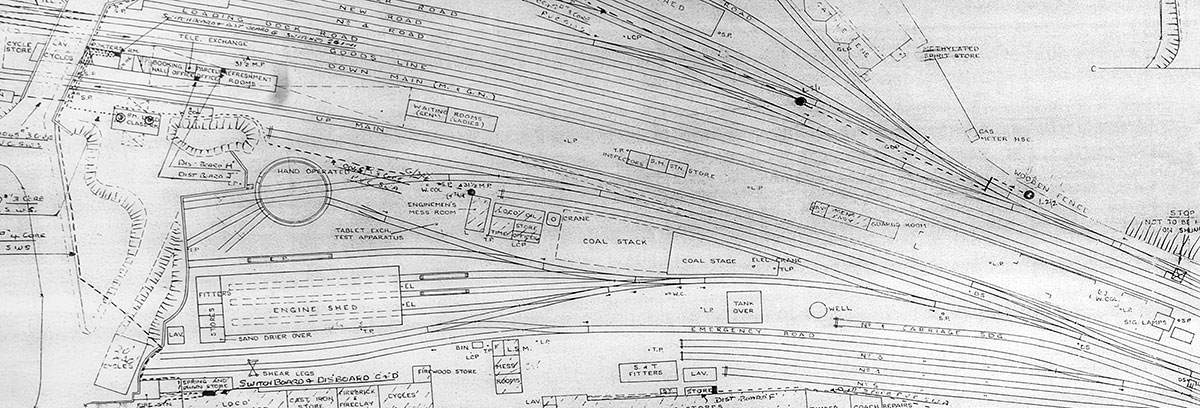
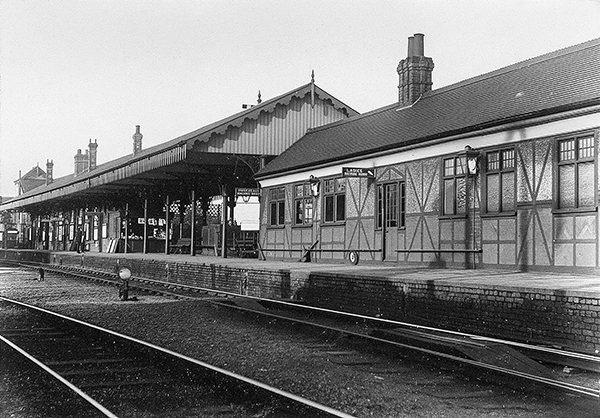
The land on which the station was built on had been donated by Lord Hastings who was in return provided with a specially-appointed waiting room with an adjoining short platform. Other than this private platform, the station was equipped with a single 800 feet island platform with through tracks on either side.
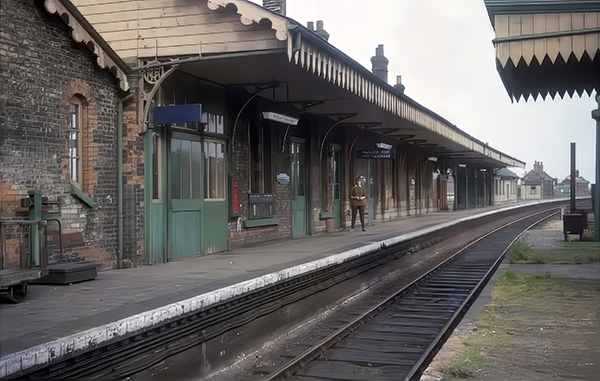
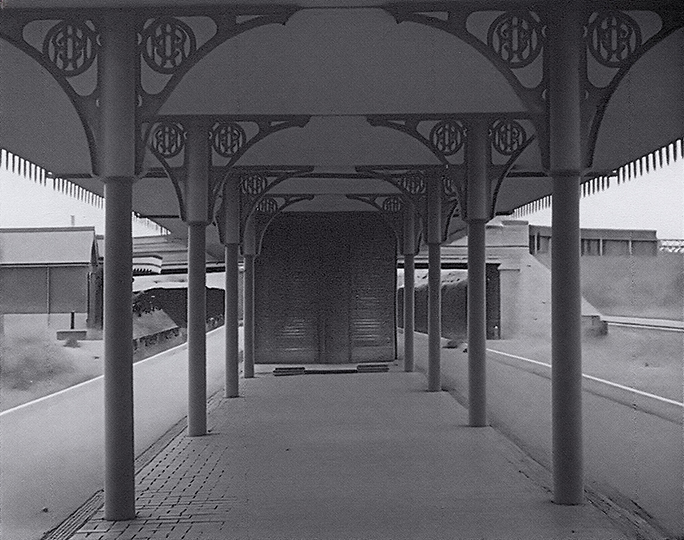
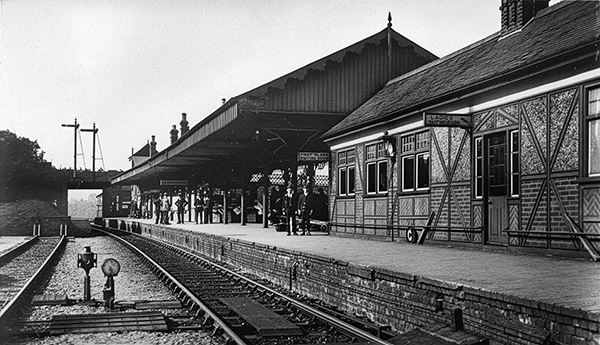
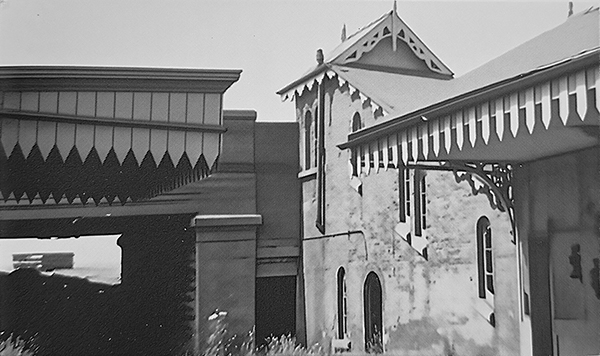
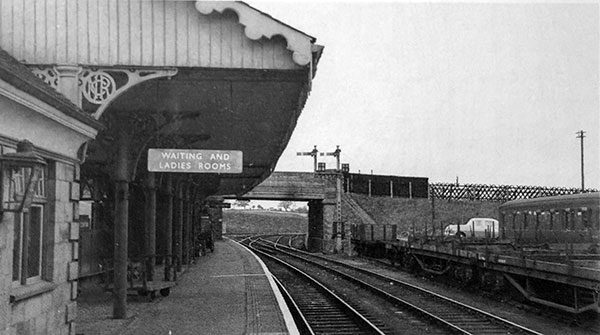
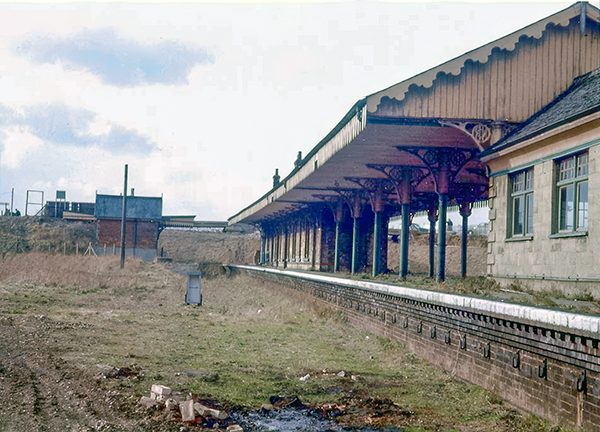
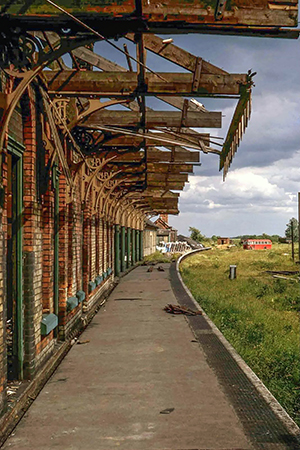
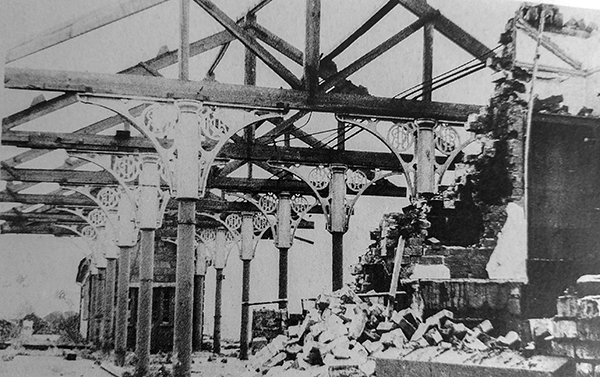
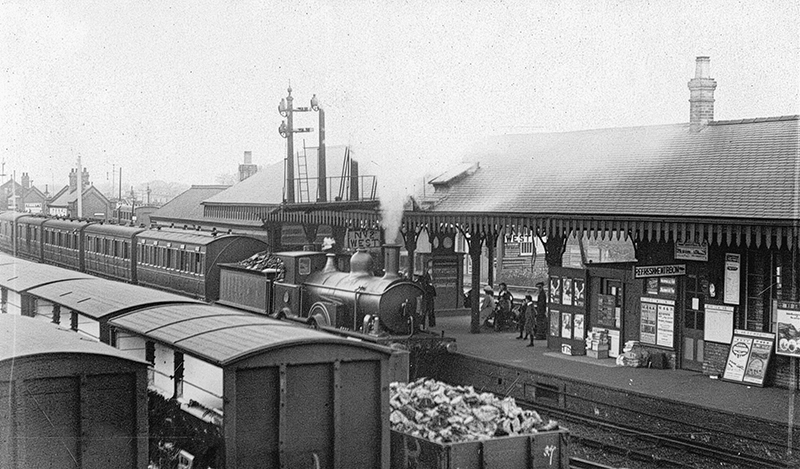
Access to the platform was via a covered staircase which descended from an adjacent road overbridge to reach a long, single-storey station building containing the booking office and refreshment room. At the eastern end of the platform, there was a single-storey brick public waiting room and toilet block, which was subsequently rebuilt with an outer casing of concrete blocks. The main station building was constructed using yellow brickwork, with the exterior woodwork painted in a two-tone green and cream colour when the London & North Eastern Railway took over operation of the M&GN. The platform was largely covered by a long canopy supported by metal spandrels bearing the initials "CNR", a reference to the failed Central Norfolk Railway scheme. A trap door on the platform surface led to the station cellars.
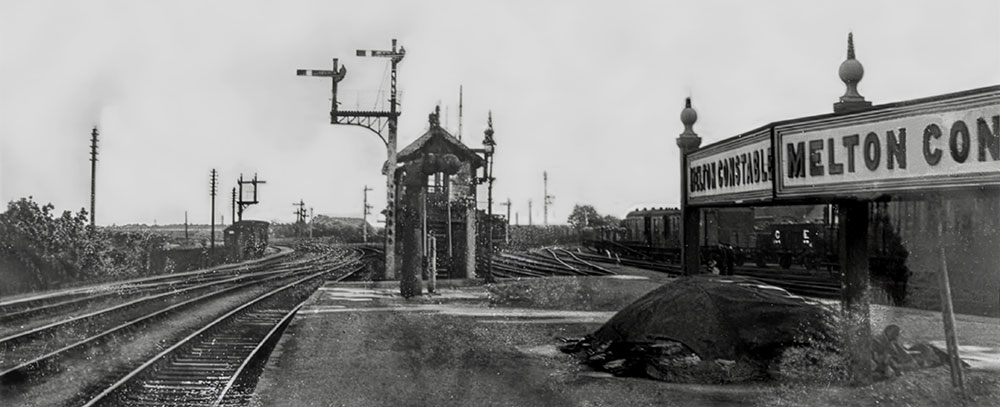
The station and junctions were controlled by two signal boxes at each end of the station and known as "Melton East" and "Melton West" boxes. They controlled typical M&GN somersault signals mounted on square posts, which were in some cases moulded from concrete.
Locomotive Works
The works were situated to the south of the main station buildings and opened in 1883. It was principally a locomotive repair establishment, with the stock accessing the works via a headshunt connection beside the Melton to Norwich line. William Marriott and his workforce carried out several major rebuilding operations at the works, including the reboilering of the M&GN's 4-4-0 and 0-6-0 engines, progressively enlarging them. Up to 12 engines could be housed in the works' three-road engine shed which was situated between the passenger station and the works. Part of the works was dedicated to the large scale production of concrete mouldings which were innovatively used by Marriott in the construction of signals and building blocks. The works closed in 1936 resulting in a significant reduction of activity at Melton Constable.
Decline and closure
Operation of the M&GN was taken over by the London & North Eastern Railway on 1 October 1936 which transferred all locomotive operations to its Stratford works as part of a move to rationalise functions of the Joint system. Melton Constable Works ceased to repair locomotives after this date, but the facilities continued to be used for wagon repairs and the scrapping of redundant rolling stock. Further rationalisation in 1945 left Melton Constable as a wagon sheet works, whilst declining traffic served to highlight the duplication of facilities between the M&GN and other Great Eastern lines. Most of the M&GN closed on 28 February 1959, leaving Melton Constable as the terminus of a branch from Sheringham until 4 April 1964 when it was closed to passengers.
Present and future
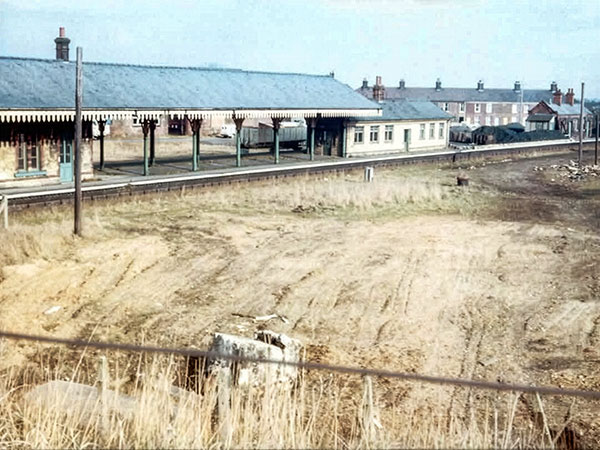
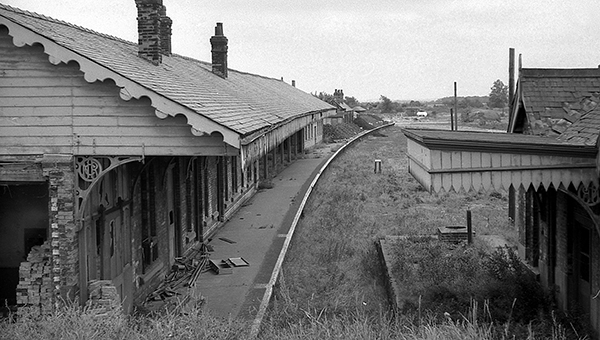
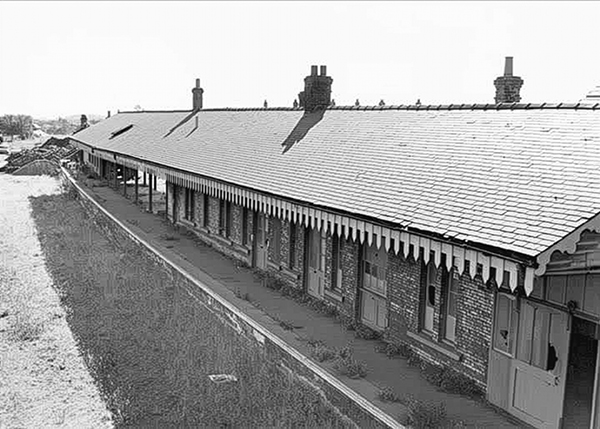
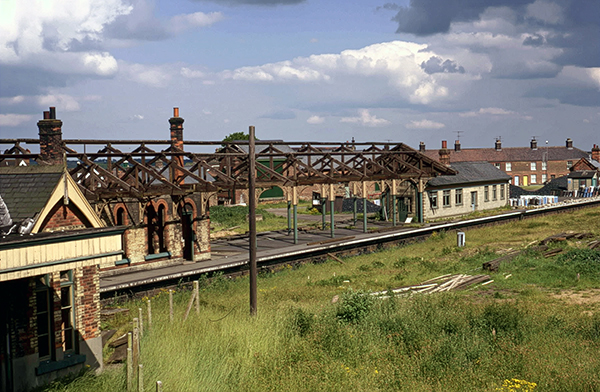
Melton Constable is today a rather smaller village with around 500 inhabitants. The station was demolished in 1971, to be replaced by a telephone exchange. Two of the ornamental CNR (Central Norfolk Railway) spandrels that held up the station roof are incorporated into the bus shelter on the B1354 Briston Road. The land of the old railway works is now an industrial estate and the sidings an artisan bakery, but a number of the old buildings have been retained. A watertower still exists above the factory area and still bears the traces of repaired shrapnel holes sustained during a Second World War air raid.

Wikipedia


White's 1883: Henry Bass, stationmaster
Henry Codling, victualler Hastings Arms Hotel and proprietor of refreshment rooms, Railway station
James Waddington Mann, railway locomotive superintendant
John Rowell, railway foreman
Thomas James Weston, railway goods agent
RAILWAY STATION - Eastern & Midlands Railway (Lynn & Fakenham)

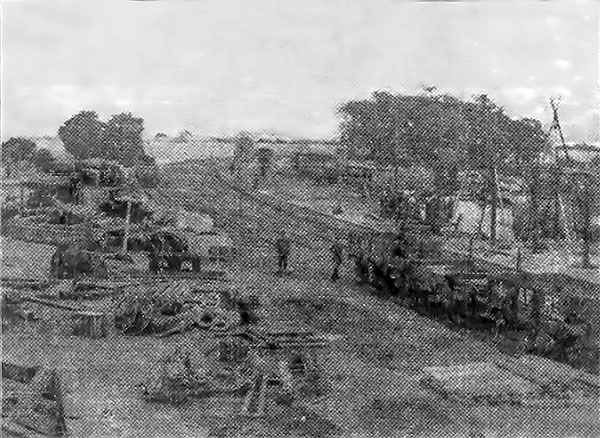
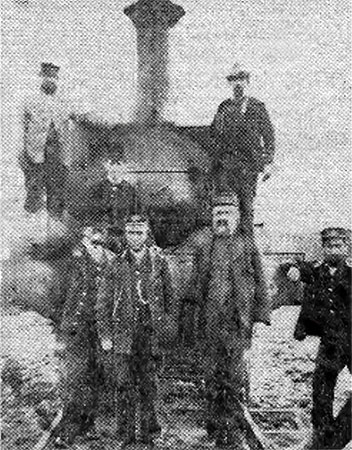
Station Construction 1881 William Marriott and staff 1881
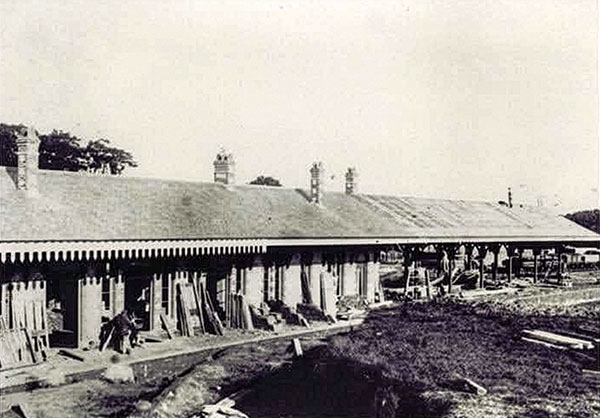
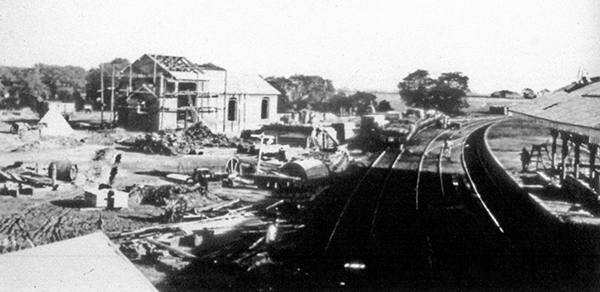
Station construction - 1881
William Marriott and staff - 1881
Above left photo
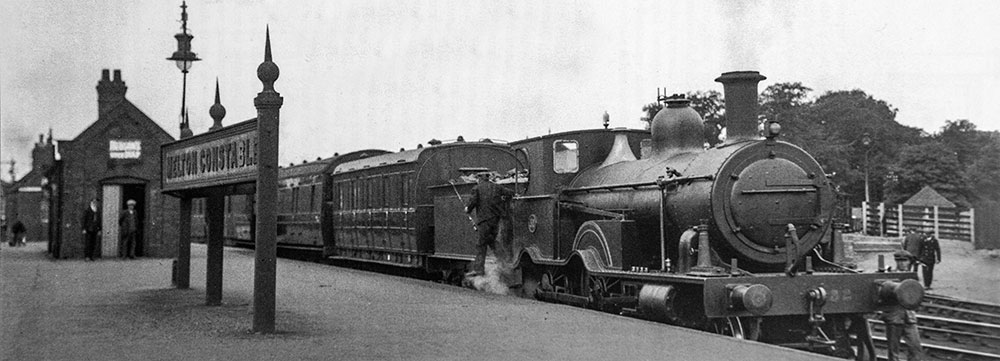
The line to Gt Yarmouth hasnot yet been built. The trucks to the right are signwritten with the Lynn & Fakenham Railway lettering. A signpost is still standing centre left at the old crossroads leading to Briston, Hindolveston, Gunthorpe and Briningham.
Above right photo
An older M&GN engine with l-r standing: Edgar Jay, fireman, Jimmy Waine, driver;
Sitting feet on buffers: William Marriott in top hat
Standing second left: Mr. Johnson, guard and second right, tall with peaked cap: Mr. Belson, first station master.

1881 1881
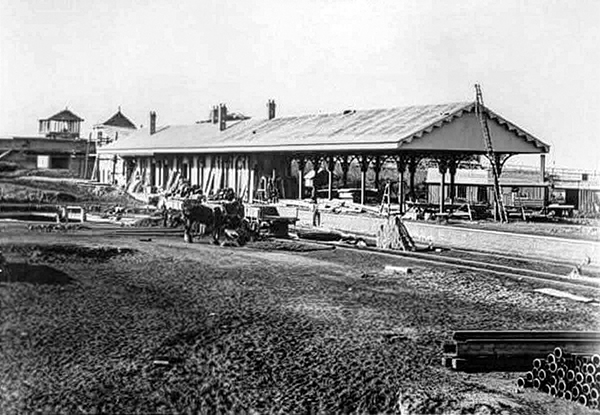
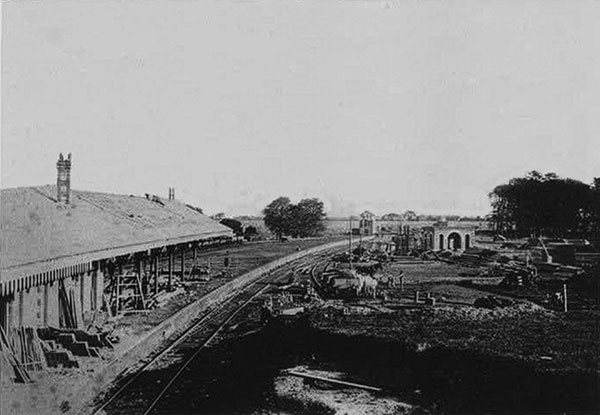
Station construction (note the horse) - 1881
Station and yard construction - 1881

1881 1881
Station construction (note the horse) - 1881
Station and yard construction - 1881

c.1881 1881
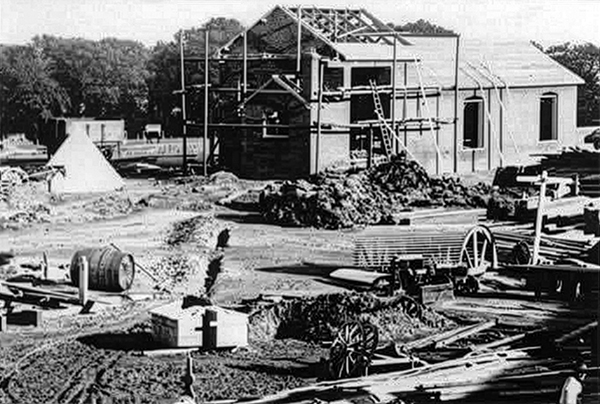
Goods shed construction - 1881
Goods shed construction with the old crossroads signpost still in situ - 1881

Station Entrance Station entrance
Station Entrance on the bridge with steps leading down to the station below

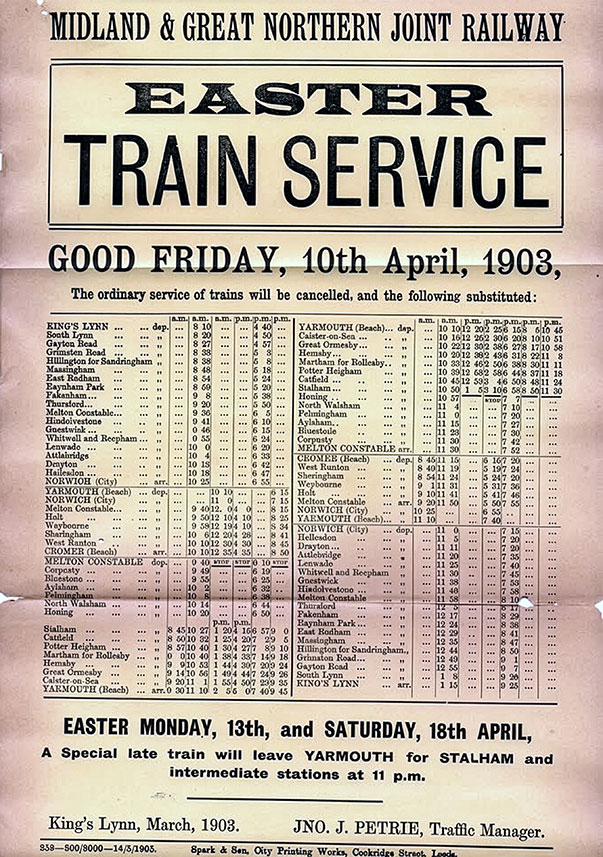
In 1903 up to 86 trains a day were coming into Melton Constable station.


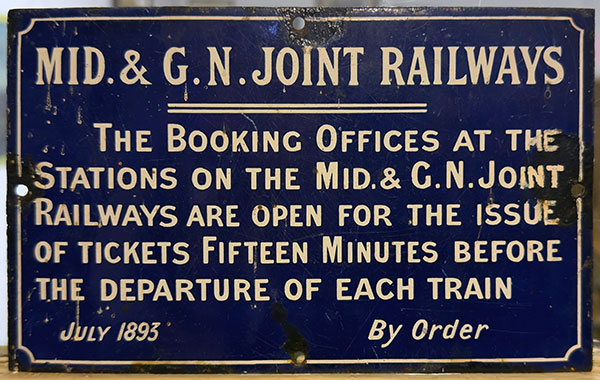
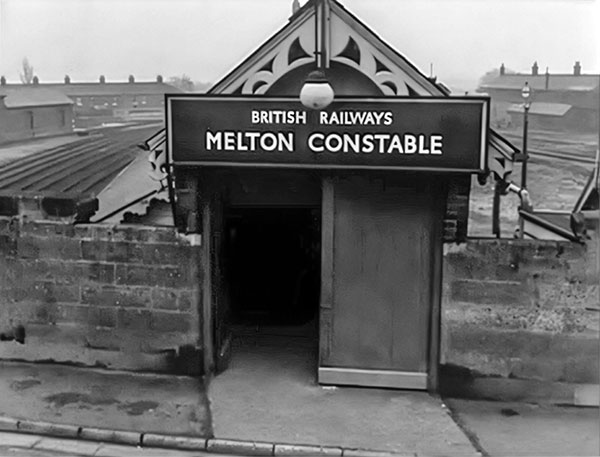
Booking Office sign

Melton Constable station c.1905
The finished station - c.1905
c.1909

1929 16th April 1947
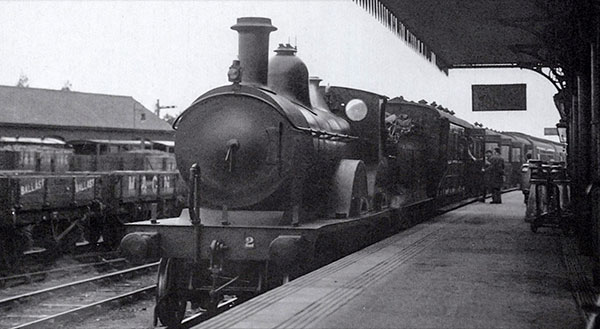
Sharp Stewart Class C 4-4-0 No. 2 - 1929
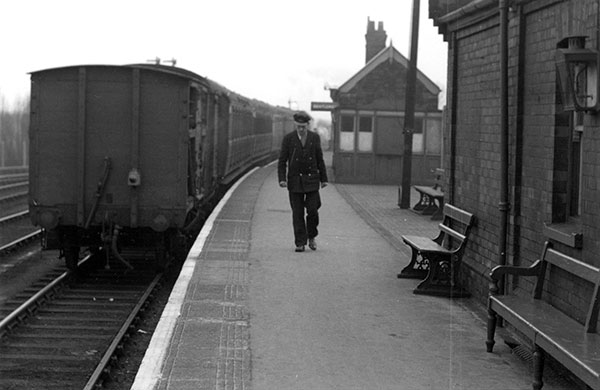
Porter taking a rest - 16th April 1947

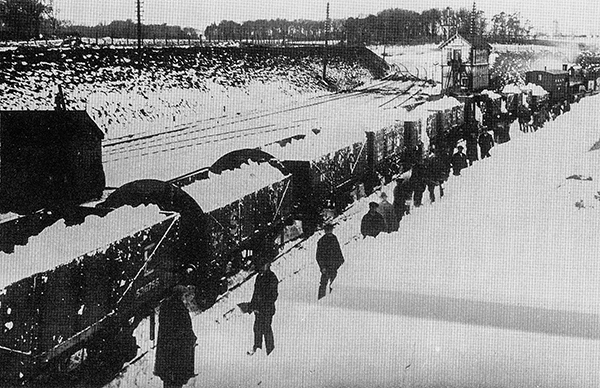
Snow clearing c.1927 Snow in 1947
Snow clearing c.1927
Snow in the winter of 1947

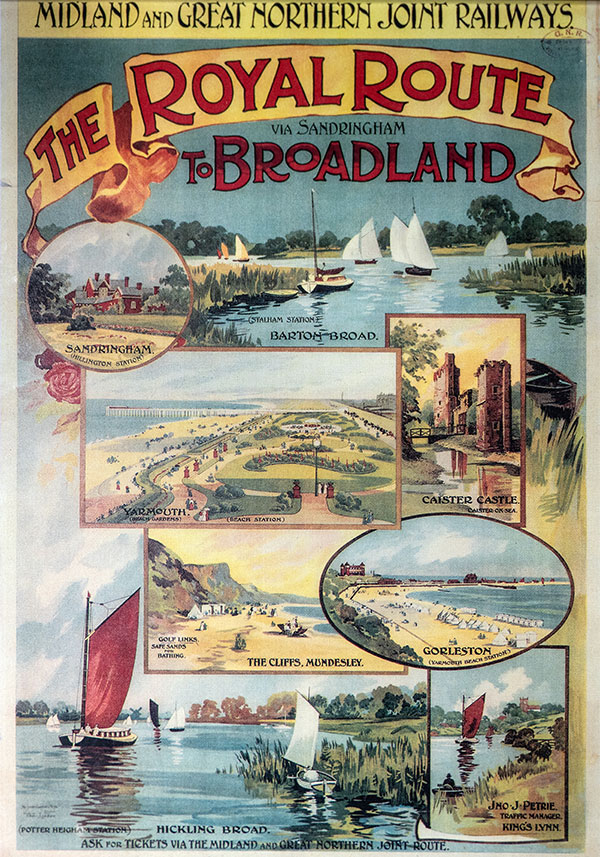
Timetable 1903 M&GN poster

c.1910 c.1915 Samuel Ribbans, porter
c.1910
c.1915
Samuel Ribbans, ticket collector
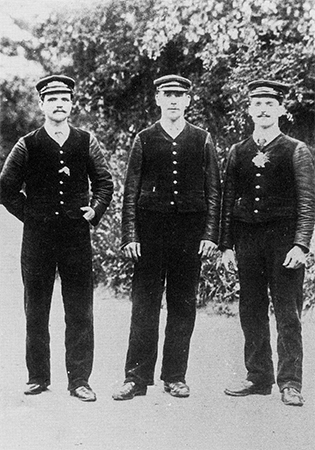
Above left photo
M&GN porters in uniform including flower buttonholes. The porter on the left was Dick Fisher, who was later promoted to Guard and stayed with the Company until he retired. Three of his five sons also spent their working lives on the railway - Dick, Fred and Stanley.
Centre photo
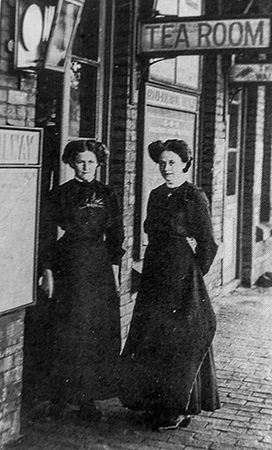
Henry Codling, the licensee of the Hastings Arms managed the refreshment rooms from 1883 after the station opened but the M&GN had taken over by 1900. The above photo shows Alice Morgan and May Fields, who worked in the rooms. When excursion trains stopped at the station, a large tea trolley was wheeled onto the platform to serve drinks to the passengers. The sign behind the Tea Room sign is for the Third Class Waiting Room.
Right photo
Samuel Ribbans, ticket collector is shown outside the ticket office holding his ticket-punch. The green tickets were about 1 inch x 2 inches, they were left whole for a single journey and halved for a return. Tickets were discounted for widows and former M&GN employees.

Refreshment Room Licence Holders

Charles James Nicholson - Sec of Lynn & Fakenham Rlwy
Henry Codling - also Hastings Arms from 1881
Thomas Cheney - also Hastings Arms
Edward William Wells - Secretary of the Midland Railway  William Latta - Secretary of the Great Northern Railway
Eustace Herbert Burrows - Secretary of the Gt Northern Rlwy
George Francis Thurston - Div Gen Manager LNER
James McLaren - Joint Secretary of the LNER
Percy John Dowsett - Secretary of the LNER
William Henry Johnson - Employee of the LNER
Arthur Allen Ryan - Employee of British Railways
William Henry Johnson - Employee of British Railways
Thomas Henry Baker - Employee of British Railways
Sarah Hannah Adams - Licensee on behalf of British Railways

24th August 1881
23rd August 1884
06th July 1896
18th January 1897
02nd September 1901
10th November 1902
09th March 1923
12June 1925
04th March 1938
09th January 1943
31st March 1948
06th May 1949
27th July 1951
07th September 1956


Charles James Nicholson, licensee in 1881 was the Secretary of the Lynn & Fakenham Railway. He was originally born in New South Wales, Australia but was living in Great Yarmouth in 1881.

Henry Codling ran the Hastings_Arms from its beginning and was granted a licence in 1881. He then took on the licence for the Railway Refreshment Room in 1884, followed by Thomas Cheney who took over the licenses for both premises in 1896. Henry Codling was a local man, born in Swanton Novers, while Thomas Cheney had been born in Oxfordshire. They were businessmen rather than railwaymen.

Sarah Hannah Adams born 1907 in Melton Constable took the licence in 1956 under the tenure of British Rail and run the Refreshment Room as Manageress, working with her sister Harriet - see People page

Other people running the Refreshment Room:
Alice Miller was Manageress from 1900 to 1904 and was recorded in the 1901 census as Bar Attendant living in Melton Street.
Alice Morgan and Mrs. Florence Field were Refreshment Room Attendants from 1910 to 1920 .
Jenny Adams and Miss Cecilia Robbins were running the Refreshment Room in the 1950’s.

Nellie English (daughter of William & Rosemary) was the Waiting Room Attendant from 1940 to 1950.


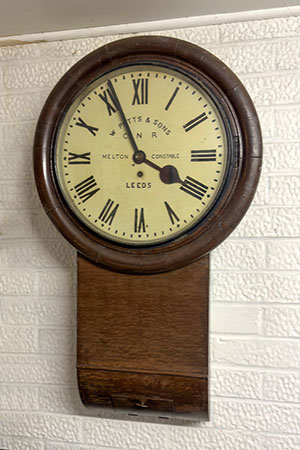
Refreshment Room clock
The original Central Norfolk Railway Refreshment Room clock

White's 1883: Henry Bass, stationmaster
White's 1890: Seth Bastow E&M Railway stationmaster
Kelly's 1892: Seth Bastow E&M Railway stationmaster
Kelly's 1896: Walter William Copland, goods agent and stationmaster M&GN
Kelly's 1900: Walter William Copland, goods agent and stationmaster M&GN
Kelly's 1904: Walter William Copland, goods agent and stationmaster M&GN
Kelly's 1908: Walter William Copland, stationmaster & goods agent M&GN, 14 Melton Street
Kelly's 1912: Walter William Copland, stationmaster & goods agent M&GN, 14 Melton Street
Kelly's 1916: Walter William Copland, stationmaster & goods agent M&GN, 14 Melton Street
March 1919: Walter William Copland, stationmaster, retired
April 1919: Charles James Neeves, stationmaster, commenced
Census: 1921: Charles James Neeves, stationmaster
Kelly's 1922: Charles Neeves, stationmaster & goods agent M&GN, 14 Melton Street
Kelly's 1925: Charles Neeves, stationmaster & goods agent M&GN, 14 Melton Street
Kelly's 1929: Charles Neeves, stationmaster & goods agent M&GN, 14 Melton Street
February 1931: Charles James Neeves, stationmaster, retired
March 1931: David Llewellyn David, stationmaster, commenced
1934: David Llewellyn David, stationmaster
1938: David Llewellyn David, stationmaster
1940: David Llewellyn David, stationmaster
August 1941: David Llewellyn David, stationmaster, retired
1941: Frank Augustine Higson, stationmaster, commenced
1945: Frank Augustine Higson, stationmaster
1947: Frank Augustine Higson, stationmaster
1948: Frank Augustine Higson, stationmaster, retired
1948: Charles John S. Brown, stationmaster, commenced
June 1951: Charles John S. Brown, stationmaster, moved
August 1951: William J. Gardner,stationmaster, commenced
August 1955: William J. Gardner,stationmaster, left
1955: G. Everson, stationmaster - 6 weeks
November 1955: Harold W. Schofield, stationmaster, left
1957: Harold W. Schofield, stationmaster
November 1958: Harold W. Schofield, stationmaster, left
November 1958: M. Eyers, stationmaster, commenced
March 1959: M. Eyers, stationmaster, left
May 1959: D. A. Winn, stationmaster, commenced
September 1960: D. A. Winn, stationmaster, left
November 1960: W. Eric Crofts, stationmaster, commenced
1961: W. Eric Crofts, stationmaster
October 1962: W. Eric Crofts, stationmaster, moved


Charles Neeves retirement
Mr. Charles James Neeves, for twelve years Station Master at Melton Constable, entered into retirement on account of age on February 28th 1931. Mr Neeves commenced his railway career on the LB&SCR as Clerk at Cooksbridge in 1879. After nearly eight years working at various stations on that line, he resigned and served two years in the Post Office, but being fascinated by railways he obtained in 1890 a position on the Eastern & Midlands Railway as Clerk at Massingham. After gaining experience there and at King's Lynn, Mr Neeves was appointed Station Master at Hindolvestone in 1891, and at Martham in 1892. In 1895 he was transferred to the Headquarters Relief Staff on which he served four years, appointments as Station Master at Aylsham and Long Sutton following. In 1919, Mr Neeves was given the Stationmastership of Melton Constable. His thorough and practical knowledge of railway working eminently fitted him for the post and by his retirement the Joint Committee have lost a capable official. He will be very much missed by the public.
On March 25th, in the presence of a representative gathering of all grades, Mr Neeves was presented by Mr David, his successor, with a roll-top desk, subscribed for by a large number of the staff at Head Office, and all over the line. Mr David and other Members of the staff voiced the good wishes of the contributors for the future happiness of Mr and Mrs Neeves, to which the beneficiary suitably responded.
Extract from the LM&SR Magazine - May 1931 - M&GN Circle

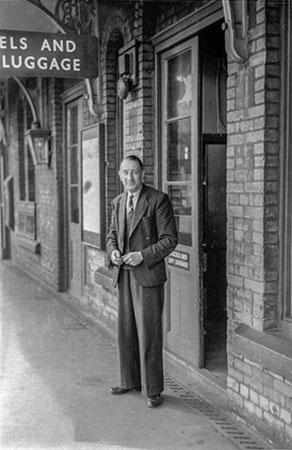
Eric Crofts 4th May 1961
Eric Crofts - 4th May 1961
Above Photo
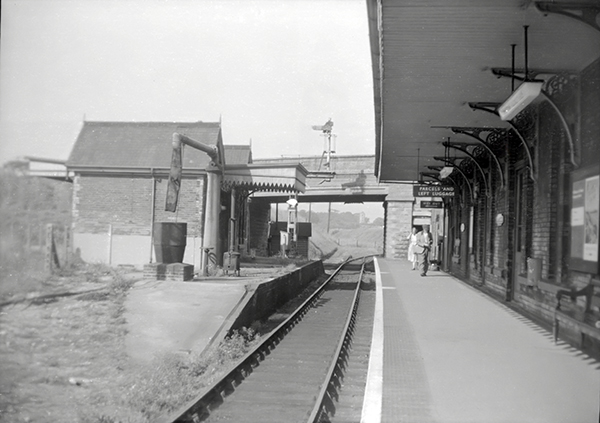
The last M&GN Stationmaster Eric Crofts (1960-1962), outside the Parcels & Left Luggage Office, on the platform. Also seen is a wall-mounted platform lamp and above are the CNR spandrels.
M&GN Circle

1952
Melton Constable station - 1952

Midland Railway style name board
Midland Railway style diamond shaped name board at Melton Constable

Midland Railway style nameboard
Midland Railway style diamond shaped name board at Melton Constable
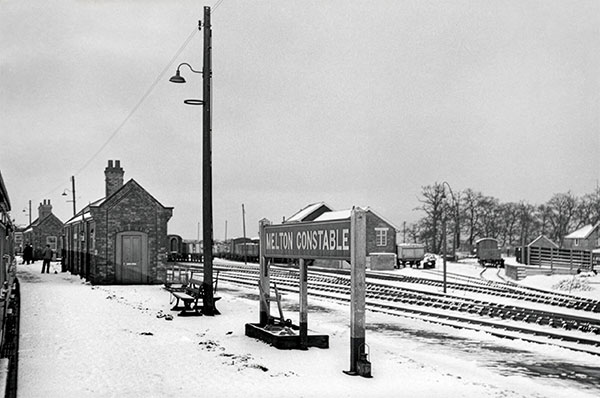
On the platform, the station name boards were in a Midland-type diamond arrangement, facing all four possible directions of running. By 1936, these had been replaced with a single double-sided timber board on concrete posts.
Nigel Digby

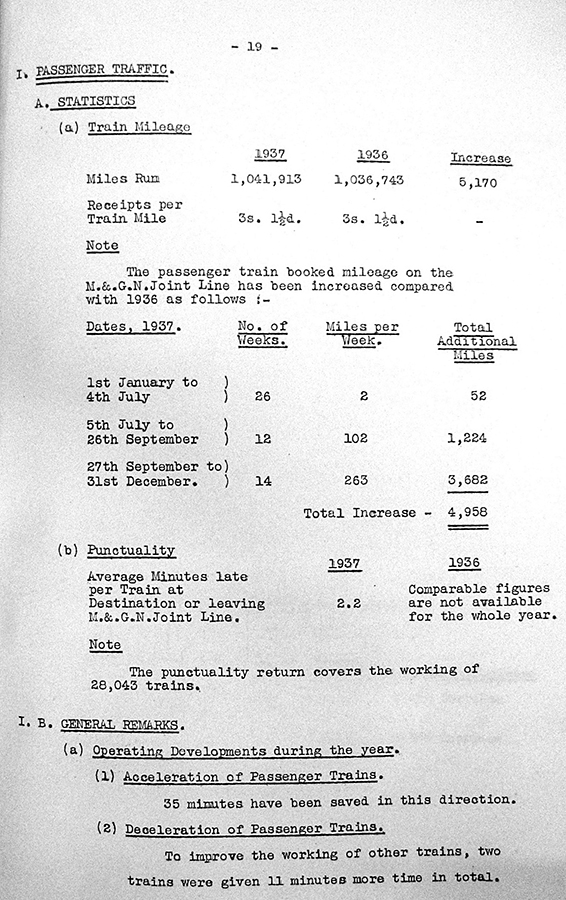
LNER timings 1936-37.jpg Porters
LNER timing report 1936-1937
Station porters

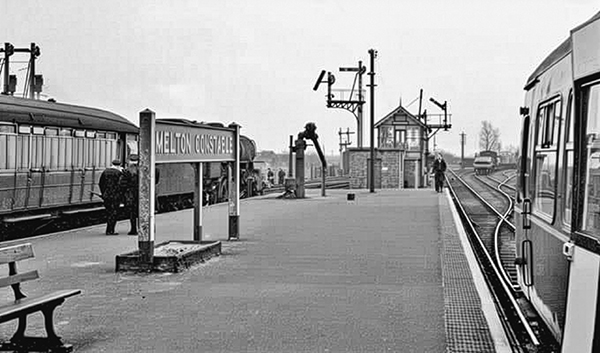
10th January 1959 Platform 20th February 1959
10th January 1959
20th February 1959

Melton Constable platformc.1958

Waiting Room Melton Constable Fluoroescent Light
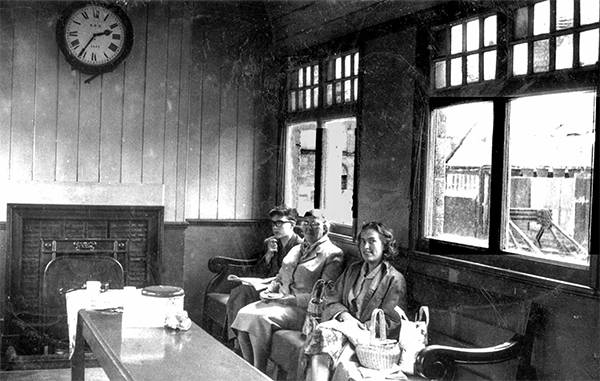
Station waiting room
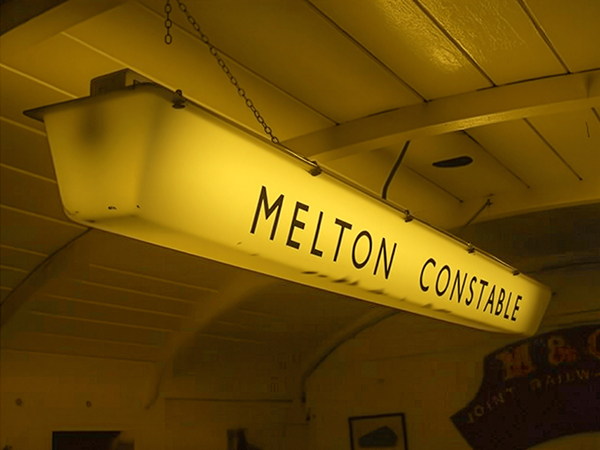
Melton Constable fluorescent light fitting

Lord Hastings waiting room Thursday 12th August 1965 Lord Hastings waiting room Thursday 12th August 1965
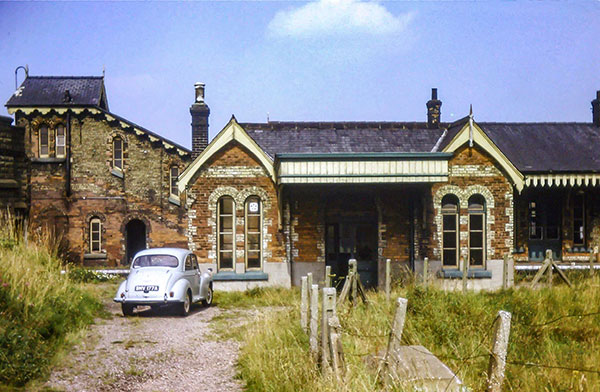
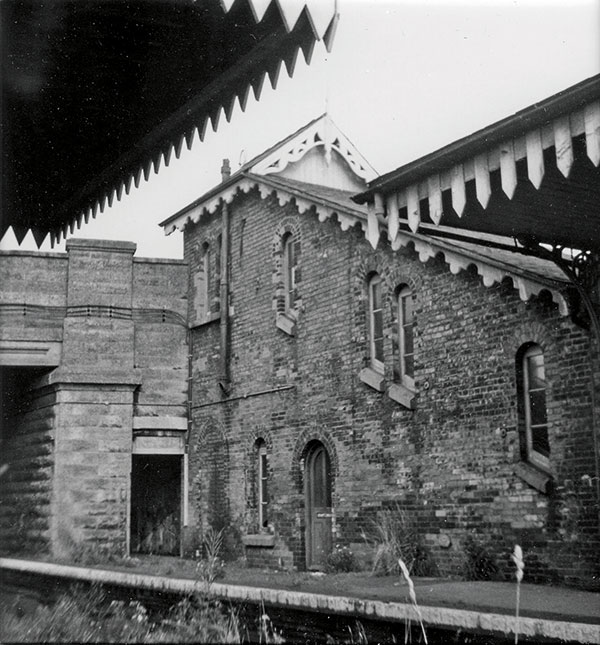
Lord Hastings waiting room entrance with station entrance stairway left - 1965
Lord Hastings waiting room and paltform - Thursday 12th August 1965
When the station was built on Lord Hastings' land, he insisted that he was provided with a private waiting room and platforrm for himself, his family and guests, with its own private entrance from the Hindolveston Road. It was rumoured that there was once an underground passage that connected to the refreshent room on the main platform, in order to access refreshments for his Lordship and his guests.

Station entrance stairway Station entrance
Station entrance stairs from the bridge to the platform
Station entrance from the stairs - far right - c.1962

Station entrance 1962 Entrance stairway c.1972
Station entrance - 1962
Station entrance - c.1972
Photo - HJ Jackson

May 1952
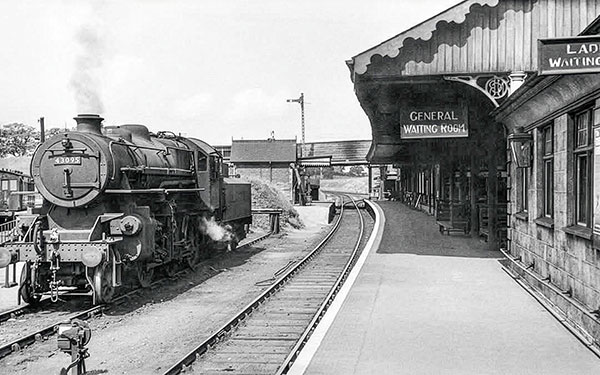
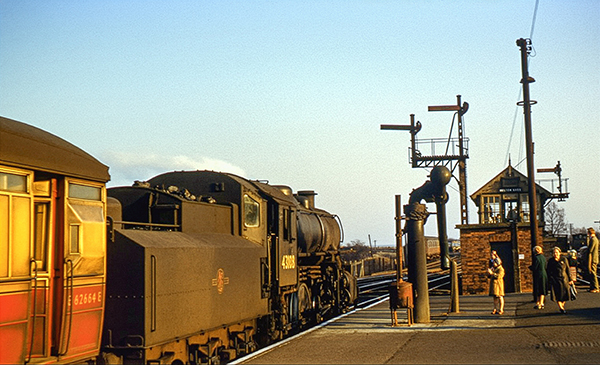
Ivatt 4MT 2-6-0 no. 43095 simmering quietly beside the down platform - May 1952

Express train Platform c.1955
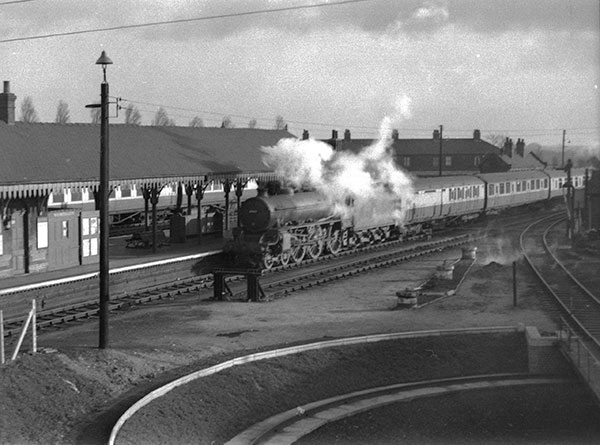
Express train with a large 4-6-0 BR locomotive
Melton Constable platform c.1955

c.1958 1959
c.1958

1959


1956 28th February 1959
1956
Kings Lynn - Gt. Yarmouth closure day - 28th February 1959

28th February 1959 99 Melton Constable 28th February 1959
Closure day of the line from Kings Lynn and Fakenham to Aylsham and Gt. Yarmouth - 28th February 1959
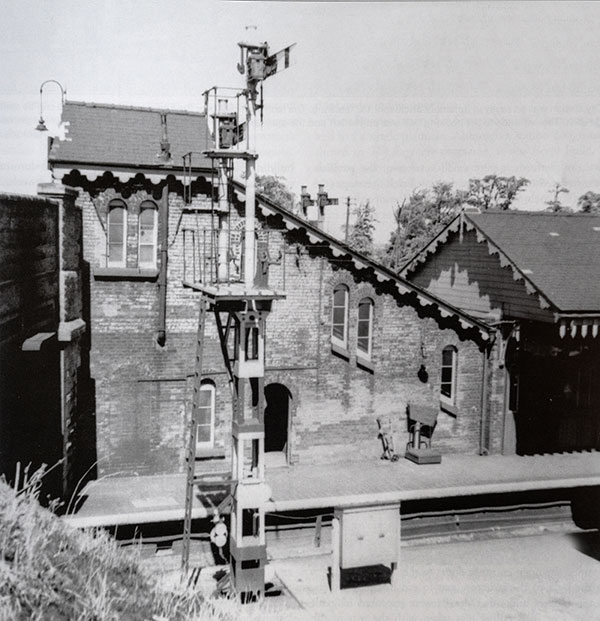
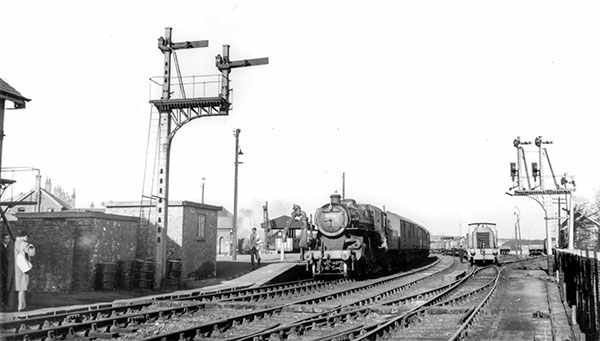
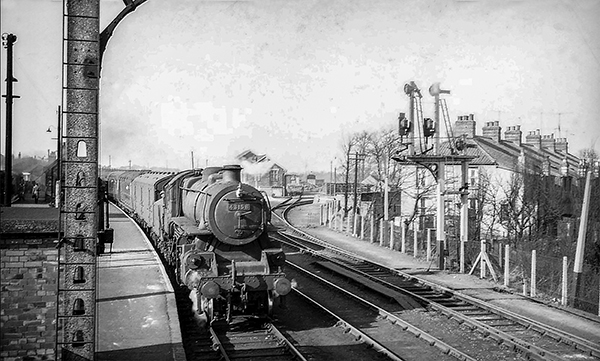
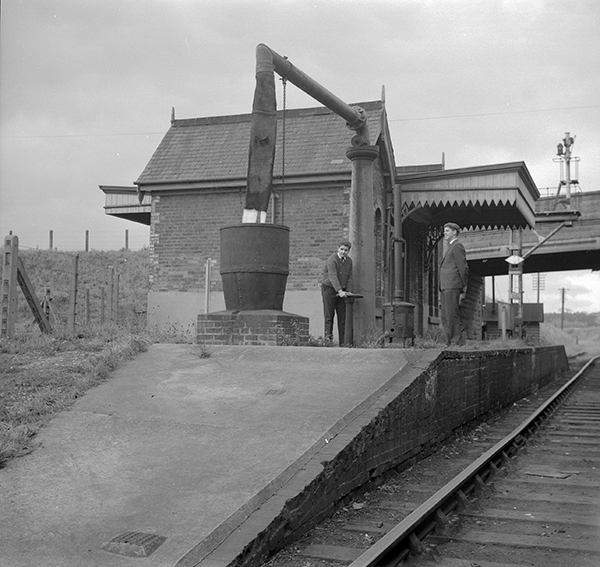
The above two photos show two different Ivatt 2-6-0 4MTs waiting to depart on the last day of running from Kings Lynn to Great Yarmouth. Both photos show a typical William Marriott style concrete signal gantry post at the end of the platform. The left hand photo shows the siding running up to the goods shed and the end of Astley Terrace behind the fence. The right hand photo shows the water hose for tender filling with a small coal stove attached to prevent freezing.

M&GN Station Map 29th May 1959
M&GN Closure Map - 29th May 1959

M&GN Station Map 29th May 1959
M&GN Closure Map - 29th May 1959

Melton Constable platforms Platform
Willie Weston operates the tender water hose watched by John Bill in front of
Lord Hastings waiting room - c.1961
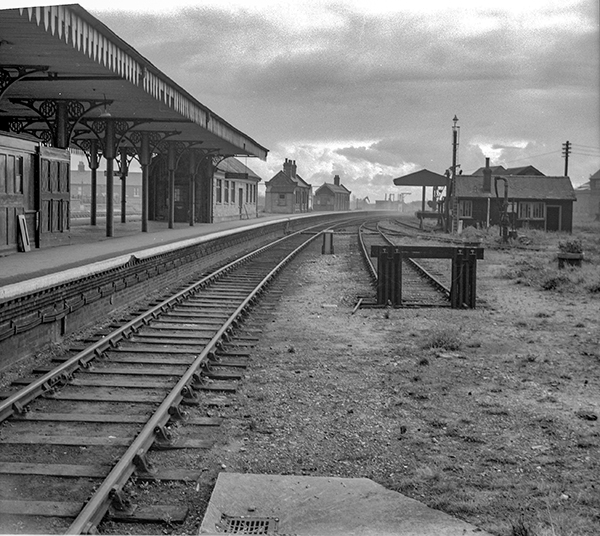
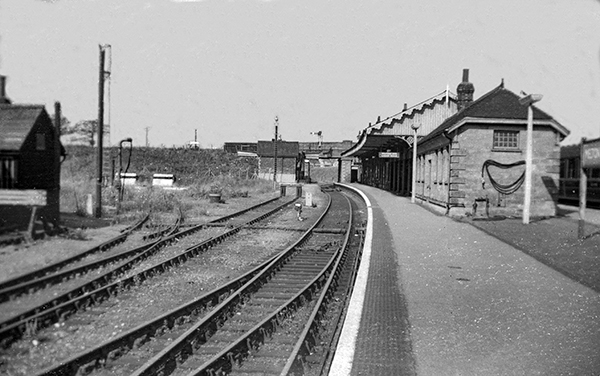
Much of Melton Constable's 800 foot platform is shown in this view

4th May 1961 4th May 1961
Lifted line to Gt Yarmouth clearly showing; Norwich line to the right - 4th May 1961
Truncated Norwich line - 4th May 1961
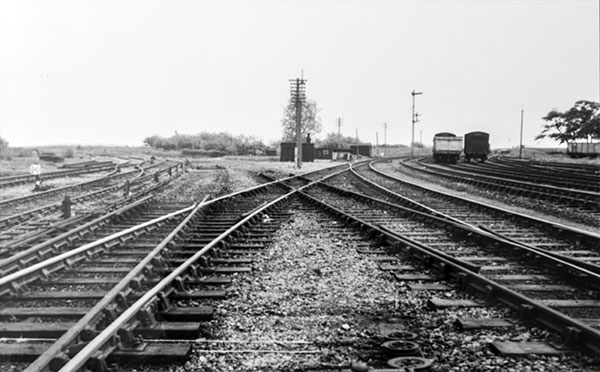
Above left photo
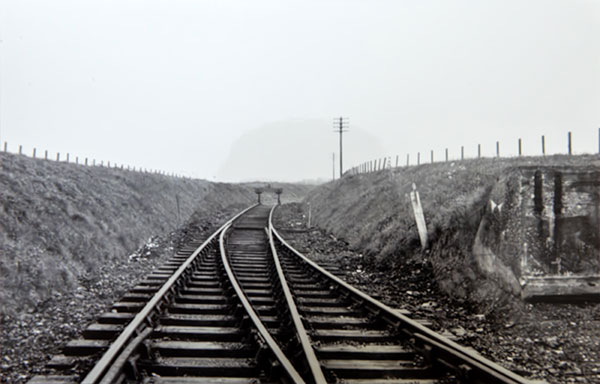
At the East end of Melton Constable Station, these are the remains of the line to Yarmouth, from the centre of the junction. The trackbed curves round to the left, cut just short of the junction points. The Engineers' Sidings are on the extreme left, with the front view of a LNER revolving disc signal. Beyond the angle of the junction is a tarred wooden Permanent Way Hut, adjacent to which, on the right is the Hut for the Engineers' Rail Motor Trolley. The Norwich single line facing points are on the right, protected by the Up Home Signal, a CBT on a tall concrete post - set on a left hand bracket is a Miniature 'T' CBT Calling-on arm. The Shunt Sidings leading from the Works are on the extreme right, with Vans and Mineral Wagons standing.
Right photo
The new 'end of the line' at the Melton Constable end of the line to Norwich, the Themelthorpe Spur being now opened and the track in between lifted. The former single line facing points are now hand-lever operated, with the new buffers in the Cutting in the centre. On the right is a concrete gradient post and the solid cement buffer stops at the end of the Works Sidings.
M&GN Circle

c.1960 c.1962
c.1960
c.1962

Melton Constable DMU Melton Constable DMU
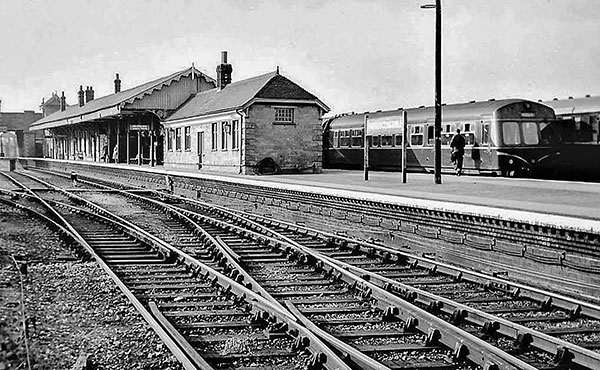
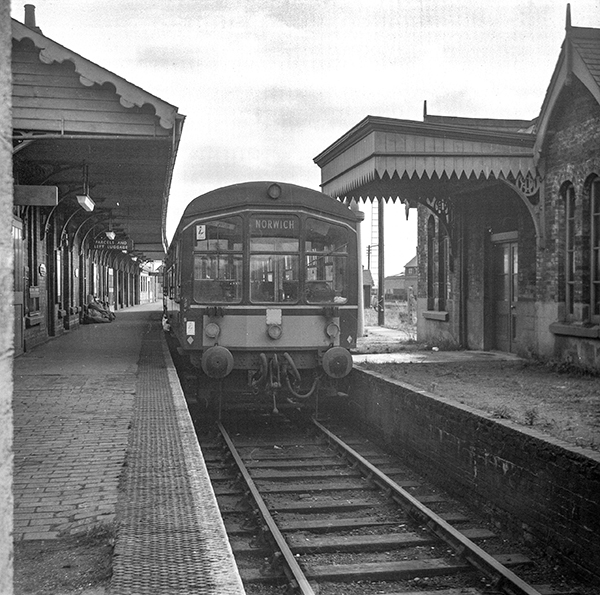
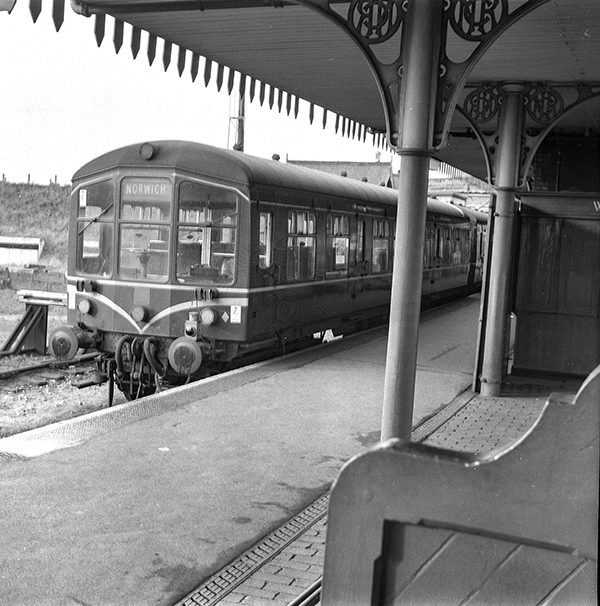
Norwich DMU standing at Melton Constable platform - c.1962

c.1962 c.1964
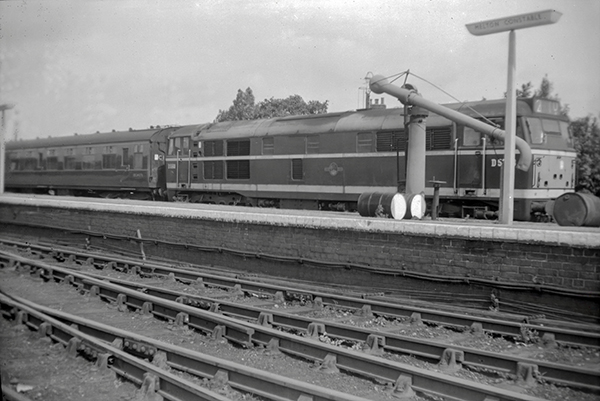
Brush Type 2 D5568 - now preserved at the North Norfolk Railway - c.1962
One of the last trains at the station - 1964

23.04 4th April 1964
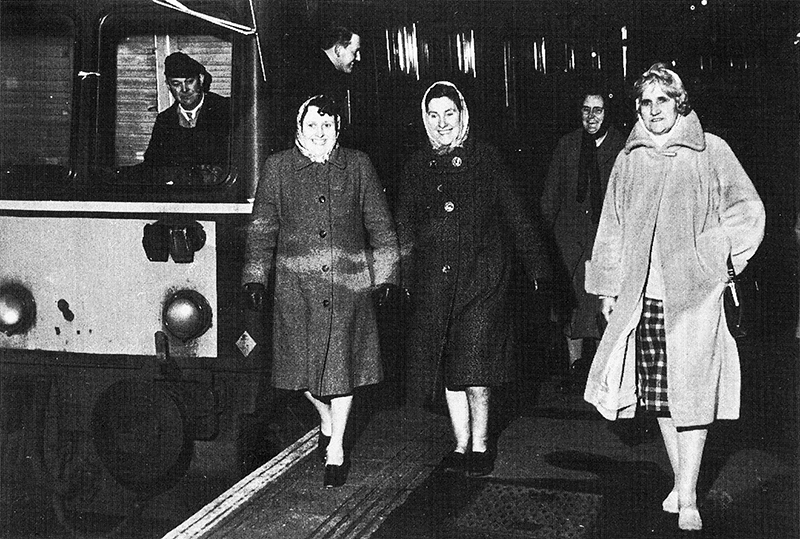
Last passenger train at Melton Constable - the 23.04 from Sheringham on 4th April 1964
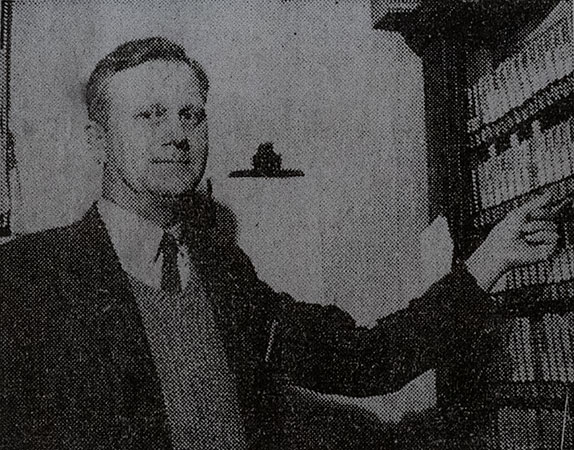
The Driver is Ernie Stapleton and Station Master, Harold Drewery is standing in the train doorway. The Guard for the journey was Robert Jones. Pictured on the platform are Mrs. S. Kirk, Mrs. Colman, Mrs. Harper and Mrs. G. Eke.

4th April 1964 4th April 1964 4th April 1964
Ernie Stapleton - 4th April 1964
Ernest G. Graveling - 4th April 1964
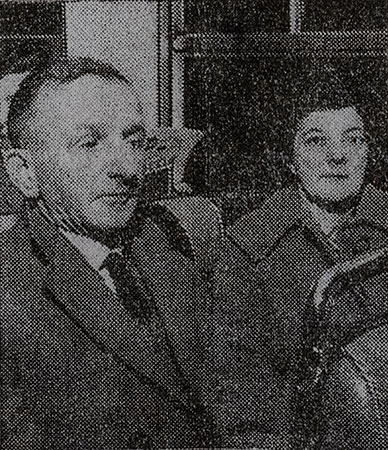
Mr. & Mrs. R. Eggleton - 4th April 1964
Above left photo
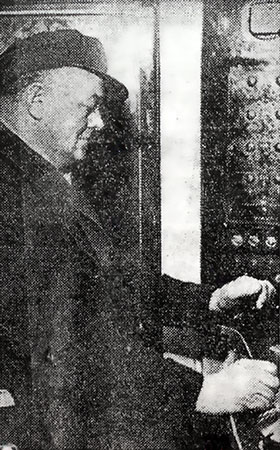
Ernie Stapleton driving the last train from Sheringham to Melton Constable on Saturday 4th April 1964.
Centre photo
Mr. Ernest G. Graveling selling tickets for the last train to leave Melton Constable to Sheringham on Saturday 4th April 1964. Mr. Graveling had been with the railways for 16 years.
Right photo
The last return tickets from Melton Constable to Sheringham were bought by Mr. & Mrs. R. Eggleton of Briston.
Eastern Daily Press - Monday 6th April 1964

Ghost Train leaves deserted Melton Constable

The passenger rail service came to an end at Melton Constable railway station at precisely 11.4 p.m. - dead on time - with a few bangs and a whimper, on Saturday.
The bangs were a few odd detonators placed on the line and a long drawn-out whimper came from the whistle of the last train from Sheringham as it slowly ground to a halt in Melton Constable station.
The final rites were conducted on the platform in an atmosphere which was more like a Hollywood setting than anything else, with people flitting in and out of the glare of the strong television camera lights like so many phantoms, ghosts from the past - of the days when Melton Constable used to be called the "Crewe of North Norfolk."

Biting Wind

One clerk expressed a hope that freight would keep the station open. You might say that hope springs eternal. The passenger service has gone and the auxiliary railway factories on the site have either gone or are going. Melton Constable is no longer a "Crewe" but a deserted village, or one of those "dying villages" we have heard so much about in the last year or two. That seems to be the immediate unattractive future prospect. There appeared to be as many television men, commentators and photographers and electricians as there were sight-seeing members of the public waiting to see the last of the line. Women were waiting in small groups, huddled together trying to keep warm in the teeth of a biting wind sweeping on from the North Sea.

What Now?

Outwardly, faces appeared anything but despondent and gloomy people were laughing and joking about it - for the railways have always been a butt for jesting. For young people it was a game. A joy ride to Sheringham and back. A night out. But underneath it all there were searching questions at the back of people's minds.
One said, "What do we do now? I'd never have believed it."
There were cheers and waves from the young people as the train came in. The women tried to smile and wave back. It was a brave effort.
Driver Ernest Stapleton jumped down from his cabin. "That's it," he said briefly, “That’s the last.” The guard, Mr. Robert Jones, looked thoughtful, sad-eyed. He is in his 50th year with the railway.

Handbells

For the record, it was a former railwayman, Mr. Reginald Eggleton, of Briston, who bought the last ticket at Melton Constable for himself and his wife for the last trip to Sheringham. The train pulled out at 8.24 p.m. Mr. Eggleton became redundant when the Melton Constable goods depot closed.
Included in those on the outward bound trip were four pupils from Gresham's School, Holt, who had their handbells with them. They were Paul Cattermole (conductor), Benedick Young, Richard Bower, Peter Mackley. They rang “Plain Bob Doubles."
One of the youngest to buy a ticket was 14-year-old Christine Gamblin, on holiday with her grandmother at Melton Constable.

At Sheringham
When a reporter boarded the last train at Sheringham there were several passengers, the majority of them young people returning from Cromer after their Saturday night out.
They seemed to accept quite calmly the fact that it was the last train bound for Melton Constable and there were no high spirits. In fact it might well have been any other train on which they were travelling and not one which was recording a historic moment.
Fog detonators went off as the train pulled out of Holt station. They had been placed there by railway officials.
Mr. Herbert Linkhorn, of Weybourne. bemoaned the loss of the service. He said several people living at Weybourne relied on the train to get to work at Sheringham. "They will have to bike to work now." he said, adding that there were only four buses a week at Weybourne.
Many of the young people said they were sorry to see the end of the service and complained that there were not enough late buses to replace the trains.
"It will mean we shall have to leave the pictures early to catch the last bus home," said one youth.
Mr. and Mrs. R. Dawson, of Holt, thought it was a sad occasion. Trains were more comfortable than other forms of transport, although they were hoping to have their own transport soon. "I shall miss the train for work." said Mr. Dawson.

Enthusiasts

The Sheringham station master, Mr. J. F. Wright, said that several railway enthusiasts had been taking pictures at the station on Saturday and some had written to him asking if they could buy old unused railway tickets for their collections.
At the end of the line, the cameras ceased to whirr. The TV men packed their gear, passengers and onlookers departed, and then the train started on its very last trip along the line, to Cromer to go back into service again. At the controls was Driver Donald Finch, 46 years on the railway, who lives at 26, Hilary Avenue, Norwich. The guard was Mr. C. Brighton, of Tuckswood, Norwich.
Silently it moved out, slowly it went. like a ghost departing, dimly lit. You could have called it the Melton Constable-Sheringham ghost train. No passengers on board this time and no more passenger trains for Melton Constable.
Eastern Daily Press - Monday 6th April 1964


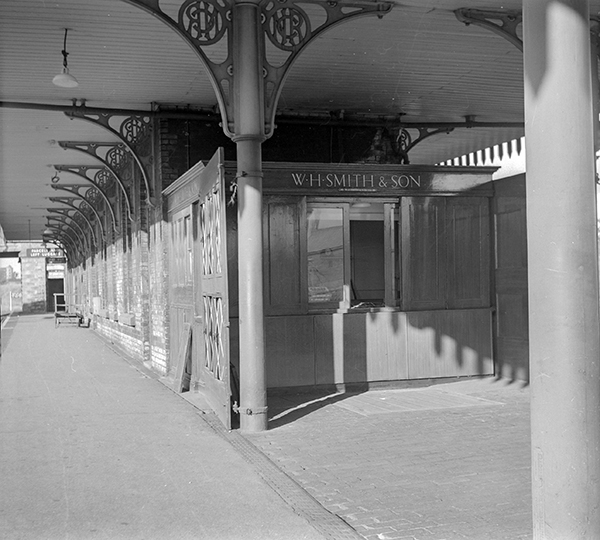
WH Smith
WH Smith's bookstall operating from before 1896 until closure
c.1921The station's cellar entrance trapdoors are open - underfilling of the bridge started - c.1971
Present and future
As a former relief manager on WH Smiths railway station bookstalls (from 1968-72) I can tell you that probably only 4 stalls in the whole of East Anglia were actually profitable. When the contract expired in 1972 WHS happily closed the vast majority of them very rapidly, I know because it was my job to do the final shutdowns. Each stall had a full time manager, plus usually one other full timer, and was manned otherwise by a series of part time staff. They were open very early in the morning, usually around 6 am and closed around 5.30 pm. Most had local newspaper rounds in their locality. Some opened on Sundays too, a limited opening time. The weekly turnover of some of the stalls mostly didnt cover the managers salary. Before closure I did holiday relief for the managers, and worked a 6 day week, usually living in the Station Hotel or similar. Because all my food and travel expenses were covered I rarely spent my wages and saved quite a bit!!
Les Smith

c.1967 c.1970
17th July 1967
Bridge underfill completed with bridge parapet remaining - c.1970

c.1970 c.1970
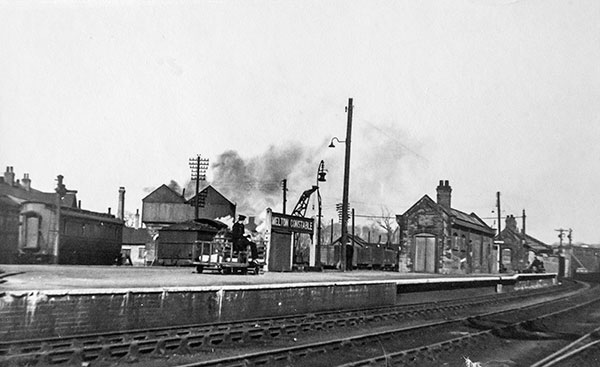
Station lying derelict with coal piled on the platform - c.1970

May 1970
Turntable site and platform - May 1970

1971 1971
Canopy demolition in progress - 1971

1971
Station demolition - 1971
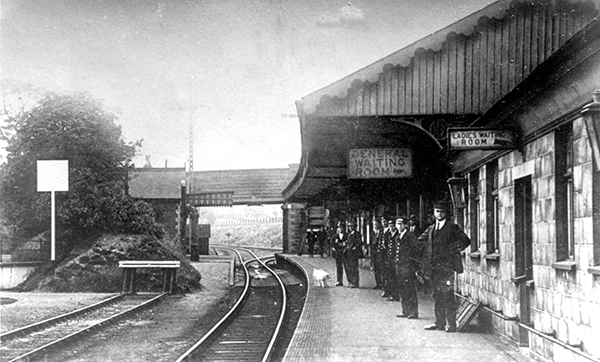
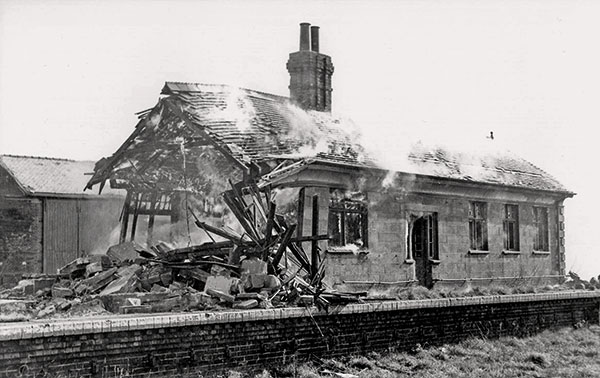
Ladies waiting room fire 1972
Ladies waiting room demolition by fire - 1972
Photo - JA Jackson


November 1972 November 1972
November 1972
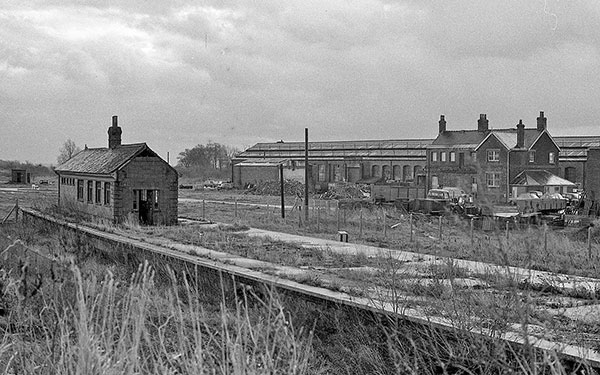
Above left photo
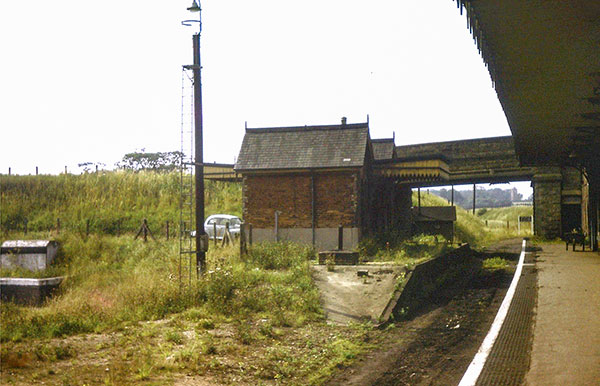
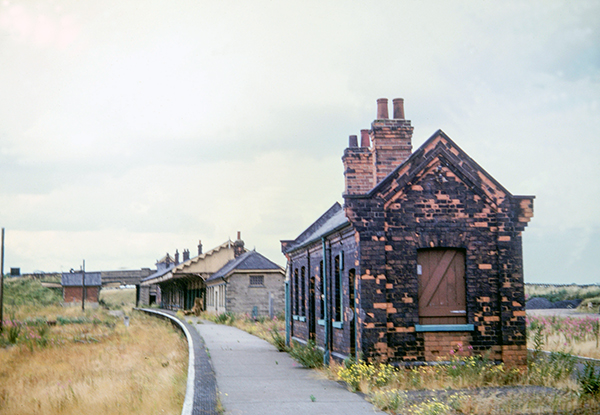
The view from the new road showing the Station Master's / Inspector's / Telegraph Office still standing on the truncated platform. Most of the office block has been demolished and all the yard track has long gone.
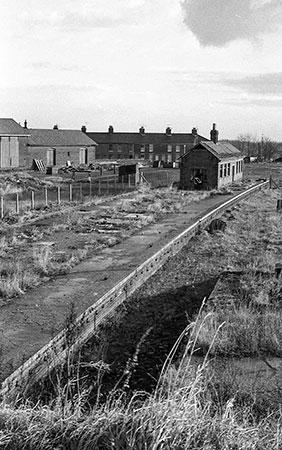
Above right photo
Lord Hasting's platform on the right and to the left is the goods shed with Astley Terrace behind.

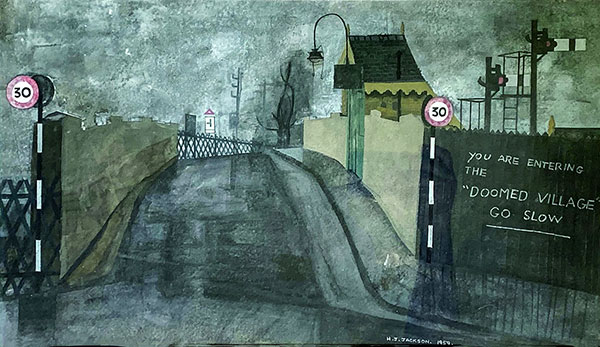
Morning after closure painting
'Morning after closure' painting by H. J. Jackson - 1959

Melton Constable
6th August 1880: Lynn & Fakenham Railway began services from King's Lynn to Fakenham

10th May 1881: First track laid at Melton Constable

January 1882: Melton Constable station opened

December 1882: Extension to Norwich City opened

1st January 1883:
The Lynn & Fakenham Railwaythe Yarmouth & North Norfolk Light Railway and other smaller companies merged to form the Eastern & Midlands Railway

5th April 1883: Extension to North Walsham opened

1883: Railway works opened for heavy repairs after the closure of the works at Gt Yarmouth and Fakenham

1st October 1884: Line to Holt opened

16th June 1887: Line to Sheringham and Cromer Beach opened

1st July 1893:
The Eastern & Midlands Railway taken over by the Great Northern Railway and the Midland Railway to form the Midland & Great Northern Joint Railway

1st October 1936: M&GN was taken over by the London & North Eastern Railway

October 1936: Melton Constable Works closed

28th February 1959: Passenger traffic ceased from Kings Lynn, Norwich and Gt. Yarmouth, just leaving Sheringham

October 1959: Turntable removed and taken to Kings Cross

6th April 1964: All passenger traffic ceased

December 1964: All freight traffic ceased

1971: Melton Constable station demolished


If you have any memories, anecdotes or photos please let us know and we may be able to use them to update the site. By all means email or telephone 07836 675369.


Copyright © Jonathan Neville 2025
Top of Page