Melton Constable History

Home

Railway History

WWl
Engineering Work

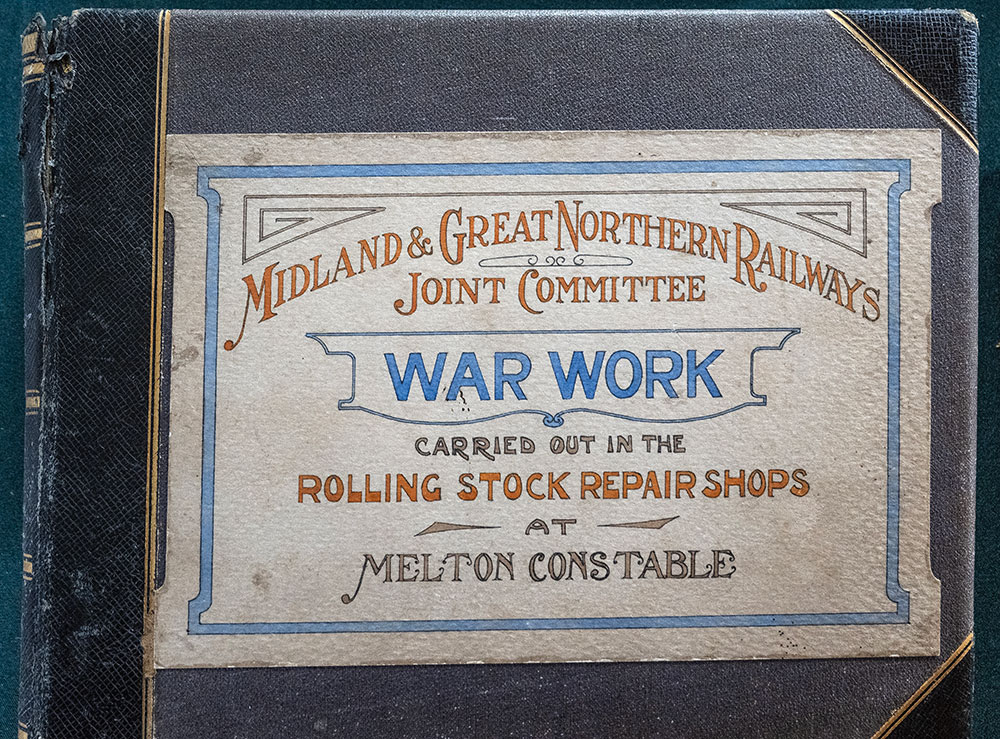
War Work album

A considerable amount of engineering work was subcontracted to Melton Constable during the first World War and some photographs showing parts made are shown below.


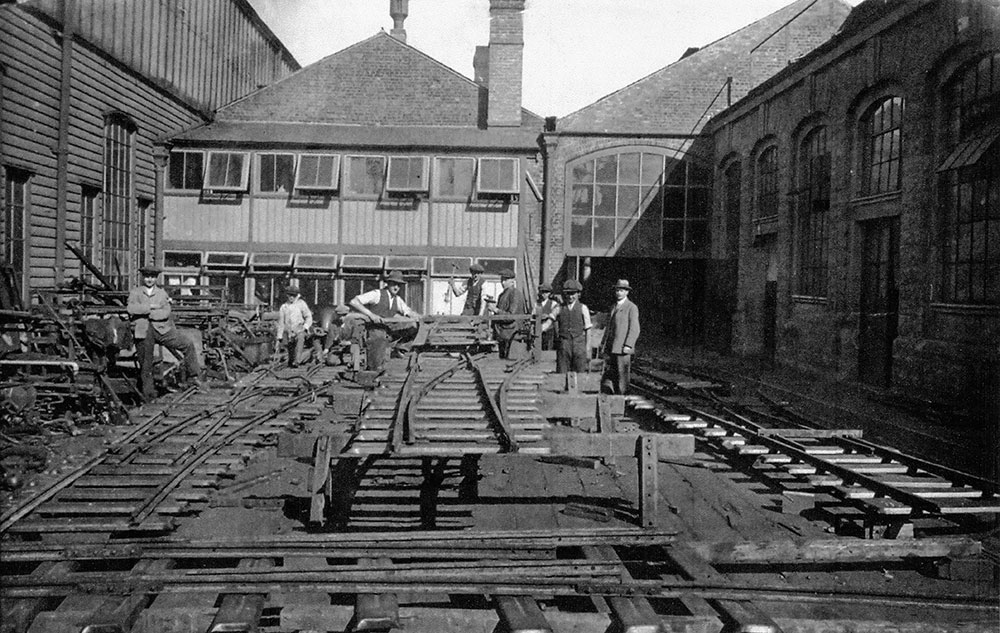
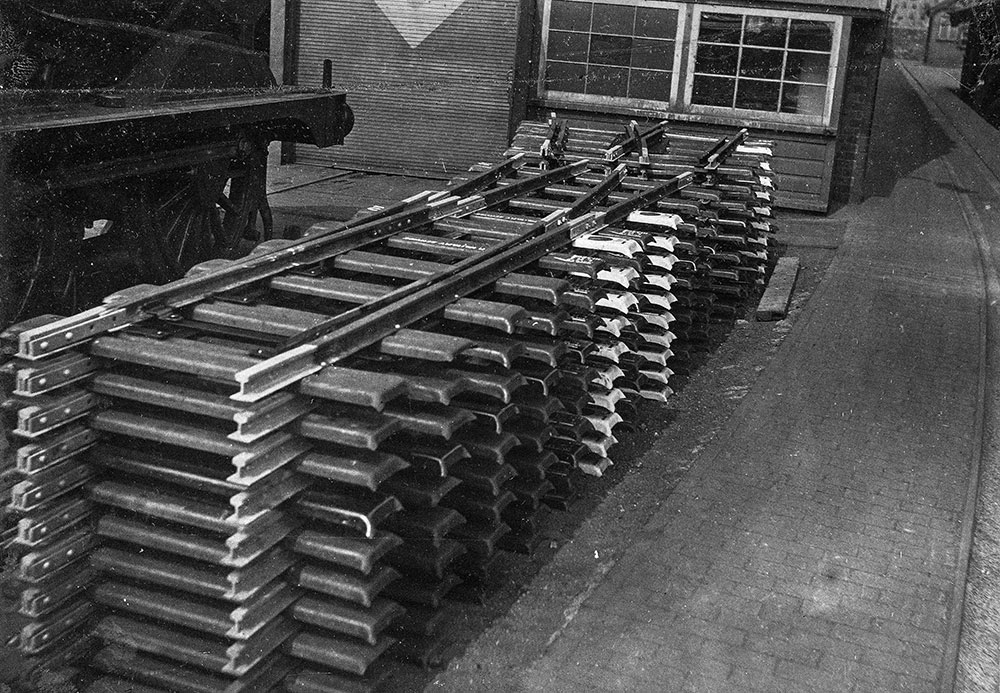
Work direct for the war effort comprised 30,000 H.E. shell noses, great quantities of forgings of all kinds, shell plant and thousands of rectification base plates for 18-pounder 4.5 in and 6 in shells. They also made several hundred 2 foot gauge light railway turnouts and lengths of track.
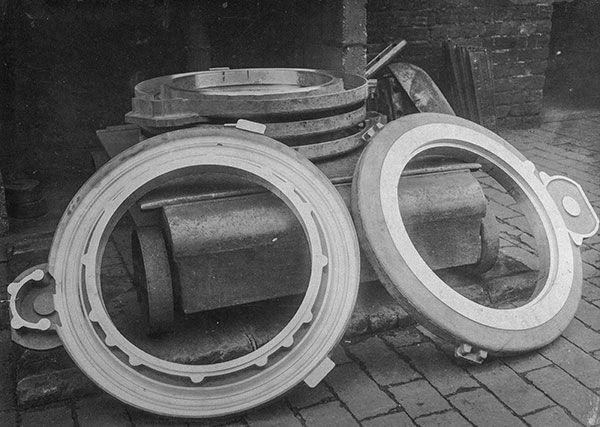
The non-ferrous foundry produced hundreds of castings for searchlight projectors and their base rings. Travelling slide rests for shell cases were produced in the tool-room. They also made roller bearings and parts for aircraft construction.
National Railway Museum


During the First World War, Melton shops had to deal with not only their own work but much in addition which was undertaken to help the parent Companies, as well as further work for the war effort direct. Seventy four 0-6-0 MR locomotives of Kirtley design were completely overhauled and covered with the original boilers and Salter safety valves, and as were those already fitted with H Class boilers. In addition at least two of the MR 2-4-0 tender engines were dealt with.

The boiler shop broke new ground by making the framing for 80 ft and 86 ft steel steam drifters which were completed by JW Brooke & Co. Ltd., Lowestoft, forgings for 70 ft. dock lighters, steering and towing gears for motor launches and towing hooks for 56 ft. steam tugs. For GNR, the Melton Constable works built fourteen 47 ft. 6 in bogie rail and sleeper wagons, fifty open sided 19 ft goods wagons, twenty 12 ton ballast wagons and repaired 580 open high sided goods wagons.
National Railway Museum


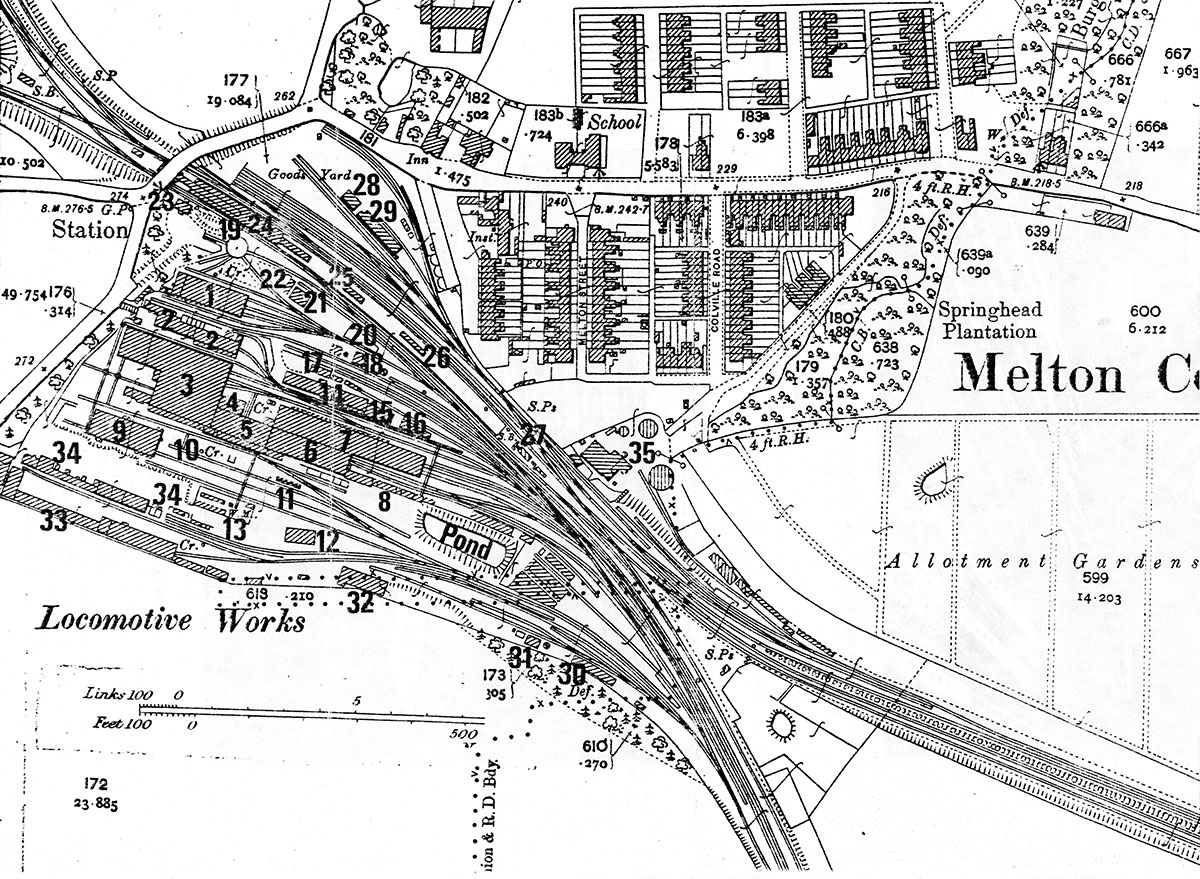
Works map 1905
O.S. map 1904

1. Loco Shop
2. Time Office, Mess Room, Foundry
3. Fitting Shop, Machine Shop, Gas Fitters, Brass Finishers
4. Boiler House
5. Blacksmiths' Shop
6. Wagon Shop
7. Carriage Shop
8. Pattern Shop, Varnish, Leather,Trimmers, Fitters, Blacksmiths
9. Boiler Shop
10. Tender Shop
11. Toilets
12. Pattern Stores,Spare Boats Breydon Bridge (White City)
13. Compound
14. General Offices, General Stores
15. Paper Stores
16. Timber Shed
17. Ambulance Room, Clerks Toilets
18. Water Tanks for Locomotives

19. Turntable
20. Coal Stage
21. Oil Stores
22. Loco Mess Room
23. Lord Hasting's Waiting Room
24. Porters Room, Station Entrance Steps, Booking Office, Parcels Office, Refreshment Rooms, W. H. Smith Bookstall
25. Waiting Room, Ladies Toilets
26. Telegraph Office, Station Master's Office, Inspector's Office
27. Melton East Signal Box, Toilets, Shunters' Hut, C&W Hut, S&T Hut
28. Goods Office
29. Goods Shed
30. Key Stores for Permanant Way
31. Pump House, Power House
32. Timber Drying Shed
33. Permanent Way Shops
34. Concrete Shop
35. Gas Works

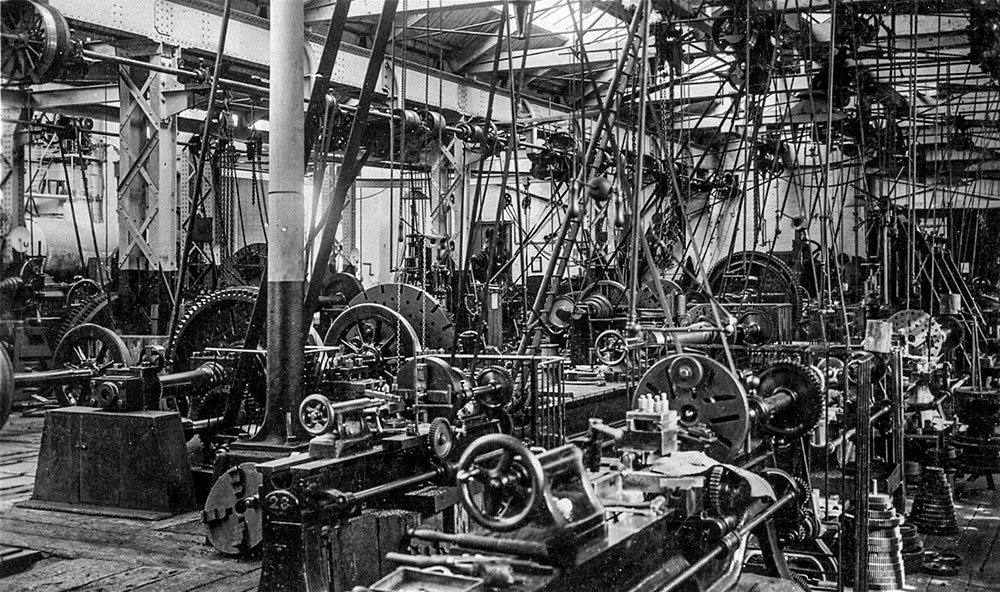
Machine shop 1909
M&GN machine shop - 1909

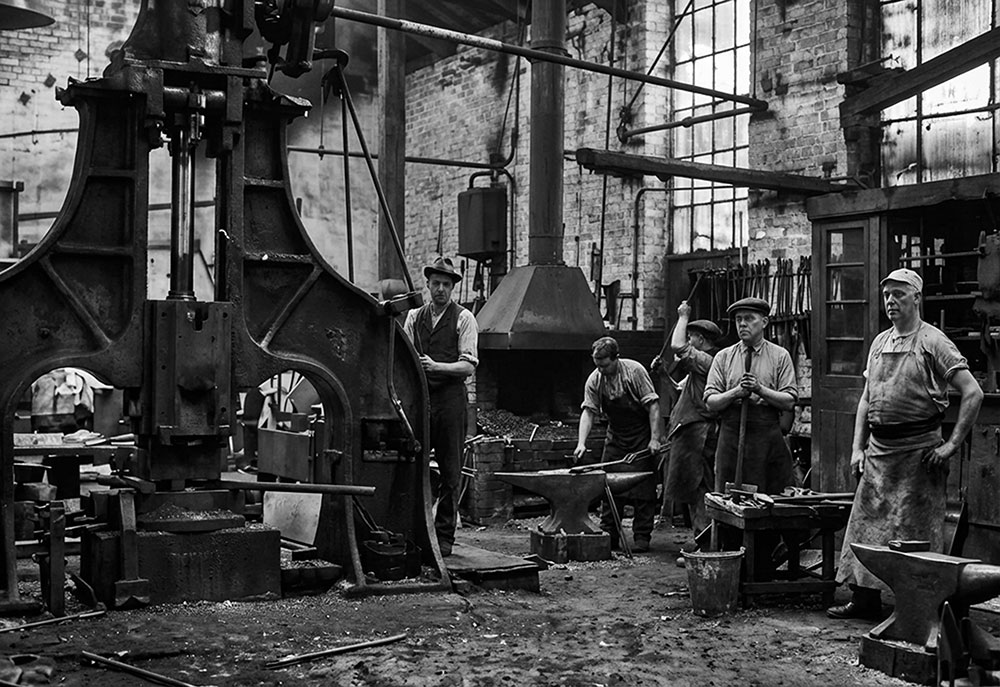
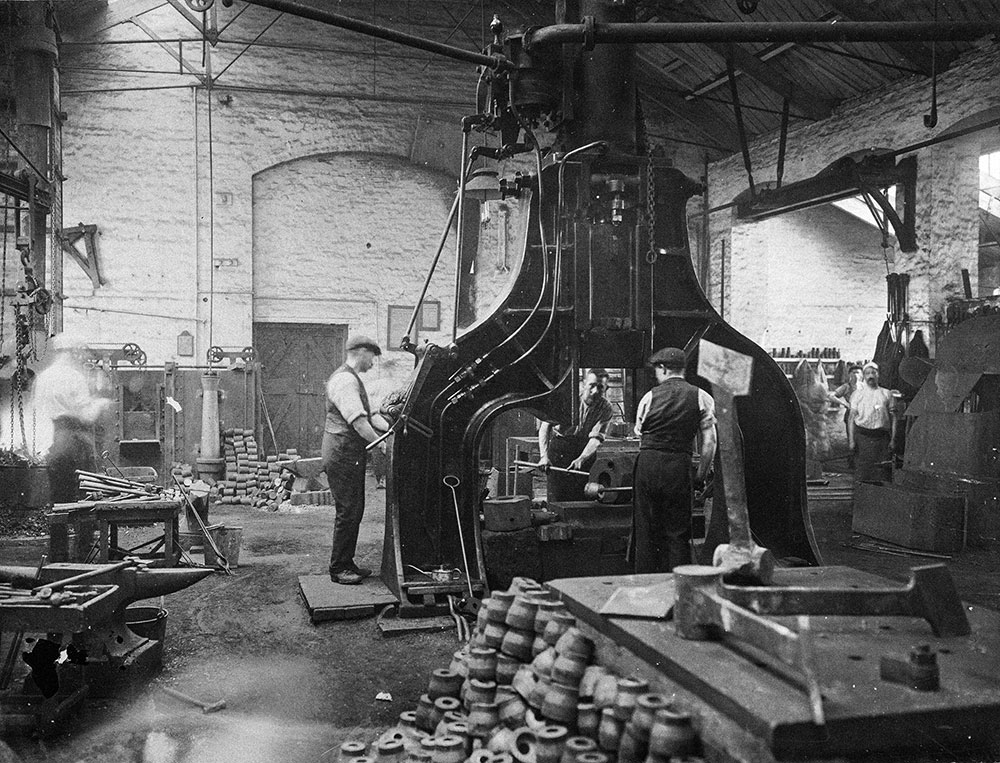
Melton Works Smiths' Shop
The Works Smiths' Shop with a large steam hammer to the left

Construction of 2ft gauge track for Western Front c.1915
Construction of 2ft (1ft 11⅝ins) gauge track for Western Front - c.1915

Above Photo
Looking towards Machine Shop with the Erecting/Fitting Shop on the left and the Gasfitter's Shop on the right.
The M&GN sent 20 ballast wagons and 20 carriages, mostly redundant Luggage Brakes, to France for the R.O.D in 1917.
Nigel Digby


Portable Railway c.1915 Portable Railway c.1915
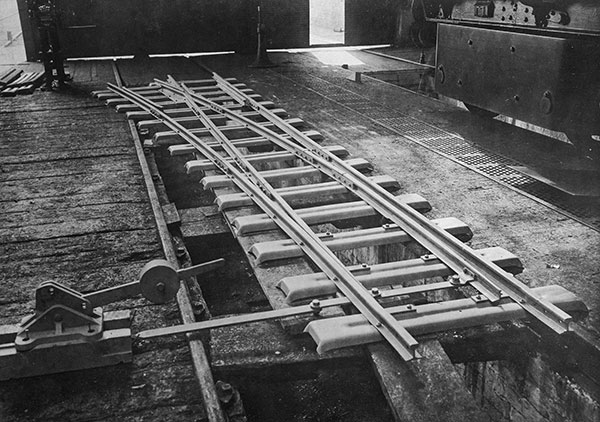
Portable Railway points - c.1915

Above Photo
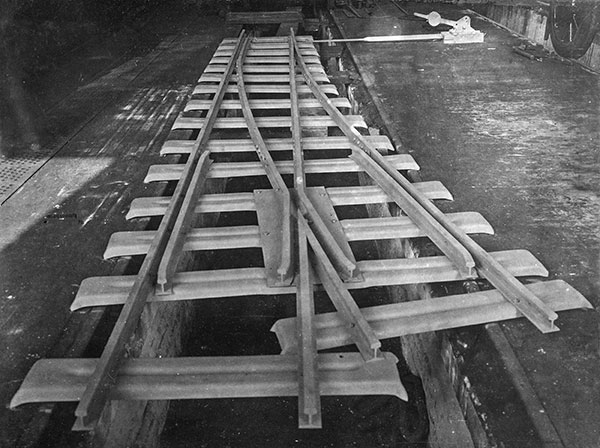
20lb track x 600mm (1ft 11ins) gauge points. 390 right and left hand sets of a 30 metre radius, complete with switch boxes were made. The work was carried our directly for the Ministry of Munitions.


Portable Railway c.1915
Portable Railway 1ft 11ins gauge rails - c.1915

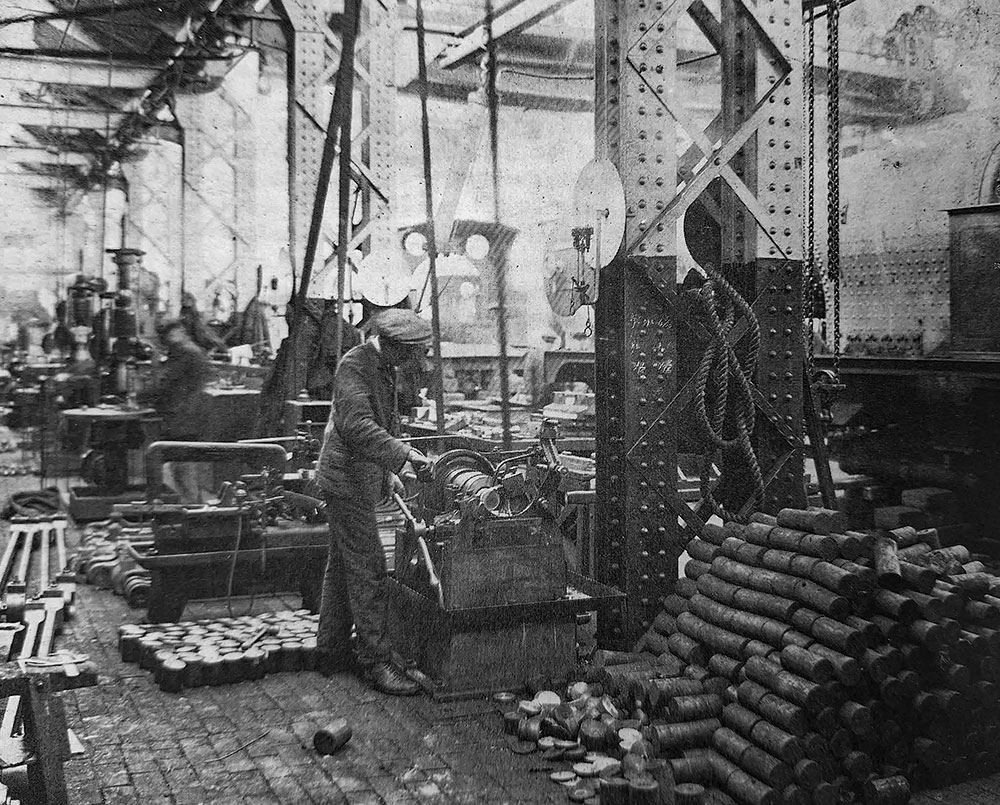
Melton Constable works
Bar cutting machines producing blanks for noses for 18 pounder shells during WW1

Above Photo
The machine being used was built at Melton Constable for cutting the scrap ends of shell bars into suitable lengths for stamping 6 inch high explosive shell noses.


6 inch shell noes being made
6 inch shell noses being made for the East Anglian Munitions Committee

Above Photo
26,925 6 inch shell noses were made from the scrap ends of shell bars collected from munition firms.
A large number were also made from old carriage and wagon axles.

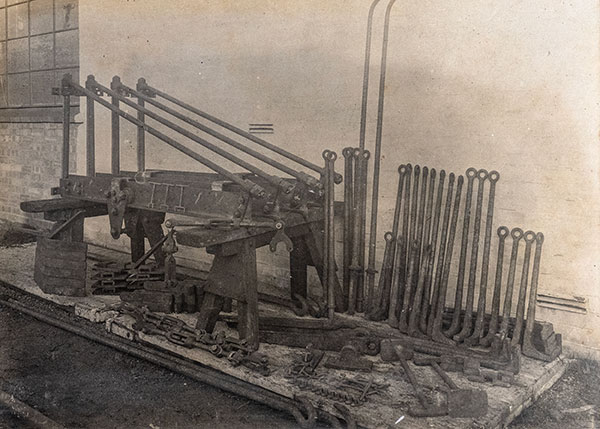
On the slab in the right foreground, is a forged A Bracket. Nine of these were made for 50 foot steam pinnaces.
This was Admiralty work subcontracted from other firms.


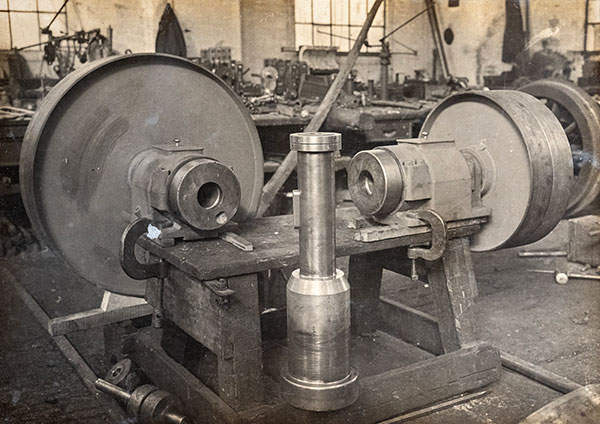
Lathe Mandrills
Lathe Mandrills

Slide Rests c.1916 Slide Rest
Slide Rests for cutting off and band turning - c.1916
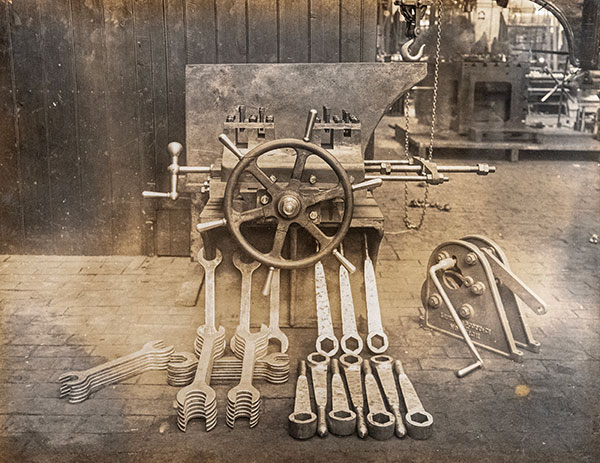
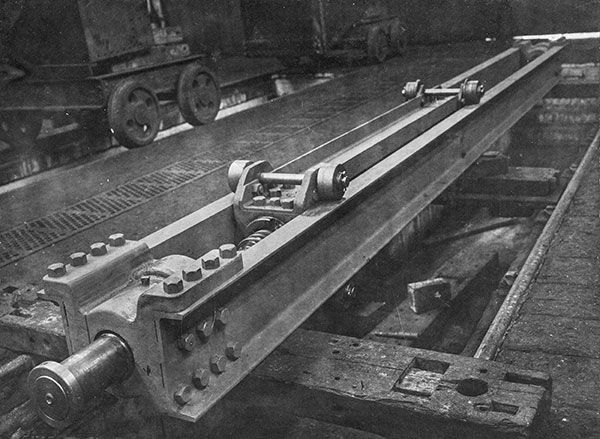
Heavy Munition Slide Rest and tools

Left Photo
Slide Rests for cutting off and band turning, were part of machines and plant for making 18 and 16 pounder high explosive shells. Several orders were received for this work, totalling a weight of aprroximately 32 tons. The work was subcontracted from other firms working for the Ministry of Munitions.

Right Photo
The Heavy Munition Slide Rest was a finished part of the machines and plant made for dealing with 18 and 60 pounder high explosive shells and included in the 32 tons mentioned above. The 13 heavy ring spanners and 304 stamped double ended spanners were for the use on shell making making machines and naval dynamos.
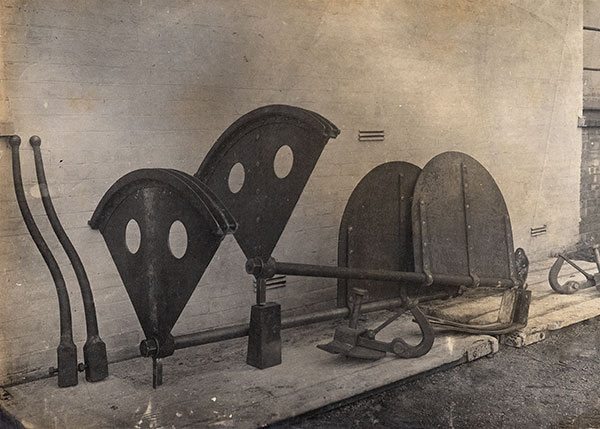
61 Shell Marking Machines and many duplicate parts were made and used for impressing the makers particulars on finishers of small calibre.


Roller Rest for Band Turning Pedestals & Countershaft Brackets
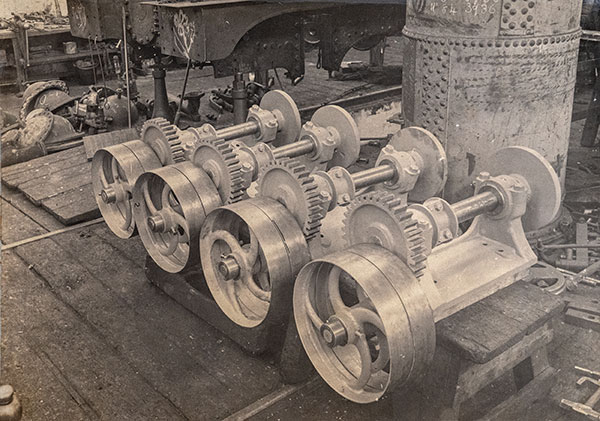
Roller Rests for Band Turning
Pedestals & Countershaft Brackets

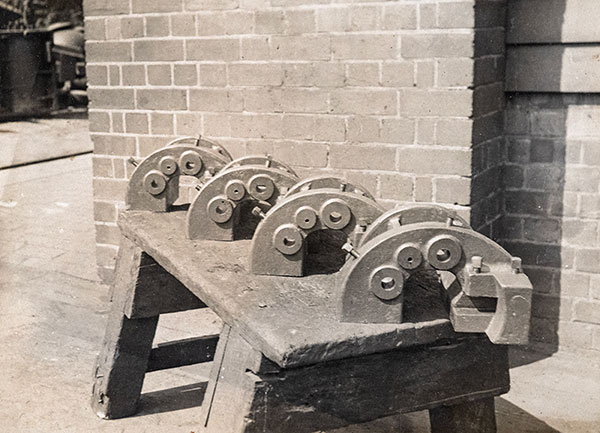
Left Photo
Four Roller Rests for Band Turning that were part ot the machines and plant made for manufacturing of 18 and 60 pounder high explosive shells and included in the 32 tons mentioned above. The work was subcontracted from other firms working for the Ministry of Munitions.

Right Photo

The Pedestals & Countershaft Brackets were finished parts of the machines and plant made for the manufacturing of 18 and 60 pounder high explosive shells and included in the 32 tons mentioned above. The work was subcontracted from other firms working for the Ministry of Munitions.


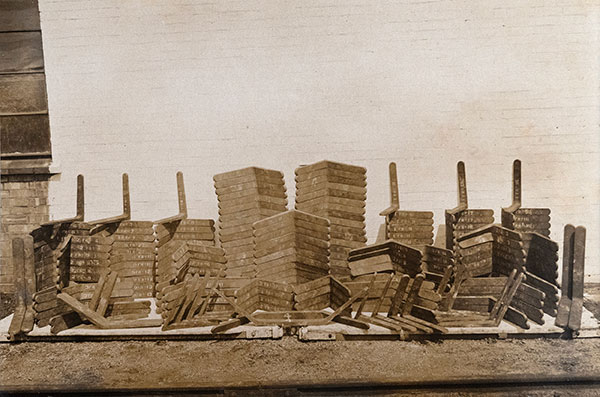
Rectification Baseplates, Countermining Roller Rest & Stamped Hooks Sleeper Wagon bogie
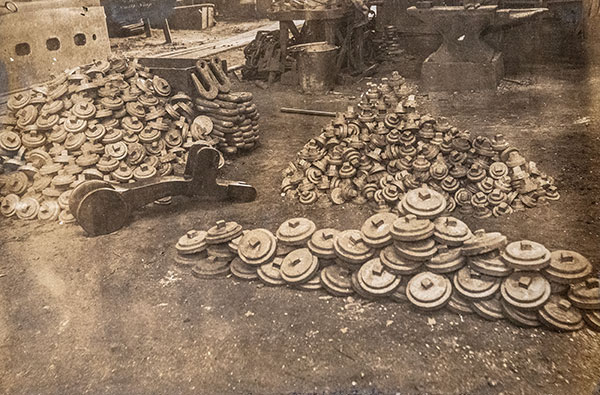
Rectification Baseplates, Countermining Roller Rest & Stamped Hooks
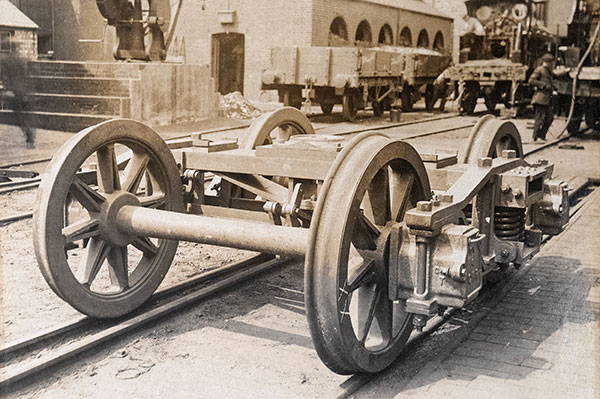
Bogie for Rail or Sleeper Wagon

Left Photo
Three heaps of Rectification Baseplates for 18 pounder 4½ inch and 6 inch shells. 18,679 were made from pieces of scrap shell bar and were used for correcting the weight of light high explosive shells.
The Countermining Roller Rest was used on motor boats and were part of the gear used for mine laying.
The Stamped Hooks were for Bogied Rail or Sleeper Wagons built for the Great Northern Railway.
The work was done for the Minister of State for Industry (Manufacturing), the Board of Trade and the parent GNR.


Rail-Sleeper Wagon
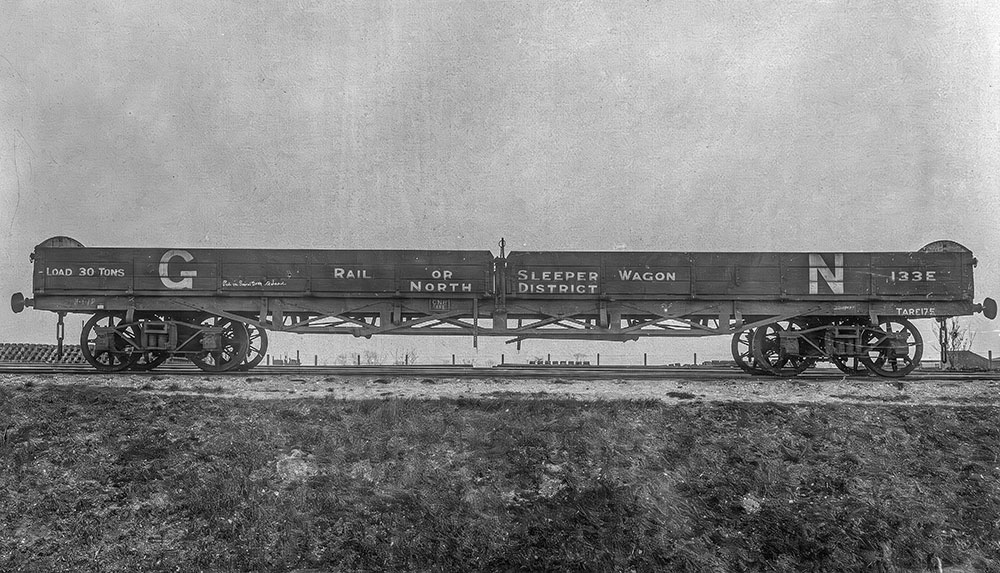
Great Northern Railway 30 ton Rail or Sleeper Wagon

Above Photo
One of 14 Bogied Rail or Sleeper Wagons built at Melton Constable for the Great Northern Railway's Engineering Department, in order to release labour at Doncaster. The underframe was made of steel to take 30 tons and the length over the headstocks was 47ft 6 ins.


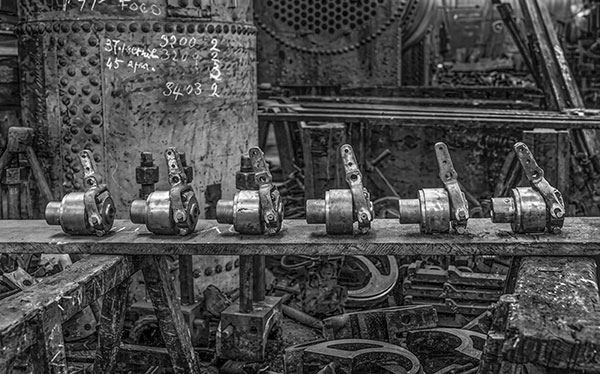
Clutches for High Speed Drills Small High Speed Drills
Lathe Mandrills etc.
Small High Speed Drills

Left Photo
Clutches for High Speed Drills. The work was subcontracted from other firms working for the Ministry of Munitions.

Right Photo
The Small High Speed Drills were for drilling and tapping holes in parts of the safety devices fitted to aircraft bombs. The work was subcontracted from firms working for the Ministry of Munitions.


Lathes 36 inch Searchlight Projectors
12 Small Lathes
36 inch Searchlight Projectors

Left Photo
Twelve Small Lathes made for producing parts used to make aircraft bombs. The work was subcontracted from firms working for the Ministry of Munitions.

Right Photo
Parts of 130 36 inch Searchlight Projectors that were machined gun metal castings. Other parts were also made.
The work was subcontracted from firms working for the Admiralty.


Horizontal Drawing Press Small Lathe Headstocks
Horizontal Drawing Press
Small Lathe Headstocks

Left Photo
A Horizontal Drawing Press made to form the bodies of aircraft bombs.Other parts were also made. The work was subcontracted from firms working for the Ministry of Munitions. Upper left can be seen two trucks on the site's narrow gauge railway.

Right Photo
Four out of six Small Lathe Headstocks made to help produce small armour piercing shells.
The work was subcontracted from firms working for the Admiralty.


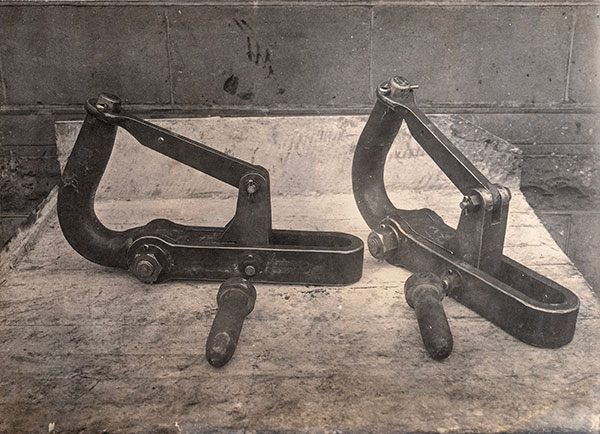
Steering & Towing Gear Towing Hooks
Steering & Towing Gear for Motor Launches
Towing Hooks for 56 foot Steam Tugs

Left Photo
Parts of Steering & Towing Gear for Motor Launches - Board of Trade supervision for the Air Ministry. It is thought that these launches were craft used to tow disabled seaplanes and flying boats. The work was subcontracted from firms working for the Admiralty.

Right Photo
The Towing Hooks for Steam Tugs were subject to Moard of Trade supervision. The work was subcontracted from firms working for the Admiralty.


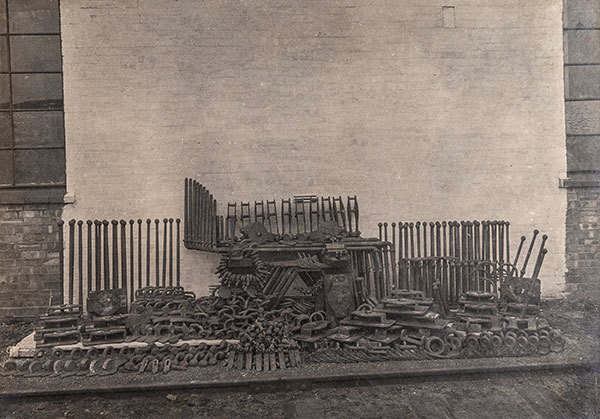
Wrought Iron Forged Knees 70 foot Docking Lighter Parts
Wrought Iron Forged Knees
70 ft Docking Lighter Parts

Left Photo
Wrought Iron Forged Knees of various anglers and bevels. Two sets of 234 forgings were made to be used in the construction of 70ft Docking Lighters for docking flying boats at sea. The work was subcontracted from firms working for the Admiralty.

Right Photo
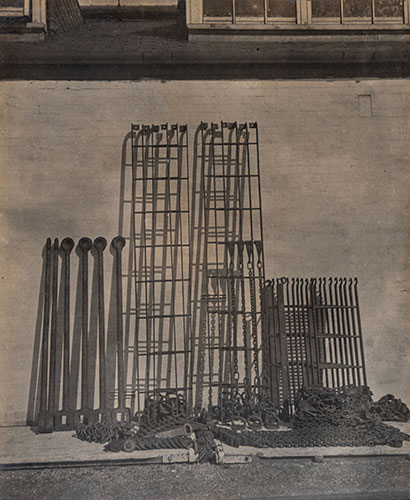
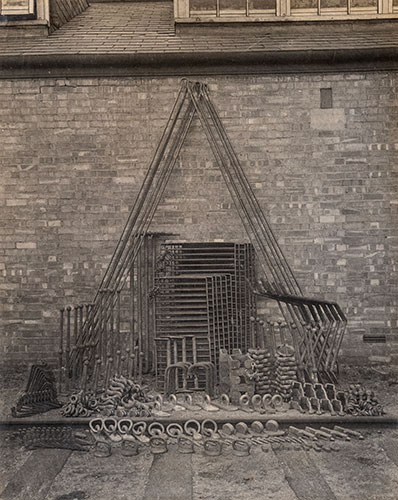
Finished parts and forgings for 70ft Docking Lighters as above.


86ft Steel Drifter parts 86ft Steel Drifter parts
86 ft Steel Drifter Parts

Left Photo, Right Photo, Left Photo below
Various parts for 86 ft Steel Drifters. Work supervised by the Board of Trade and subcontracted from firms working for the Admiralty.


86 foot Steel Drifter Parts 70 foot Docking Lighter Parts
86 ft Steel Drifter Parts
70 ft Docking Lighter Parts

Armoured Train
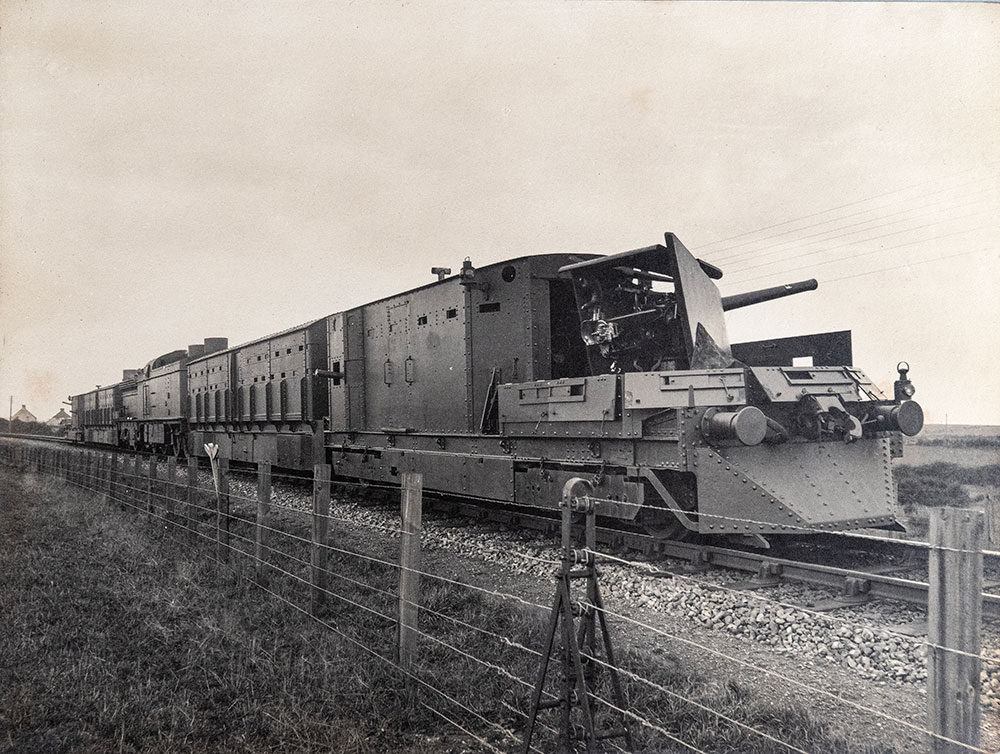
Armoured Train on the M&GN line

Above Photo
The Armoured Train was used on coastal patrols on the M&GN and was based at North Walsham. Maintenance and many additions were carried on the orders of the War Office at Melton Constable.


If you have any memories, anecdotes or photos please let us know and we may be able to use them to update the site. By all means email or telephone 07836 675369.


Copyright © Jonathan Neville 2026
Top of Page