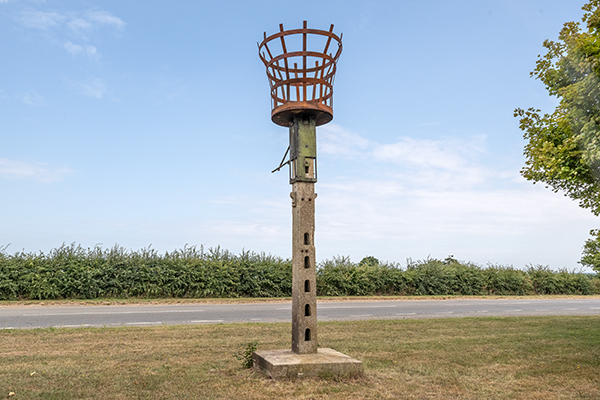
Melton Constable's beacon set on an old Marriott concrete signal post
|
Melton Constable History |
Concrete Production |
Melton Constable's beacon set on an old Marriott concrete signal post |
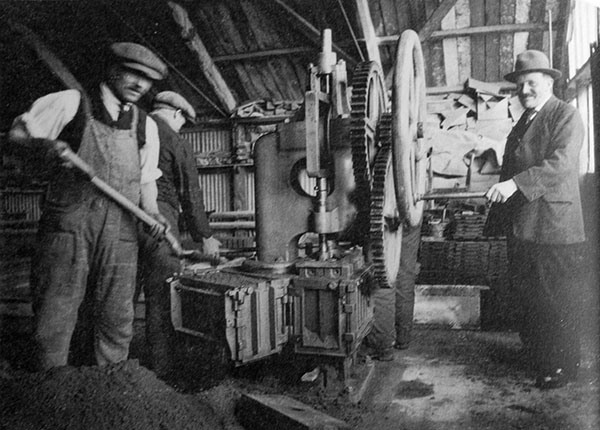
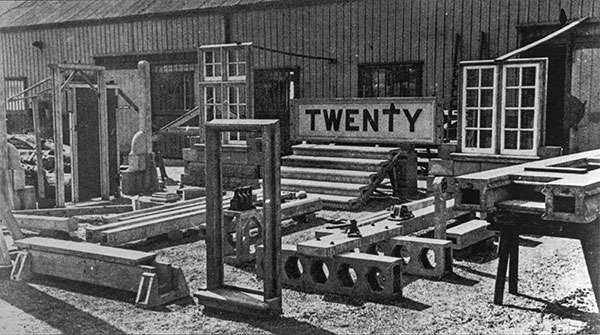
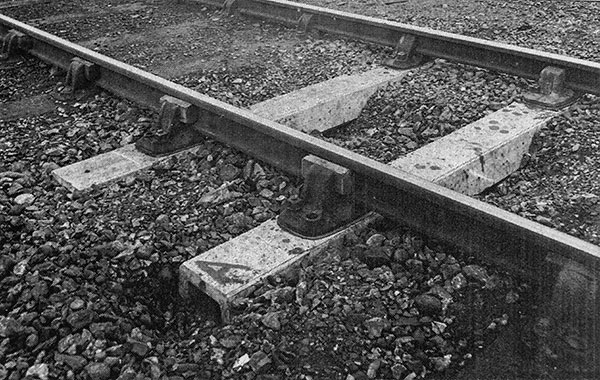
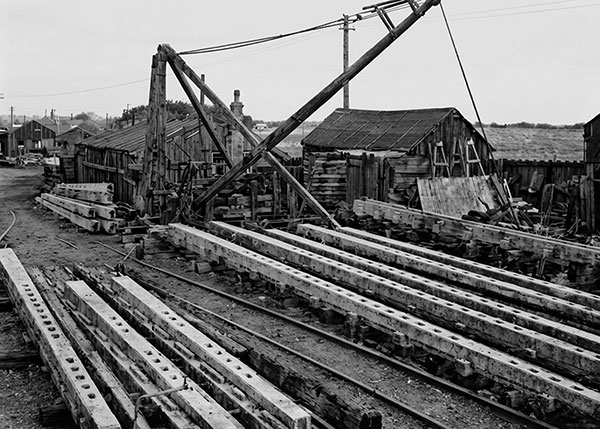
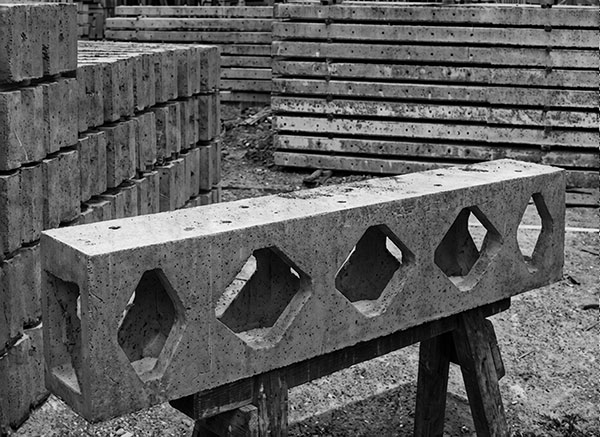
William_Marriott is known as the 'Father of the M&GN'. Concrete was probably his biggest lasting legacy to the modern world. Melton first manufactured ferro-concrete fence posts, then from 1915, signal posts. During World War I, Marriott was asked by the Government to develop building blocks for postwar housing (as there has been bombing). Although concrete had been used before on the railways, William mass-produced it and made everything out of concrete. There were many patents produced relating to developments in concrete sleepers, chairs and signal posts. When the original Holt station burnt down, Melton concrete works produced a new concrete station. Today there are still many examples of the concrete products, including the lamp posts at Sheringham station on the North Norfolk Railway and the station sign at West Runton railway station. Cromer signal box base is made of Melton concrete. After 1916, the M&GN used the concrete blocks for box construction, however only Cromer Beach was built to this design. Gedney railway station sign is a Melton product. The only surviving M&GN signal in original position is Melton concrete (outside the village of Sheringham). |
An important development for which William Marriott’s skill and experience was responsible was the application to railway work of concrete. He laid out a concrete shop at Melton and patented a machine for making blocks. He had introduced concrete fencing posts in 1909 and had patented and registered 135 inventions and designs using both concrete and reinforced ferro-concrete. These included signal posts, girders, gate posts for level crossing gates, fittings for gate houses, platforms, walls, sleepers, bridging blocks and station buildings and name boards. Tests were carried out at Melton and at the factory of Messrs. Ellis at Leicester, and from June 1916 to May 1917 concentrated particularly on signal posts. The set of signals guarding the western approaches to Melton was supposed to be one of the largest concrete signals in the world. Concrete signal posts made at Melton were also later supplied to the Great Northern Railway, Great Central Railway and Midland Railway. Concrete sleepers first appeared on running lines in June 1916 in Melton and the road bridge at Melton station was of Mr. Marriott’s design replacing the original L&F brick structure. |
|
|
|
Early in 1917, the Signal Engineer of one of the principal English Railway Companies visited Messrs. Ellis and Sons at Leicester, and asked for a (Melton Concrete) Post to test. One 32' 6" long was chosen, blocks and falls were fastened 4ft. from top of the Post and a rope
attached to the rails of a Siding. The top of the post was then lifted on 10ft props, when the blocks came into action and the post then raised to the 'vertical' in a foundation hole, being steadied by 3 guys held by 3 men. No timber protections or reinforcement to the
post were used, a ladder was fixed and man was on top of post within 30 minutes. |
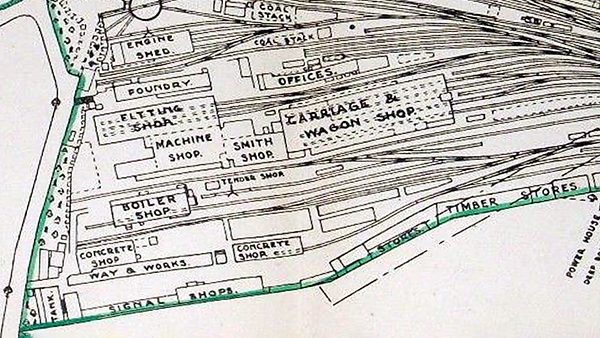
The concrete shop was renewed in 1909. |
Relations with the Astley family had deteriorated since his lordship, son of the one-time Director of the Lynn & Fakenham Railway, had come into the title in 1904. When approached by the Committee requesting some more land on the south side of the Works for an extension to the concrete shop, he refused to release it. Nigel Digby |
|
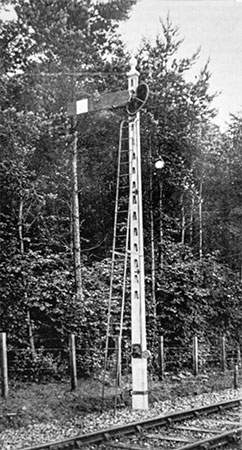
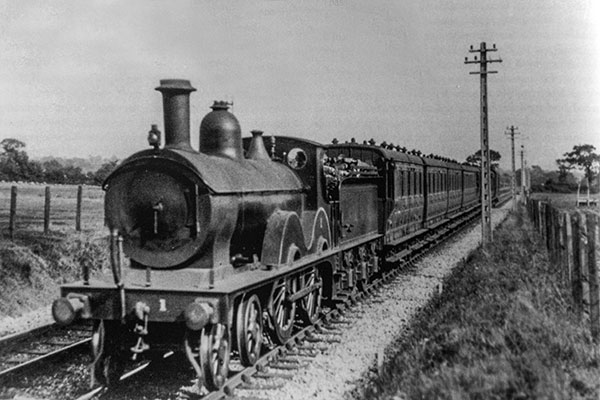
Above left photo This shows the first reinforced concrete signal post erected in Britain. It was a Marriott Reinforced Concrete (MRC) post and was the Melton West Down Advanced Starting signal on the line to Cromer. This design was a prototype and later versions incorporated several alterations. Above right photo MRC triangular section telegraph poles set beside the line incoming from Gt Yarmouth, the only such installation known. The train mainly consisted of ex Gt Northern six wheeled carriages and was pulled by Class C 4-4-0 no. 1 |
|
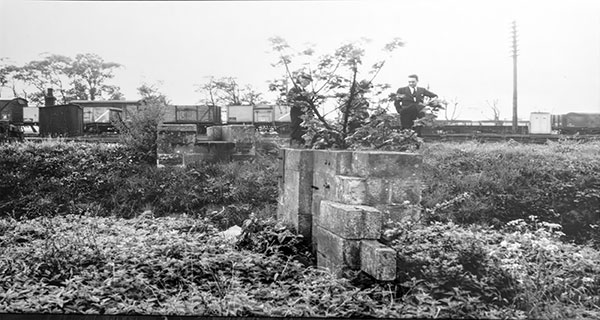
Above left photo A side view of the Melton Constable Concrete Post testing structure, with former Relief Signalman, Charlie Faulkner looking on. Some old Mineral Wagons are in the rear. M&GN Circle |
If
you have any memories, anecdotes or photos please let us know and we may
be able to use them to update the site. By all means email or telephone 07836 675369. |
Copyright © Jonathan Neville 2025 |