 |
30th August 2025 |
|
Melton Constable History |
Churches |
|
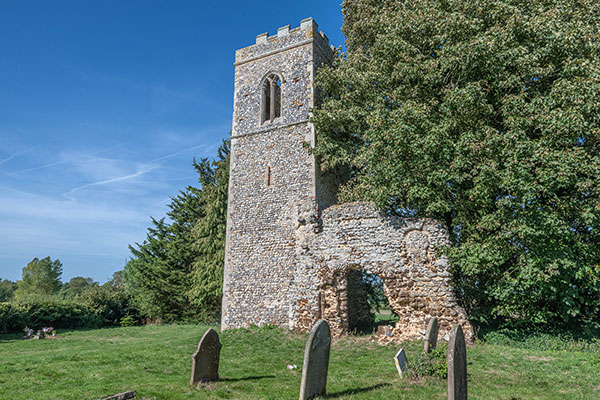
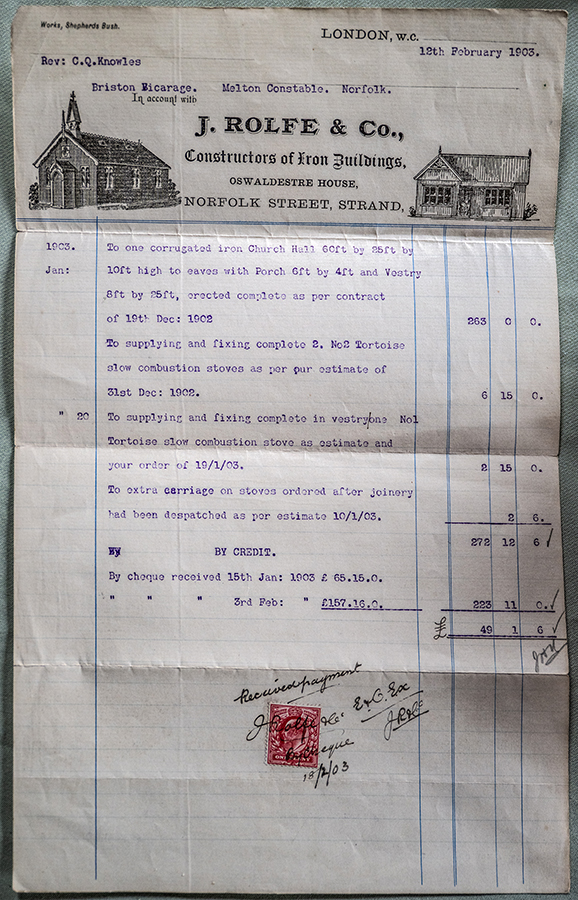
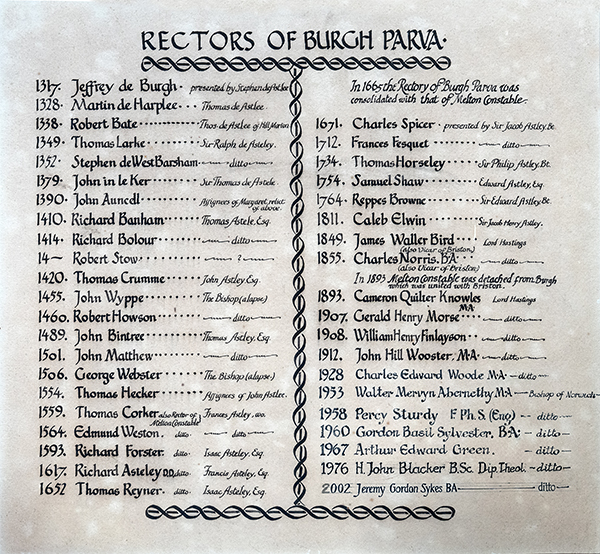
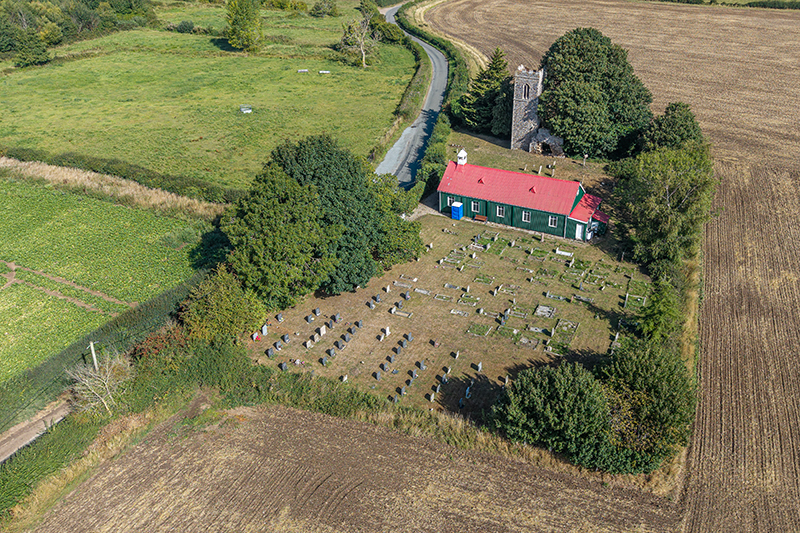
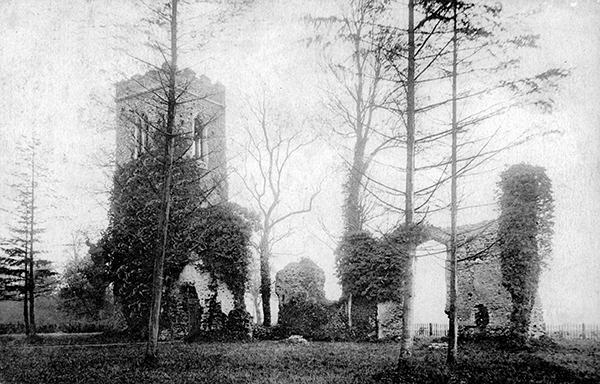
There are three Anglican churches associated with Melton Constable and Burgh Parva. Melton Constable Hall has St. Peter's church in the original settlement of Melton Constable - the Church in the Park. Burgh Parva had its own church - the Grade ll listed St Mary's, which fell into ruin in around the 1700s, mainly through lack of use. When the railway arrived in Burgh Pava as it then was, it brought families from all over the country and the need arose for a church nearer than St Peter's at the Hall and it could be that the then Lord Astley wasn't over keen on his church being filled with railway workers and their families. Thus, in 1903, Burgh Parva's 'Tin Church' was built in the grounds of St. Mary's graveyard. The much loved church is still in use today, both as a meeting place and for religious services. |
|
St Mary's Church is somewhat unconventional; it is a tin tabernacle situated next to a ruined church (abandoned in the 17th century). The neighbouring village of Melton Constable experienced a boom in the 1870s when it became a major railway junction of the Midlands and Great Northern Railway. The railway workers put down their religious roots at Burgh Parva in the form of a tin tabernacle. The nearest church was St Peter's, located over a mile away on the estate of Melton Constable Hall, the historical family seat of the Astleys. A competition to design the new church failed to attract a winning entry and a temporary corrugated iron structed was erected, remaining in use to this day. The reredos came from St Philip's Church in Norwich which was bombed. A crack in the war memorial bears witness to a gale which almost blew the church down in 1977. |
|
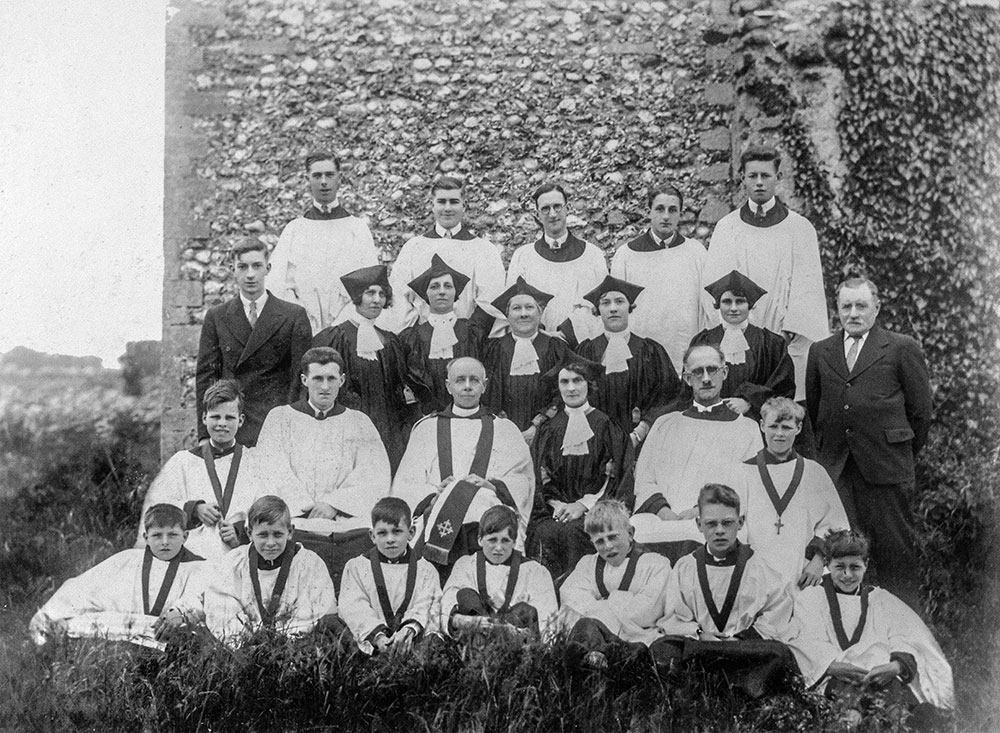
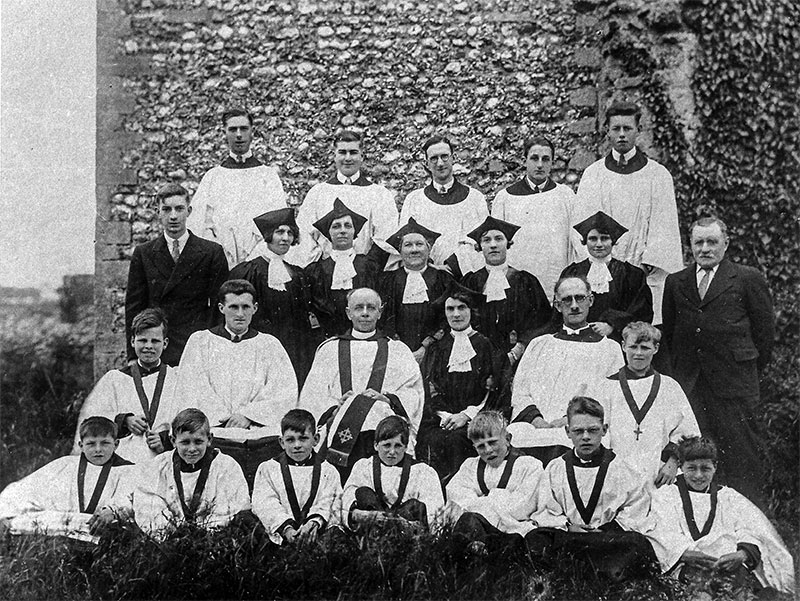
| Back row: Harry Lewis, Jack Shepherd, Mr. Cann (Co-op manager), Douglas Bryant, Frank Morgan Second row: Edward Walpole, Mrs. Leamon, Mrs. Miller, Emma Morgan, Sarah Adams, Rosie Morgan, Fred Morgan Third row: Harry Furnell, Wilfred Morgan, Rev. C. E. Woode, Mrs. Rosalie Bradfield, (née Hewgill, organist), Mr. Lewis, George Lines Front row: Harold Lines, Charlie Frosdick, Aubrey Ducker, Brian Nurse, Robert Simmonds, Les Ducker, Billy Clitheroe |
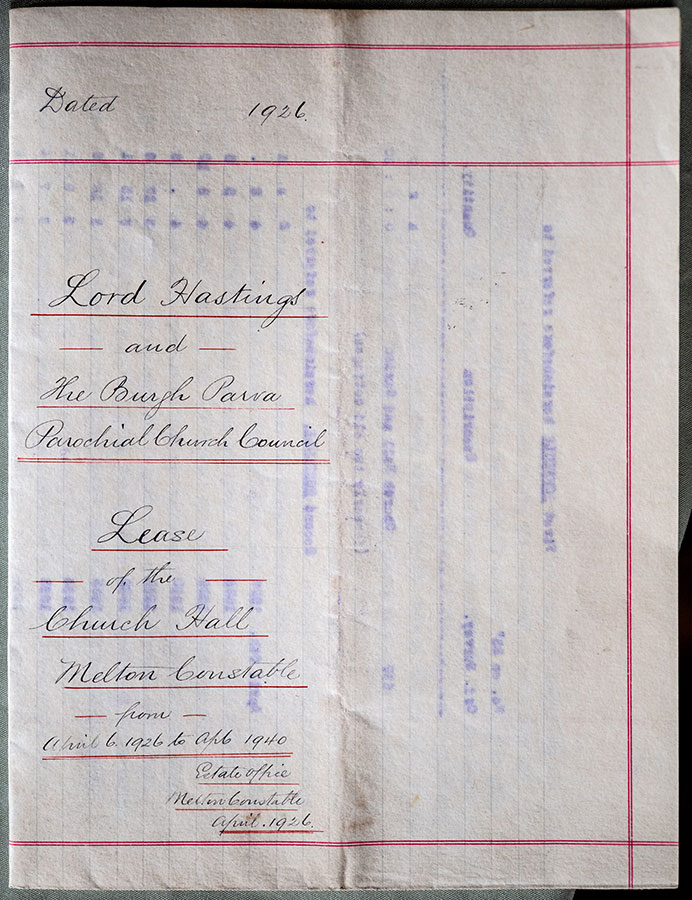 St Mary's Church lease - April 1926 - April 1940 St Mary's Church lease - April 1926 - April 1940 |
It was said that St. Peter's in the Park was the church you went to, if you liked a good walk and considered yourself a swanky Christian or you went to
Saint Mary's Burgh Parva if you were a good churchman, for the hill you descended had to be climbed after the service and in winter it was a cold walk. |
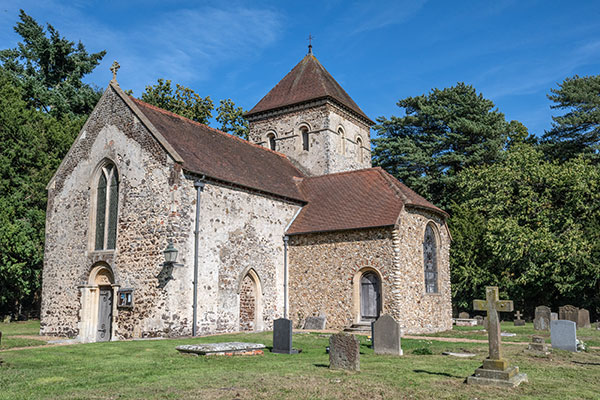 St Peter's Church - 19th September 2025 St Peter's Church - 19th September 2025 |
|
|
|
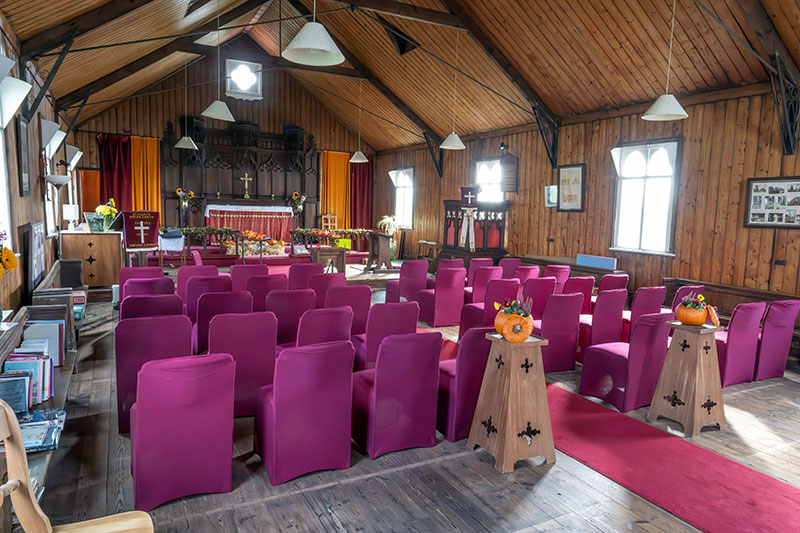 St Mary's interior - 29th September 2025 St Mary's interior - 29th September 2025 |
William_Marriott was man of strict religion - a member of the 'Plymouth Brethren', They were a ‘Low Church', Nonconformist group that emphasised biblical prophecy and the Second Coming of Christ. Mr._Marriott had strong religious and philosophical ideas he also knew, from events in established towns elsewhere, that drunkenness led to all sort of disarray and misery. He was concerned that as hundreds of men, women and families came to work at Melton they should come to an orderly, peaceful place and have a happy life thereby. Mr._Marriott was aware of the need for Leadership. He was therefore an advocate of teetotalism. The oldest residents I met said that the very first thing Mr._Marriott did at Melton, even before he began building the station and factory, was to buy two old cottages and convert them into a place of worship. To inculcate a sense of personal discipline he introduced, not Baden Powell's Boy Scouts but when the Railway_Institute was built by the Midland and the Great Northern Railway companies, the building became the meeting place for the Church Lads Brigade and was the Drill Hall - there was a large sign over the door proclaiming its purpose. Today this building stands on a bank, on the west side of the main road, a few yards beyond Burgh Beck Road. Marriott was said, by elderly locals to me in 1983, to be a member of the Plymouth Brethren'' religious sect. They held their meetings in a house in the 'private' estate called ‘Avondale', adjacent to Burgh Beck Road and opposite Grove Road in the railway estate. The front and back room of this house was knocked into one. The Brethren's religious beliefs were so extreme that it is hard to believe Mr._Marriott held to them. The sect believed in the literal truth of the Bible: believing that the world was created by God exactly 4004 years before the birth of Christ and that creation took 7 days. Marriott's strongest certain beliefs were that no-one should consume any alcohol, that everyone ought to go to church or chapel on Sundays and his admiration for the existing class structure. ln his memoirs '40 Years on a Norfolk Railway' one can read his rather grovelling attitude towards people with titles - Mr. Upcher, of Sheringham Park was ‘A Patriarch amongst his People'. Mr._Marriott saw his role as 'Patriarch’ of Melton Constable. He certainly gave Leadership to the people of Melton Constable to create a stable society. He established the childrens' Sunday School at Melton and also a ‘Young Mens' Bible Class' which he taught himself. Every year the children of the Sunday School went to Marriott's house, Brinton Grange, for their treats. Their mothers came out from Melton to make the sandwiches and Marriott supervised them to ensure the butter was spread thick. Marriott was supremely keen on Sunday worship basing his enthusiasm on the Second Commandment of God in the Bible: 'to keep holy the Sabbath Day and do no work' Marriott did not allow this ‘Commandment of God' to stand in the way of running trains on Sundays until the start of 1912. On 16th December 1911 the National Insurance Act became law - to protect working people against loss of income related to sickness or unemployment' The Act required employees to contribute four pence a week from their wages and employers 3d per worker in their employ. In the New Year, Mr._Marriott stopped running trains on Sundays except for excursions coming in from outside the M&GN. Sundays were then a wageless day for a lot of railwaymen. |
The Institute (Secretary, A. Q. Newman) was a place we all went to for our various pursuits. The Library, billiards, night classes, to pay the Club, concerts, the Reading Room. dancing and whistdrives and even for a bath. The main hall was used on a Sunday for services and Sunday School; on Wednesday evenings for Bible study. It was packed to capacity every Sunday evening. Many a stirring sermon was preached by men and sometimes women, drawn from various denominations in the area. This work is continued at the present Gospel Hall, which is the oldest building in Melton. Originally it was built as two cottages in the late 1850s. It was later made into a Drill Hall. There the Church lads met the bands as they marched down the hill, bugles at blast, drums rolling, sometimes headed by the Rechabites' banner. At other times there would be a procession led by the Hindolveston Silver Band and headed by the Union banner. All stirred the hearts of the people, young and old, as they lined the pavements watching the procession go past. Norman Haskins |
Then there were various places of worship; the tin church, the Railway Mission and Avondale House (meeting place for the Brethren). Quite a number of Melton folk went to Briston for services and the Salvation Army had many followers from Melton. In charge of the Congregational Chapel was the Rev. Hales, affectionally called by most of the boys 'Cakes and Buns'. The Reverend left much to be desired as preacher but his church was filled every Sunday. There were also two Methodist Chaopels, Hall Street and the Central, which were supported by Melton people. Norman Haskins |
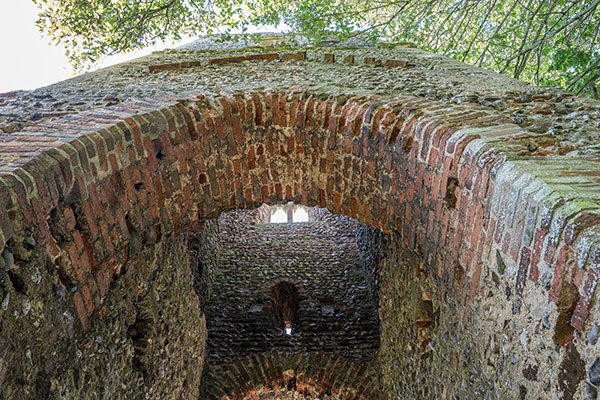
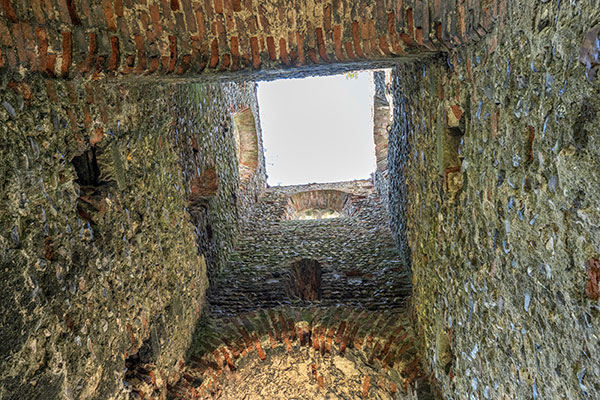
St Mary's tower - 19th September 2025 |
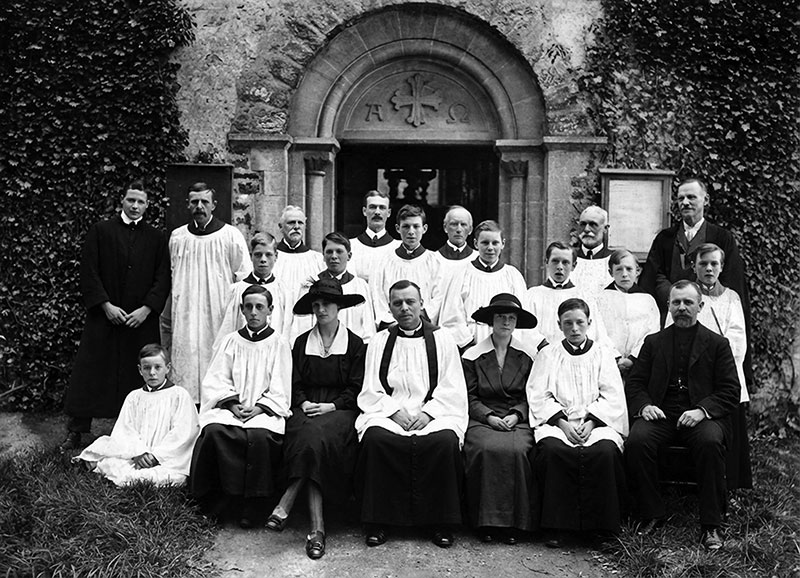
However, great store was set from the Marriott days in Praising God in the Railway Mission, part of the Railway Institute. Their choir was well known in most parts of Norfolk and Mr G.B Clarke dedicated himself to its service ably assisted by his wife. The children's Sunday school run by Johnny Copps & others gave many happy hours to the locals with Sunday school Anniversary Prize Giving & the Sunday School Treat, a trip to Sheringham and there are many tales to be told of these outings, which I will try to fit in later in this book. The choir ran for many years and only after Mr. G. B.Clarke left Melton Constable to live out his life with his children on the south coast area, that the choir ended. Its voices are still heard no doubt by many old Meltonians and then Christmas Carolling around the village streets had to be heard to be appreciated as we lucky ones who have seen them under the Gas lit lamps lights then voices only drowned by a locomotive whistle or the banging buffers of shunting yard workers.Ralph Kimber |
|
|
St. Mary's graveyard contains two War Graves - Arthur Chrles Gibson - 5th Battalion, Norfolk Regiment - died 23rd February 1917 aged 21 Henry William Thomas Stimpson - 5th Battalion, Norfolk Regiment - died 13th November 1918 aged 28 |
|
If
you have any memories, anecdotes or photos please let us know and we may
be able to use them to update the site. By all means email or telephone 07836 675369. |
Copyright © Jonathan Neville 2025 |
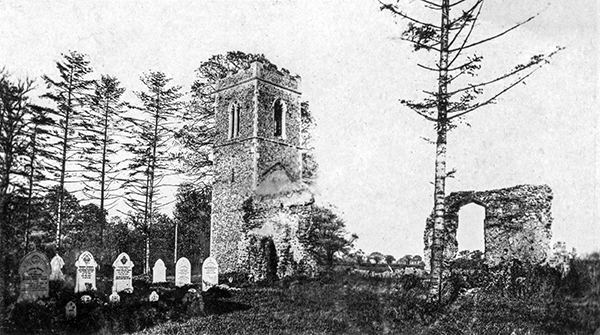
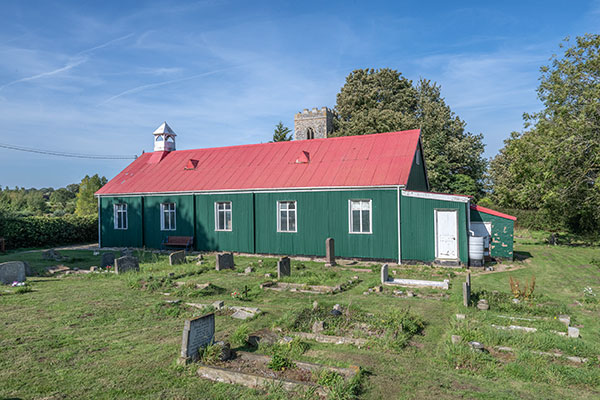 The 'new' tin church of St Mary - 19th September 2025